Our world is on the verge of living the worst parts of the Bible – the apocalyptic parts. You are living the Book of Revelation whether you want to acknowledge it or not. This means that you will witness the short-lived reign of Anti-Christ, the fall of Babylon, the judgements of God upon the world, and the cleansing of mankind to prepare the way for the return of the King. How seriously are you taking this?
Too many people are carried away with optimism for the awakening they see happening across the world. They are ignoring the parts of prophecy that foretell the horrors that will precede the Millennium. They see a new golden age emerging but don’t recognize the shocking growing pains that will precede it. When Babylon falls, it’s going to flail and lash out and take billions of souls with it. Are you ready to survive the fall?
Are you ready for massive earthquakes, gigantic hail stones that destroy the earth’s crops causing global famine, catastrophic weather, a desolating scourge that decimates earth’s population, flesh-eating flies, stars falling from the heavens, ocean life dying, nuclear war, the collapse of order and stability, the implosion of the global economy, grid-down living without electricity and the internet, the rise of the Anti-Christ, the rampaging of nihilistic mobs and merciless militaries, and all the other things the scriptures have foretold? Are you taking this seriously?
Seriously, how ready are you? If something happened today, such as a nationwide power outage that was not resolved for three weeks, are you prepared this instant to survive and cope? I know I’m not exactly where I would like to be, though I have made many preparations to safeguard my family in the dark days ahead. I am pushing forward, gathering supplies, learning as many new things as I can, examining the situation, and closely observing the signs of the times.
I urge you to take stock of your life, your supplies, your location, your skill level, your physical health and fitness, your network of friends, and your overall preparedness level. If you find yourself lacking, do your best to make up the difference NOW while we still have relative peace and prosperity. Things won’t get better from here on out; they will get progressively and exponentially worse.
If you need a necessary skill, such as first aid, preparing tinctures, identifying edible plants in your area, gardening, shooting, hunting, butchering animals, sewing. welding, small engine repair, food preservation, well digging, HAM radio operation, knot tying, lock picking, or whatever it may be, start developing it now.
If you want to harvest food in the proper season, get the seeds in the ground now; both figuratively and literally. Do you have seeds? Do you have a garden? Have you ever practiced? Growing food to survive on is not something you do willy-nilly; it takes practice. So, practice!
If you want to defend yourself when the crap hits the fan, obtain the means and gear to do it with now. This should include multiple types of firearms, sufficient ammunition, optics, tools, spare parts and batteries, light, and other accessories. Don’t pay much attention to the videos you see saying that you must have this or that style of weapon, but get something and learn how to use it. A .22 that you have trained with and have ammunition for is far better than the AR-15 you bought and put in the safe and never touched.
Do you live in a safe area away from high population centers that will turn into mobs when the power goes out? If not, move or make serious preparations to relocate at a moment’s notice. Generally speaking, the Intermountain West will be the safest part of the United States. Other areas such as the Ozarks will be safe, too. Acquire some land if you are able. Begin putting in survival preparations such as garden plots, fruit trees, berry bushes, fish ponds, fences, wells, defensive preparations, supply caches, storm shelters, bunkers or safe rooms, etc.
Are you prepared to survive nuclear war? It is more survivable than most believe. Do you have a gas mask or potassium iodide tablets? Have you considered what you must do to survive? Have you looked at a map of the most probable nuclear targets in the United States and a map of nuclear power plants near you? Have you read “The Good News About Nuclear Destruction” and the other great information at ki4u?
Are you out of debt? This is a hard one for most people. Having financial Freedom is better than being in debt slavery. Poverty without the fancy things of the world is better than having all the outwardly nice things but being in debt to big banks.
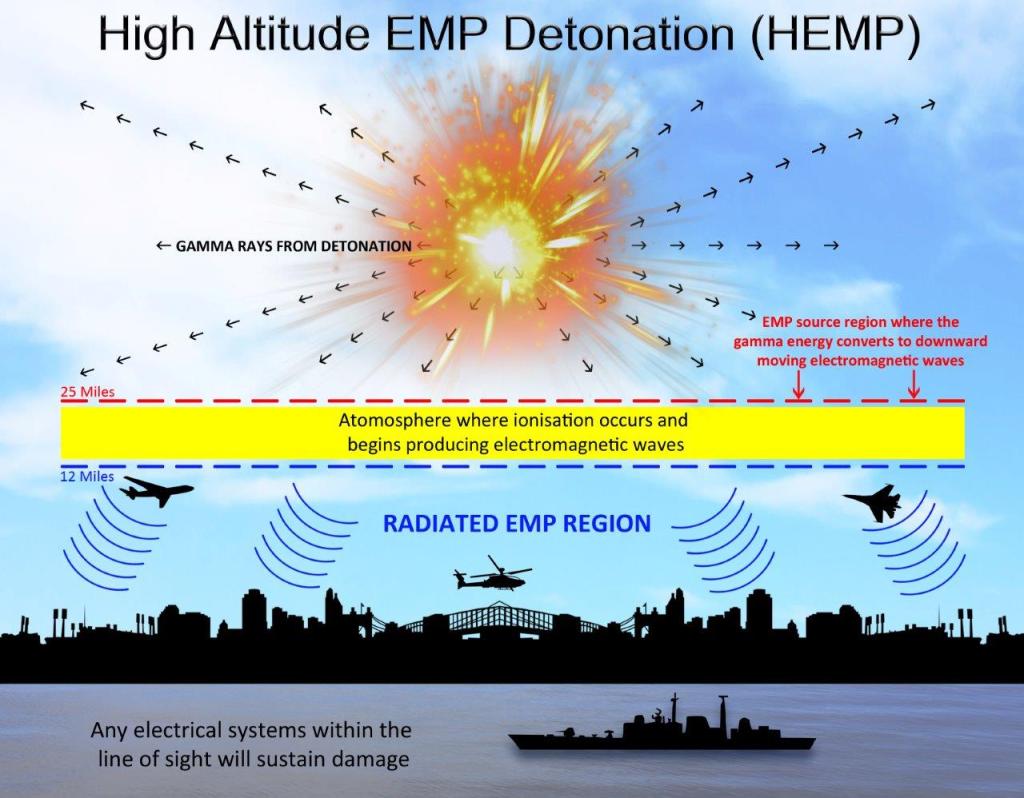
Do you have a food storage? How much? 72 hours of food is insufficient – unless you only want to survive for 72 hours. I assert that you need at least a year’s worth of food and water; society will be offline for that long. Do you have water and/or water purification or filtration methods? Do you have warm winter clothes – a nice coat, boots, gloves, scarf, hat, thermals, etc.? You’ll need them. Do you have a power generator that will run on natural energy sources? Do you have a faraday cage or faraday cloth to protect sensitive electronics against EMPs and solar flares? Do you have a sturdy tent just in case? Do you have tools – axes, hammers, saws, nails, duct tape, etc.?
Do you have a network of family, friends, or like-minded acquaintances who can be trusted? You don’t want to be a lone wolf during a cataclysm. No one person can do it all. You need someone who specializes in medicine, another in agriculture, another in communications, another in organization, another in defense and tactics, etc. It is wise to train for disasters with friends and family whenever possible. Discuss all the potentialities and develop contingency plans. Everyone should be aware of the plan, their role in it, and the backups. Few things trump training and having a plan.
Lastly, how strong is your relationship with God? How finetuned is your discernment? Are you in tune with the Holy Spirit who has the power to tell you all the things you need to do, where you need to go, how you can best prepare, and how you should react in a real crisis? Above all things, get close to God and His Son Jesus Christ.
Preparing for the collapse of society is a daunting task, but you need to do it if you want to survive. The scriptures are true. Being true, we know that the world will be rocked by disasters and horrors the likes of which we’ve never seen as a species. Cities will fall into the sea. Hundreds of millions if not billions will perish in wars, famines, and plagues. Earthquakes will split the land. The weather will go haywire. People will go berserk as society devolves into anarchy, mobocracy, and tribalism. And there will be signs in the heavens and in the earth. I wonder how seriously we’re taking our situation and how sincerely we’re considering how to survive what we know in our gut is barreling toward us.
Zack Strong, March 9, 2024
Below is a list of multiple articles I have previously written on relevant topics and my predictions of what is to come. Following my articles is a short list of other resources that discuss either general or specific aspects of preparedness. God bless you to start preparing to safeguard your family against the coming cataclysms.
I foresee no future in which our power grid won’t be attacked or otherwise taken down. Do you comprehend what a grid-down scenario means? Are you prepared for such a trying situation? If you haven’t thought seriously about our grid-down future or made any preparations for that approaching day, begin today.
First, let’s discuss in detail, citing several sources, how terribly vulnerable our power grid is and what the risks are. In 2017, the Council on Foreign Relations – one of the chief conspiratorial bodies working against the United States – reported:
“The U.S. power grid has long been considered a logical target for a major cyberattack. Besides the intrinsic importance of the power grid to a functioning U.S. society, all sixteen sectors of the U.S. economy deemed to make up the nation’s critical infrastructure rely on electricity. Disabling or otherwise interfering with the power grid in a significant way could thus seriously harm the United States. . . .
Read “Nuclear EMP Attack Scenarios and Combined-Arms Cyber Warfare” by Dr. Peter Vincent Pry
“Attacks on power grids are no longer a theoretical concern. In 2015, an attacker took down parts of a power grid in Ukraine. Although attribution was not definitive, geopolitical circumstances and forensic evidence suggest Russian involvement. A year later, Russian hackers targeted a transmission level substation, blacking out part of Kiev. In 2014, Admiral Michael Rogers, director of the National Security Agency, testified before the U.S. Congress that China and a few other countries likely had the capability to shut down the U.S. power grid. Iran, as an emergent cyber actor, could acquire such capability. Rapid digitization combined with low levels of investment in cybersecurity and a weak regulatory regime suggest that the U.S. power system is as vulnerable—if not more vulnerable—to a cyberattack as systems in other parts of the world.
“An adversary with the capability to exploit vulnerabilities within the U.S. power grid might be motivated to carry out such an attack under a variety of circumstances. An attack on the power grid could be part of a coordinated military action, intended as a signaling mechanism during a crisis, or as a punitive measure in response to U.S. actions in some other arena. In each case, the United States should consider not only the potential damage and disruption caused by a cyberattack but also its broader effects on U.S. actions at the time it occurs. With respect to the former, a cyberattack could cause power losses in large portions of the United States that could last days in most places and up to several weeks in others. The economic costs would be substantial. As for the latter concern, the U.S. response or non-response could harm U.S. interests. Thus, the United States should take measures to prevent a cyberattack on its power grid and mitigate the potential harm should preventive efforts fail.”
According to the CFR, our power grid’s vulnerabilities can be exploited by several nations – Russia, China, and Iran, notably – in wartime, or via cyberattacks. The “costs would be substantial.” That’s a gross understatement!
A 2021 article by the Senate Republican Policy Committee noted various ways our grid could be targeted:
“There is almost nothing more essential to day-to-day life in America than electricity generation and delivery. The U.S. electric grid is comprised of all of the power plants and other ways of generating electricity, together with the transmission and distribution lines and infrastructure that bring power to customers. Ensuring the cybersecurity of the electric grid is critical to safeguarding the reliability and resilience of the grid.
“The U.S. electric grid faces significant cybersecurity risks from a variety of actors, including criminals, terrorists, “hacktivists,” and foreign governments. The grid is vulnerable to cyberattacks that could cause catastrophic, widespread, and lengthy blackouts. The effect on hospitals, police departments, banks, gas stations, military bases, and families across America could be disastrous. . . .
“One of the greatest cybersecurity threats to the electric grid involves a mundane function known as “industrial control systems.” ICS are used to manage electrical processes and physical functions like opening and closing circuit breakers. These systems increasingly are being merged with technologies that connect to or rely on the internet. This enables remote monitoring and can improve cost and energy conservation, but it also creates more access points for hackers. . . .
“The 2021 annual threat assessment concluded, “Although an increasing number of countries and nonstate actors have [cyberattack] capabilities, we remain most concerned about Russia, China, Iran, and North Korea.” The report noted that Iran was responsible for multiple cyberattacks in 2020 against Israeli water facilities. Russia “continues to target critical infrastructure, including underwater cables and industrial control systems, in the United States and in allied and partner countries, as compromising such infrastructure improves − and in some cases can demonstrate − its ability to damage infrastructure during a crisis.”
“A 2020 assessment by the Department of Homeland Security warned “we remain concerned about China’s intent to compromise U.S. critical infrastructure in order to cause disruption or destruction.” Last month, Energy Secretary Jennifer Granholm confirmed that America’s adversaries are capable of shutting down the grid.”
Indeed, a grid-down scenario would be “disastrous.” Our enemies have been practicing taking grids down and hacking power stations. Our government is evil enough to do the same to further its ends. It’s only a matter of time before one of a host of “bad actors” pulls the trigger.
In October 2022, the ironically named U.S. Government Accountability Office published a report, complete with helpful diagrams, showing how the grid and smart appliances at home could be attacked. They noted:
“The U.S. electricity grid is really three interconnected transmission grids covering the contiguous United States, as well as parts of Canada and Mexico. It is roughly divided into the western states, Texas, and the eastern U.S. and Midwest. These three interconnections operate independently to provide electricity to their regions.
“There are several points of vulnerability in the U.S.’s system of electricity grids. For example, grid distribution systems—which carry electricity from transmission systems to consumers—have grown more vulnerable, in part because their operational technology increasingly allows remote access and connections to business networks. This could allow threat actors to access those systems and potentially disrupt operations. . . .
“The Federal Energy Regulatory Commission (FERC)—which regulates the interstate transmission of electricity—has approved mandatory grid cybersecurity standards. But it hasn’t taken steps to ensure that those standards fully address leading federal guidance for critical infrastructure cybersecurity. For example, and similar to the above, the standards do not include a full assessment of cybersecurity risks to the grid.
“In 2019, we recommended that FERC consider adopting changes to its approved standards to more fully address federal guidance and evaluate the potential risks of a coordinated attack. These recommendations have not been implemented yet, leaving the grid vulnerable.
“Finally, in March 2021, we found that the federal government does not have a good understanding of the scale of the potential impacts from attacks facing the component of the grid that is generally not subject to FERC’s standards: distribution systems.”
Government efficiency at its best. They know the threat. They know the vulnerability of the power grid. They know how horrific a grid-down scenario would be. Yet, they do nothing. They employ half-measures. They don’t seriously warn the public or take steps to prepare us. While apathy and ignorance surely play a part in why government leaders and their controllers don’t do anything to help prepare the public, I believe many of them want a grid collapse.
There would be no better way to make the entire nation suddenly dependent upon a power that can ride in and save them from destruction than to cut them off from electricity and make them watch helplessly as their entire world grinds to a halt. Remember, these sick people have unleashed bio-weapons on us, foisted poisoned vaccines on the world, lied to take us to war for profit and private agendas, covered up treachery, wage war against their political opponents, ad infinitum. Do you trust these conniving criminal conspirators?
They admit they want a “Great Reset” that involves your slavery to their international plutocracy. They admit they want to take your wealth and property. They admit they want you to live in smart cities where you can never leave – a form of Hunger Games-style high-tech feudalism. A grid-down reality would allow a bigger opportunity to “reset” things than any other situation I can imagine; perhaps even greater than nuclear world war – which is also inevitable. See my in-depth article “The Inevitability of Nuclear War.”
In February of this year, Chuck Brooks wrote in Forbes of the aged condition of our power grid and three “alarming threats” facing it. It’s a more technical and thorough article and I recommend it:
“The underlying reality is that from an energy frequency perspective, the aging U.S. Energy Grid infrastructure is extremely vulnerable to cyber-attacks, physical incidents, and existential threats. . . .
“Although in recent years the grid has been augmented with automation and some emerging tech, It is still mostly dependent on legacy technologies. In fact, 70 percent of transmission lines are at least 30 years old and approaching the end of their lifecycle, and 60 percent of the circuit breakers are more than 35 years old, compared to useful lives of 20 years.
“The aging infrastructure and increasing demand for power have made the grid susceptible to “cascading failures,” where the failure of one component leads to a series of failures. This has been witnessed during periods of harsh weather. . . .
“The new reality is that most of the U.S. Energy Grid critical infrastructure components operate in a digital environment that is internet accessible. The trends of integration of hardware and software combined with growing networked sensors are redefining the surface attack opportunities for hackers.
“The gaps for cyber-attackers have been recognized by government and industry. The General Accounting Office (GAO) has explicitly stated that the U.S, Energy Grid is vulnerable to cyber-attacks. The GAO notes that the grid distribution systems—which carry electricity from transmission systems to consumers—” have grown more vulnerable, in part because their operational technology increasingly allows remote access and connections to business networks. This could allow threat actors to access those systems and potentially disrupt operations.” . . . .
“The fact is that cyber-attacks are evolving in sophistication enabled by artificial intelligence. Also, state actors, criminal gangs, and other attackers are homing in on energy critical infrastructure. Connectivity driven by the adoption of industrial internet of things and operational technology has further expanded the attack surface and energy infrastructure operators should implement “security by design” to counter cyber threats. Cybersecurity by design necessitates building agile systems with operational cyber-fusion to be able to monitor, recognize and respond to emerging threats. The bottom line is that cybersecurity for the U.S. Energy Grid must be elevated. . . .
“As if cyber-attacks were not enough of a security concern, physical attacks by domestic terrorists on the U.S. Energy Grid are an increasing threat. Based on data from DOE, physical attacks on the grid rose 77% in 2022. . . .
“In January 2023, a bulletin from the Department of Homeland Security (DHS) warned that domestic violent extremists “have developed credible, specific plans to attack electricity infrastructure since at least 2020, identifying the electric grid as a particularly attractive target.” . . . .
“The existential threat to the U.S. Energy Grid can come from a variety of angles. Both weather and solar storms, are top factors for power outages in the United States (one other big factor is outages from squirrels hanging out on transformers and transmission lines!). Hurricanes, tornados, fires, floods, and other acts of nature can have devastating impact on power plants, transformers and transmission lines. . . .
“Solar storms are a different existential threat to address. Solar flares are made up of high-energy particles resulting from explosions on the Sun’s surface. A geomagnetic storm can be defined as a major disturbance of Earth’s magnetosphere that occurs when there is an exchange of energy from the solar wind into the space ecosphere surrounding Earth.
“Over the past 150 years, the earth has been struck by more than 100 solar storms In 2008, the National Academy of Sciences estimated that the damage and disruption of the grid caused by a solar flare could cost up to $2 trillion in economic damages, with a full recovery time of four to 10 years. . . .
“Testimony at the Hearings from the late Dr. Peter Prye, a member of the Congressional EMP Commission and executive director of the Task Force on National and Homeland Security, put the threats in frightening perspective: “Natural EMP from a geomagnetic super storm, like the 1859 Carrington Event or 1921 Railroad Storm, and nuclear EMP attack from terrorists or rogue states, as practiced by North Korea during the nuclear crisis of 2013, are both existential threats that could kill 9 of 10 Americans through starvation, disease and societal collapse.”
“Dr. Prye also noted that “a natural EMP catastrophe or nuclear EMP event could black out the national electric grid for months or years and collapse all the other critical infrastructures — communications, transportation, banking and finance, food and water — necessary to sustain modern society and the lives of 310 million Americans.”
“The underlying reality is that the US electric grid infrastructure is extremely vulnerable to physical, cyber, and forces of nature incidents. Helping reduce the vulnerability and fortify the U.S. Energy Grid has become an urgent need, and the clock is ticking.”
I seriously dispute that 9/10 Americans would die in a grid-down situation, but who can dispute that tens of millions would perish and that it would upend our society? We would lose more of our people within the first weeks of such a hellish scenario than in all the wars we’ve fought combined. It would be nothing short of catastrophic. The economy would fail, law and order would vanish, mob violence would rage, and last vestiges of sanity would flee. We’d be living an 1800s lifestyle overnight.
This article hit upon one of the reasons I believe a grid-down situation is inevitable – solar flares. Regardless of what happens on earth, the sun may intervene and plunge us into darkness at any moment. We briefly examine the Carrington Event to see what happened in 1859 and what could happen again. To summarize what happened during that exceptional event, Space.com has written:
“On Sep. 1, as [Richard] Carrington was sketching the sunspots, he was blinded by a sudden flash of light. Carrington described it as a “white light flare” according to NASA spaceflight. The whole event lasted about five minutes.
“The flare was a major coronal mass ejection (CME), a burst of magnetized plasma from the sun’s upper atmosphere, the corona. In 17.6 hours, the CME traversed over 90 million miles (150 million km) between the sun and Earth and unleashed its force on our planet. According to NASA spaceflight, it usually takes CMEs multiple days to reach Earth.
“The day after Carrington observed the impressive flare, Earth experienced an unprecedented geomagnetic storm, with telegraph systems going haywire and auroral displays — normally confined to polar latitudes — visible in the tropics, according to NASA Science.
“Carrington put two and two together and realized that the solar flare he’d seen was almost certainly the cause of this massive geomagnetic disturbance. This was a connection that had never previously been made, according to NASA Spaceflight. The solar storm of 1859 is now known as the Carrington Event in his honor.
“The origins of space weather can be traced to contortions in the sun’s magnetic field, leading to dark blotches or sunspots on its surface, according to NASA Earth Observatory.
“It’s from these spots that solar flares, coronal mass ejections and other electromagnetic phenomena can emerge — with potentially hazardous consequences for our technological way of life.
“Sunspot activity rises and falls on an 11-year cycle, and we’re currently approaching the next solar maximum in 2025. So now is a good time to look at the worst solar storms.
“The Carrington Event sparked a huge geomagnetic storm that wreaked havoc with technology. Earth fell silent as telegraph communications around the world failed.
“According to History.com, there were reports of sparks showering from telegraph machines, operators receiving electric shocks and papers set ablaze by the rogue sparks.
“Striking auroras dazzled skywatchers around the world as polar light shows stretched far beyond their usual ranges. The northern lights (aurora borealis) were witnessed as far south as Cuba and Honolulu, Hawaii, whilst the southern lights (aurora australis) were seen as far north as Santiago, Chile, according to National Geographic. . . . .
“It’s been conjectured that a storm on the scale of the Carrington event, if it happened today, could cause an internet apocalypse, sending large numbers of people and businesses offline. For this reason, the U.K. government lists adverse space weather as one of the most serious natural hazards in its National Risk Register, and companies have contingency plans to deal with severe events — as long as they have sufficient warning of them.”
For more about the Carrington Event and CMEs, see here, here, here, and here.
Mother nature does what she wants to and her fury trumps man’s might. We may have gained limited supremacy over certain natural laws, such as the law of gravity, but when nature strikes, humanity has no recourse but through faith, prayer, and purity that can call down God’s protective power.
Who can halt a rushing wall of water from a tsunami? Who can put a lid on the fiery wrath of volcanic explosions? Who can stop earthquakes from splitting apart the ground and toppling buildings? Who can prevent hurricanes and tornadoes from ripping apart cities and homes? Who can stop hailstorms from destroying crops? Who can counter excessively harsh winters that stop plane flights, block roads, and topple power lines? Who can push back the sun when it projects its power in our direction? It is arrogance to think, if Russia and China don’t do it to us first, that our power grid won’t at some point be rocked by the uncontrollable fierceness of Mother Nature.
In May 2023, Reuters published a piece on the U.S. power grid’s vulnerability to extreme weather and because of idiotic environmental regulations. It commented on a report by the North American Electric Reliability Corp (NERC), stating:
““Wildfire risks to the transmission network, which often accompany these wide-area heat events, can limit electricity transfers and result in localized load shedding,” NERC said.
“In the U.S. Midwest, NERC said the Midcontinent ISO could face challenges in meeting above-normal peak demand if wind generator energy output is lower than expected.
“In Texas, NERC said resources are adequate for peak demand of the average summer as the state has added over 4 gigawatt of new solar capacity to its grid since last year.
“But the group warned that “dispatchable generation may not be sufficient to meet reserves during an extreme heat-wave that is accompanied by low winds.”
“NERC said New England and Ontario may need to rely on non-firm imports during extreme demand or low resource conditions, while the Southeast is vulnerable due to flat growth in generating resources.
“Limited operation of coal-fired power plants due to new environmental regulations, low water levels on major reservoirs, unexpected tripping of wind and solar resources, and curtailed transfers to areas in need also posed reliability concerns, NERC added.
“NERC has become more assertive in warning about reliability concerns in recent years after power grid operators were forced to impose rotating outages in California in August 2020 and in Texas in February 2021.”
Imagine that, radical Marxist environmentalist regulations are endangering us all. They make a vulnerable system even more fragile and unreliable. But don’t worry, people are being more “assertive” about the danger – as if the will and desires of the People ever changed the incompetence and iniquity of government.
Tripwire has raised yet another warning voice about the reckless vulnerability of the grid:
“Energy is one of the 16 sectors that the Department of Homeland Security has identified as critical infrastructure in the U.S. It is arguably the most important, because it supplies the energy required to power every other essential infrastructure sector. Regrettably, the electric grid is insufficiently secure against both physical attacks and cyber intrusions.
“When there is a disruption in the electrical grid, it’s often merely a matter of short-lived inconvenience. But what if the outage engulfed not just a confined area but a wide swath of the country, and the power went out for a week or more? Many aspects of life would freeze, and the likelihood of potential casualties would skyrocket. Minor annoyances, such as the inability to recharge a cell phone or the lack of internet, would quickly yield to greater concerns, such as having no water to drink, no household heat or air conditioning. In addition, there might be no gas for automobiles or generators, and both local and national emergency systems, such as the ability to call an ambulance might be inoperative as well.
“The number of direct physical attacks on U.S. power grids soared 77 percent last year to 163, a record-high, according to the US Energy Department. Since last September, attacks were reported on 18 substations and one power plant each in Florida, Oregon, Washington and the Carolinas. The attacks underscored the vulnerability of the U.S. electric grid, which keeps electricity flowing across more than 470,000 miles of circuits and includes more than 7,300 power plants, 160,000 miles of high-voltage power lines and 55,000 transmission substations.
“Substations, which increase electricity voltage so that it can flow into big transmission lines, are the biggest targets. But they are mostly in rural or semi-rural areas and typically unprotected.”
Americans are, by and large, naïve of the danger facing them. Who would want to truly hurt us? How could they hurt us at home? We’re generally good folks who want to be left alone. As such, we’re trusting and we ignore things that should raise red flags.
Because of the openness of our society, we’re wide open and exposed to major attacks on our water supply, food production facilities, infrastructure, power grid, and beyond. When such attacks come, they will be devastating because few are prepared – these attacks aren’t even on their radar. You can’t prepare for what you haven’t contemplated.
It’s long past time to start thinking seriously about a grid-down scenario. Even though it’s only a matter of time before a solar flare hits us, more than likely mankind will strike before Mother Nature has her chance. Our enemies know our weaknesses; they have helped design and maximize them! America’s takedown was planned decades ago. The enemy has been methodically following its blueprint and is reaching the conclusion. We don’t know it, but we’re in mortal peril. In the blink of an eye, we could be attacked and reduced to Pioneer days. It won’t come that suddenly for those who pay attention, but those who haven’t begun following the goings on in the world, and who haven’t begun preparing for their logical conclusion, will be startled into stunned paralysis.
In a recent interview with Canadian Prepper, “Green Gregs” Gregory Allison, a rocket scientist whose channel I’ve followed for some time, made this statement about an EMP attack:
“An EMP doesn’t directly hurt anybody. You don’t kick over dead and start doing the funky chicken because an EMP. What happens is you die as a result of loss of infrastructure because you’ve got no water, no fuel, no communications, no bank account, no cellphone. It’s all gone. Electricity is the one critical keystone to all of our 14 critical infrastructure elements. Without electricity, you can’t pump fuel. Without electricity, you don’t pump water, you don’t have sanitation, all these things that we rely on. Everything is electrical powered. And now we’re trying to make things more electrical powered. So, we’ve got a lot of issues with our grid. And this is known by all our adversaries. They know this is our Achilles heel. They know that this is a way to put us out of business.”
You know what an Achilles heel is. It’s the weak point. It’s the vulnerability. It’s the place where, if you hit it, you can destroy that which was otherwise impregnable. America is strong, but the power grid is our major Achilles heel. Its collapse the thing few have thought of and fewer still have prepared for. People in general have no conception of how dramatically a crash would impact them.
While some things would still operate sporadically, generally, people would have no water, no electricity, no light at night, no “smart” anything, no cellphones, no cars, no mobility, no banks, no and digital money. Could you survive?
Could you really endure and survive with no electricity, no lights, no power, no water, no car, no phone? Could you survive the diseases that will spring up because of the terrible sanitation, sewage backups, and decreases in hygiene that will occur? Do you have a way to survive when our nuclear power plants meltdown in the aftermath of a grid-down scenario
Do you have a contingency plan to meet with your family if suddenly communications were down? Do you have a backup plan in case you can’t get there because cars stopped running or the roadways were clogged with refugees? Do you have backup water supplies no dependent upon an electric pump? Do you have food storage on hand so that you don’t have to go to a store or leave your residence? Do you have a power generator? Do you have alternative ways to heat your home if there was no power in winter? Have you ever considered these possibilities?
As we wrap up this up, we point you to several links with tips on how to survive a grid-down scenario:
I leave you to do your own homework on how to best safeguard your family and survive our inevitable grid-down future. However, I share one final quote from the top link on the list above:
“If you’re going to prepare for one disaster, a medium- to long-term power outage is the one. America’s power grid is woefully inadequate, outdated and ill-prepared for an attack or even a natural disaster. Whether it comes in the form of an EMP from North Korea or Chinese hackers or any other source, the power grid isn’t something that you can rely upon on a daily basis. You need to know how to survive a power grid attack, or at least prepare yourself for a power outage.”
I’m writing this by hand with pen and paper in the darkness of a power outage caused by stormy weather. I’m going to ask some hypothetical survival and prepping questions that are more alarmingly real than most people want to admit. Answer them honestly for yourself or with your spouse. If your responses are disappointing, examine how you can change; and then do it!
Their “tomorrow” is our today.
When we see earthquakes topple buildings in Peru, tsunamis wash away villages in Japan, lava swallow homes in the Canary Islands, fire consume Australia, or civil war rage in Africa, we tend to think “it can’t happen here.” Thinking “It can’t happen to me” is a fatal flaw. Bad things happen to all people sometimes. America has already had a civil war, rebellions, natural disasters, lethal power outages, invasions, heatwaves, and plagues. So, what’s this “it can’t happen here” mindset?
In the interconnected world in which we live, disasters are amplified manyfold. A disruption in one part of the supply chain thousands of miles away, for instance, could directly impact your local stores’ ability to keep their shelves stocked or leave the pumps at your corner gas station bone dry. (Several months after writing the previous two sentences, as I finally polish up this article for publication, we now see massive strains on the supply chain globally, truckers threatening strikes, companies unable to get product, cargo ships lined up outside of harbors waiting to offload, gas prices shooting up, pilots striking over tyrannical vaccine mandates, potential war in Ukraine threatening Europe’s gas supply, etc. It’s all falling apart and the time to start preparing was yesterday!)
Since we know all these awful things can and do happen, the question becomes: What are you going to do about it? Are you preparing for or evading reality? There are really only two ways a person can react to potential threats – prepare or ignore. Being aware is not being prepared, though it’s an essential first step. True preparedness requires action. Acknowledging this, it’s time to answer some questions and decide what you’re going to do about them.
If the power went out, what would you do? Don’t misunderstand; I’m not referring to a temporary outage that the power company quickly fixes. What if a section of the power grid – or the whole thing – went down, either from a hostile EMP strike, a terrorist attack, a comprehensive hack attack, or even a solar flare, and no one knew exactly how long it would be off? It could be days, weeks, or months. And the devastating crisis would be compounded further by anarchy and rioting, or perhaps even by an opportunistic attack by Russia and China.
In such a scenario, which is far more realistic and far closer than most realize, what would you do? Could you survive? Do you have a power generator? If so, what kind? If it’s gas-powered, do you have sufficient stores of fuel on hand for long-term use? Do you have alternative energy sources, whether wood, coal, gas, hydro, or solar? If your answer is “wood,” have you prepared it, dried it, and made it ready for use? If you answered “solar,” consider whether your solar panels are linked to the power grid as most installed panels are, making them quite useless in a grid-down scenario. Whatever your alternative source, ask yourself if you know how to use it and if you have enough to last.
More pressing even than alternative forms of power is the question of food and food preparation. Do you have food that could be prepared without electricity? More to the point, do you have a way to prepare food without electricity; say, a solar oven? If not, then, again, I ask, what will you do when the power inevitably goes off?
Even if the power doesn’t go off in a meaningful way, there will still come a day when you will need a food storage. How much food storage do you have? Three days? One week? One month? One year? I don’t recommend anything less than a one-year supply. All those experts telling you to get a two-week supply are misguided and will lead you to starvation and misery if you heed them. Half measures won’t get you through what’s coming.
Again, I ask: If the store shelves were empty, could you survive? For how long? Do you have food canned, packed, and stored in your house? Do you have a home garden or homestead? Do have #10 cans or buckets full of grain, oats, beans, rice, and other staples? Do you have honey and other essentially non-destructible foods? Do you have spices – salt, pepper, cayenne – to live up your food so you’re not eating the same thing every single day? Do you have flour, oil, Crisco, or other ingredients to cook with, or at least the means of making your own?
Furthermore, do you have a solar oven, portable solar oven bag, wood stove, or other alternative way to heat and cook food? Do you know how to grind wheat and make bread? If you have some food stored, is it expired or ready to use? Do you have a list of the foods you have available along with their amounts and when they need rotated or eaten? And if you have a baby, or pets, have you factored their unique considerations into your planning?
Being prepared to feed yourself in a crisis demands a lot more than just having some food in buckets. It’s a mindset. It’s a skill set. It’s a determination to not only survive, but thrive. Could you do it? Could you live for a year – or any prolonged period – without setting foot in a store or murdering your neighbors for their cache of supplies? Starving people are desperate people – especially those with starving children at home. Are you willing to watch your kids starve or are you confident that you’ve prepared enough food storage already to take care of them in a major crisis?
Perhaps you’re in the camp that thinks they’ll just go into the woods with their gun or bow and hunt game or live in a shelter made of sticks and moss. Good luck! Though God has blessed America with an abundance of wildlife and natural foods, this isn’t a winning strategy. Some may successfully do it, but with droves of people attempting to hunt in a given area, how long before it gets hunted out? The Indians who often subsisted on hunting didn’t stay in one area too long because they’d hunt it out too quickly and wouldn’t be able to survive. Do you think you’d avoid the same fate? Or are you prepared to shoot other desperate people who try to go onto your property to hunt for food?
As important as food is, water is even more critical. If the water supply suddenly evaporated, what would you do? Think of the question in serious terms. If terrorists or enemy forces poisoned the water supply, or if pipes burst for any number of reasons and a plague or war conditions prevented maintenance from occurring, or a major earthquake disrupted the delicate system, what would you do? If any of these or other scenarios turned off the water, and there was no prospect of it flowing from the tap any time soon, how would you get by? Filling your bathtub with water isn’t going to hold you over for long.
Do you have a water storage on hand? If so, how much? Enough for a day, two days, a week, a month, longer? The average American drinks about 182 gallons of water a year, or eight cups a day (though you should ideally be consuming more than that). I ask again very pointedly: How much water do you have stored and ready to use in a crisis? 182 gallons? 728 gallons, which would supply a family of four? More? Less? Is your supply enough not only to drink to stay alive, but to prepare food, wash utensils, and bathe?
Let’s say you physically don’t have enough storage space for the large quantities of H2O we’re talking about (though everyone has room for some – under the bed, in the closet, on a shelf, on top of the dryer, in the car trunk, etc.). Do you at least have water filtration devices at the ready? LifeStraw, Sawyer, and numerous other brands, make high-quality, inexpensive and highly portable water filtration systems that can be thrown into any bag and even that can fit in a pants pocket. Do you have one or more for each member of your family? If not, do you have chlorine tablets or drops to purify water? If you have none of these things, do you at know at what temperature water boils and how long you need to boil water to kill harmful bacteria? This brings us back to whether or not we have fuel or electricity to even heat our theoretical water. Answer honestly if you could survive a severe water shortage.
Moving on. If the “unthinkable” happens and nuclear war hits us, how would you cope? Some people have been awed into complacency and inaction by literal Soviet propaganda, still prevalent today, about “nuclear winter” that will exterminate all humanity and end the earth. Rest assured, all the nuclear weapons in the world couldn’t destroy the planet or kill off earth’s population. So, considering that you’ll likely survive the initial devastation of the planned nuclear war against our civilization, what will you do in the aftermath?
Do you know how to defend yourself against radiation and fallout? Do you have KI tablets handy and tucked into your survival kits? Do you even know what KI tablets are or do? Are you familiar with the prevailing wind patterns and how fallout might be dispersed? Do you know how to calculate the half-life of radiation and estimate when it will be safe to emerge out of hiding after a blast? Do you know what the potential nuclear targets in your area are? In short, what is your strategic plan to save your family in the nuclear war that I guarantee is coming in our future?
If civil unrest, which seems to be spreading like wildfire, comes to your community, what will you do? Will you flee? If so, where? Have you selected a retreat location? Do you have a go-bag ready to get you there? Who will go with you? Who knows about it? Does your family know how to get there and what to do if it ever becomes necessary? Have you coordinated the details with your loved ones? For instance, how will you transport your survival supplies – the food, water, and fuel we’ve discussed – to your retreat location? What if your preferred route is blocked either by the National Guard, a riot, roving gangs, a natural disaster that destroys a bridge, or any other cause? Do you have an alternative route, a back-up plan, or a secondary location?
Perhaps you don’t want to flee, but prefer to fight. What is your defense strategy? What buildings or assets will you defend? Will you stand on top of your business with a rifle and pick off rioters? Will you shoot starving people who want to get at your food storage? Will you call up some friends and form a vigilance committee to collectively guard your neighborhood? If making a Spartan stand is your choice, then which weapons will you use? Firearms? Are you trained with them? Are they in working order? Do you have enough ammunition? Are your friends reliable? Are they also trained? Have you trained together in small arms tactics or urban warfare? Do you have a command structure? Can you rely on each other in a life-or-death situation? Could you really survive violent anarchy and are you emotionally prepared to gun down your countrymen if you decide to dig in?
Or maybe you don’t want to flee or flight. Instead, you want to hunker down until the raging storm blows over. Fair enough. How will you do it? Will you bury a large bunker in your backyard? Do you have the money to do so? Can you do it without all your neighbors knowing what you’re up to? Will you build a concealed shelter in your basement? Are you capable of such a task? Hiding in your closet isn’t a practical option, so are you prepared to go big or go home and put in some form of shelter, panic room, or bunker? And if you put in a survival shelter, remember that you still need to stock it with food, water, a waste disposal system, and so forth. Could you survive if you tried to hide?
If a truly devastating plague – unlike the COVID-1984 scamdemic – hit us and caused a legitimate pandemic, could you survive? You’ve survived a global psyop, but could you survive the real thing? Do you have gas masks or other biochemical warfare gear? Are you in tip-top physical shape? Do you get proper nutrition and take sufficient vitamins? Do you have reserves of vitamins, antibiotics, and other life-saving medicines? Do you know any herbal and traditional remedies? Could you use cayenne, cattails, chamomile, dandelion, elderberry, garlic, ginger, turmeric, or any of the other amazing plants, herbs, and spices God placed on earth for the benefit of man for your health and healing?
Additionally, if your health requires you to be on oxygen or dialysis or some specific medication, how will you survive if society collapses or hospitals are truly overcrowded with infectious patients? Do you have a plan? Do you have alternative medicines in mind? Do you have back-up supplies to hold you over until, perhaps, society could get back up on its feet enough to help you in the normal way? And, as always, if a true pandemic or war or terrible event forced you to shelter in place, or if the government sealed off your neighborhood or city, do you have a medicine cabinet, a food and water storage, and other supplies to sustain yourself for the long haul?
Throughout all of these scenarios, I bet you imagined yourself clothed. But this begs the question: Do you have proper clothing set aside for times of trouble? We’re not talking about your everyday clothes, but the sturdy garments that will last – especially during the winter.
One of the most essential items in every survival kit should be a warm winter coat. Do you have a water-resistant, breathable coat that is good for use in minus temperatures? Do you have good outdoor boots? Do you have the type of clothes you’d wear camping? Those are the ones you’ll want – not your fancy business suit or night club skirt. And what about spare socks and underwear? Extra shoelaces and soles? A warm hat and gloves? Tactical gloves or tactical pants?
Perhaps even more important than having these things on hand is possessing the ability to mend or make them. Can you sew a torn shirt? Can you put a button back on? Can you crochet or knit? Could you make your own clothes, blankets, gloves, or other necessities, if the supply chain broke down or the stores closed or war disrupted society? Our ancestors knew how to make their own clothing – do you?
Finally, are you mentally prepared to survive the coming apocalypse? Earlier, I said that preparedness is a mentality. Are you psyched up and ready to survive? Are you actively and strategically thinking about all of these things? Are you actively engaged in protecting your family and ensuring their future? Have you run through all the scenarios and hypothetical situations? Have you war-gamed it out with your family? Have you tested any of these hypotheses and plans? Have you taken your head out of the sand and looked reality square in the face, both the reality of what’s coming and how prepared (or not) you really are for it? And, lastly, are you spiritually prepared with sufficient faith and testimony to weather the storms, resist the Adversary, and come out of the furnace of affliction more refined?
The future is both dark and sunny, terrible and great. Things in society will get so much worse before they get better. You’ll live through other pandemics, false-flag attacks, world war, famine, mobocracy, and tyranny. You’ll see friends and loved ones turn on you, neighbors tear each other apart, and order break down. You’ll watch loved ones pass on to the other side and millions of your countrymen perish.
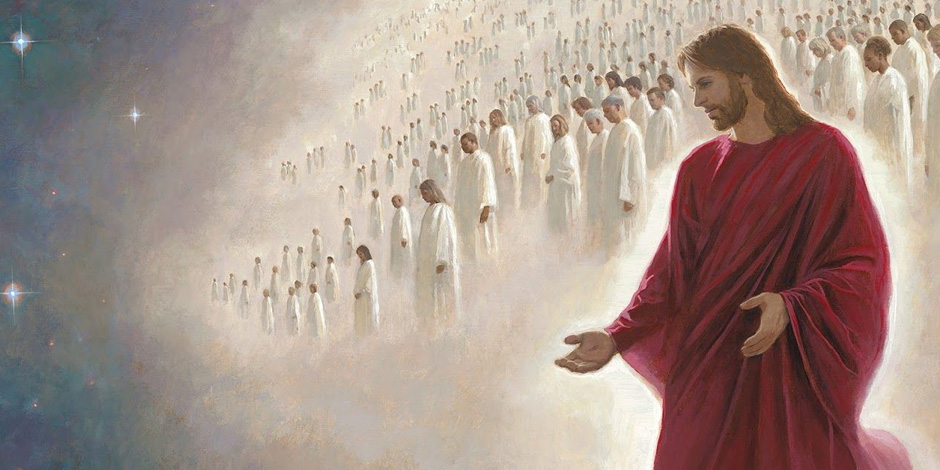
Yet, in the face of it all, the Lord has promised: “If ye are prepared ye shall not fear” (Doctrine and Covenants 38:30). Normal is not coming back, Jesus is. But before He does, hell will be unleashed in an unprecedented way. Prepare to survive so that you can be one who merrily meets the Lord when He comes to claim His Kingdom.










 The American Citadel