
It seems oxymoronic to associate communism with labor, unless you count forced labor in the GULAG, yet Labor Day’s roots run deep in communist soil. By all means, have a spectacular Labor Day – I’m going to go camping with family in the beautiful Idaho woods – but know why the holiday exists.
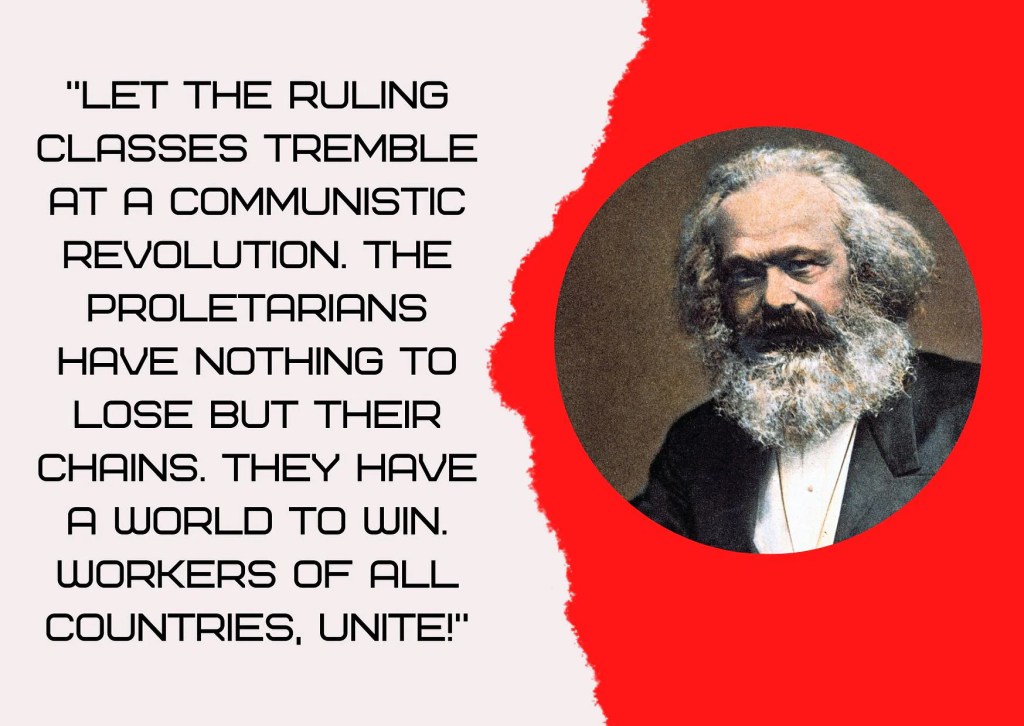
The 1880s were tumultuous years filled with violent strikes, rampant anarchism, and tremendous upheaval in the field of labor. Nearly all of this upheaval was sparked by socialists of varying stripes – anarchists, unionists, and outright communists. No event more perfectly captures the flavor of this anti-Americanism than the Chicago Haymarket Riots.
It’s fitting that the Haymarket Riots of 1886 began on May Day and in Chicago. Chicago was the first headquarters of the Communist Party USA (their headquarters is now New York City). On May 1, the international communist holiday that commemorates the date on which the Order of Illuminati was founded in 1776, tens of thousands of workers walked out of their jobs.
Over the next three days, more joined them in protesting and demanding an eight-hour day. In classic “something-for-nothing” socialist fashion, many of them harangued the city for ten hours’ of pay for eight hours’ of work. On May 4, as the rioters were gathered on Haymarket Square, someone threw a bomb into the crowd. The resulting clashes left seven police and at least four rioters dead, and sixty others injured.
No one ever positively identified the bomber, but eight rioters were arrested and charged with murder for their participation in the clashes. Of the eight, six had been born in Germany, one in England, and one in the United States. All belonged to subversive organizations or hostile labor unions, such as the Knights of Labor and Central Labor Union. Most of the eight belonged to the International Working People’s Association – a communist organization which was otherwise known as the First International. Karl Marx was not the founder, but he was highly engaged in its work.
The entire Haymarket Affair was planned and executed by Marxists, anarchists, and radicals. The Haymarket Riot became one of the primary catalysts, in an era of unionist violence, that prompted President Grover Cleveland in 1894 to declare the first Monday of September each year to be Labor Day.
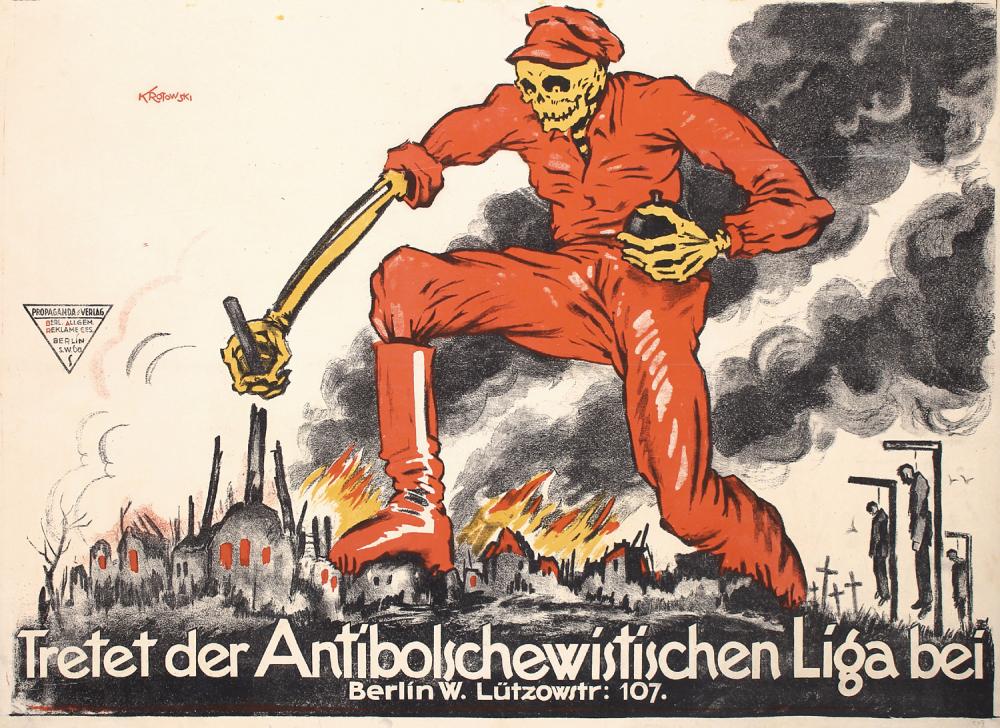
The communists proudly claim Labor Day as their own. Here is a smattering of statements made by communistic organizations. In an article originally published by Tim Goulet for Jacobin, and reproduced by International Socialist Organization, we find the following about Labor Day:
“Many depict it as a tokenistic “gift” from capitalist politicians who wanted a sanitized May Day that could capture militancy and disperse it into “responsible” channels. This narrative calls Labor Day a “bosses’ holiday” that marks the working class’s historic defeat.
“This not only misrepresents the day’s history, but also forces us to choose one holiday over the other, as if there were not enough room on the calendar for two days that celebrate workers.
“May Day undoubtedly belongs to us: It symbolizes internationalism and solidarity. But Labor Day also has roots in our radical tradition. The militant struggles of the 1880s produced both holidays, and Labor Day’s proponents also fought for the eight-hour day.
“However, as the labor movement evolved–fracturing across different social layers and political tendencies–the holidays took on different meanings. Labor Day now stands for the working class’s capture by conservative politicians, while May Day became synonymous with revolutionary action.
“But those who see Labor Day as a sop to “buy off” workers gloss over the holiday’s positive effects and the struggles of those who fought for it. The workers’ movement and the socialists so integral to its early days created Labor Day. It did not begin as a national holiday, but as self-activity in the streets.”
In 1904, Socialist Party of America presidential candidate Eugene V. Debs published a Labor Day greeting in the Social Democratic Herald. I found it on marxists.org. He said:
“Comrades, this is the day for Workingmen to think of the Class Struggle and the Ballot—the day for Labor to clasp the hand of Labor and girdle the globe with the International Revolutionary Solidarity of the Working Class.
“We are all one—all workers of all lands and climes. We know not color, nor creed, nor sex in the Labor Movement. We know only that our hearts throb with the same proletarian stroke, that we are keeping step with our class in the march to the goal and that the solidarity of Labor will vanquish slavery and Humanize the World.”
He may as well have quoted from the last line of The Communist Manifesto: “Working Men of All Countries, Unite!”
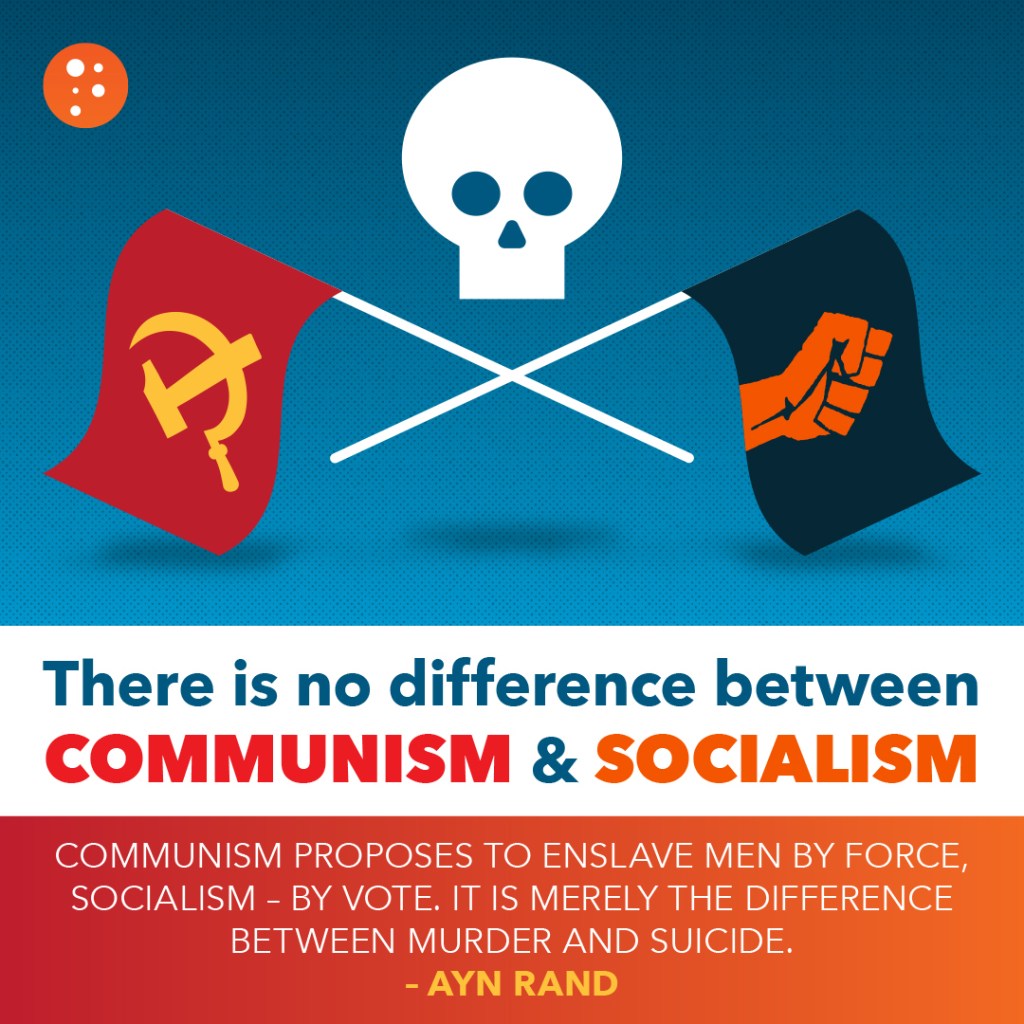
On marxist.com, we find these paragraphs claiming Labor Day for the socialists and militants:
“Depending on the source, it was first proposed in 1882 by either Peter McGuire or Matthew Maguire to the Central Labor Union of New York, as an official workers’ holiday. McGuire was General Secretary of the Brotherhood of Carpenters and Joiners and a co-founder of the American Federation of Labor. Matthew Maguire was a machinist and a member of the International Association of Machinists. Both were members of the same branch of the Socialist Labor Party. Regardless of who is ultimately responsible, Labor Day originated in the labor movement and was conceived of by socialists. . . .
“There is room in the calendar year for workers to have two Labor Days! The September holiday was conceived of and celebrated by socialists and militants within the labor movement, and we should remember and reclaim this history. In the words of Peter McGuire, one of the inspirers of the holiday, on Labor Day, we are to celebrate those who “have delved and carved all the grandeur that we behold.” The first Monday of September belongs to us and not the bosses!”
In a history of Labor Day published by Forbes, we read:
“Engels, the co-author of The Communist Manifesto, had high hopes for May Day, which originated in the United States. When the socialist-dominated organization known as the Second International jumped on the American bandwagon and adopted May 1 as International Labor Day, Engels confidently expected the proletariats of Europe and America to merge into one mighty labor movement and sweep capitalism into the dustbin of history.
“Things didn’t work out that way, of course, and the divergent Labor Day celebrations are part of the story.
“May Day’s origins can be traced to Chicago, where the Federation of Organized Trades and Labor Unions, under its leader Samuel Gompers, mounted a general strike on May 1, 1886, as part of its push for an eight-hour work day. On May 4, during a related labor rally in Haymarket Square, someone threw a bomb, which killed a policeman and touched off a deadly mêlée. As a result, four radical labor leaders were eventually hanged. . . .
“In 1888, Gompers’s union reorganized itself as the American Federation of Labor, and revived its push for the eight-hour day. Gompers laid plans for a strike to begin on May 1, 1890–the fourth anniversary of the walkout that had led to the Haymarket affair. Meanwhile, in Paris, a group of labor leaders were meeting to establish the Second International. To these Europeans, the executed Chicago radicals were revered martyrs. In an act of solidarity, the Second International set May 1, 1890, as a day of protest.
“Engels was thrilled. “As I write these lines, the proletariat of Europe and America is holding a review of its forces; it is organized for the first time as one army,” he wrote on the first May Day. “The spectacle we are now witnessing will make the capitalists and landowners of all lands realize that today the proletarians of all lands are, in very truth, united. If only Marx were with me to see it with his own eyes!”
“The first May Day was deemed a success, so the Second International adopted it as an annual event. And for a few years, it seemed as though May 1 might be on the way to becoming a rallying point for socialists in America, as it was elsewhere. The Panic of 1893 touched off a national wave of bankruptcies that plunged the nation into a deep depression–and depressions generally push workers toward radical solutions. Things came to a boil with the Pullman Strike, which erupted in Chicago in May 1894. The striking Pullman Palace Car Co. workers quickly won the support of the American Railway Union, led by Gompers’s rival Eugene V. Debs. Railroad traffic in much of the country was paralyzed.”

We see from this except, and those preceding, that Labor Day was spawned by the international Marxist movement. It is fundamentally a celebration of anarchism, violence, strikes, protests, and communism. The chief movers and shakers in the movement were socialists – and sometimes avowed communists. Disruption, discord, and death were its fruits. Now, we celebrate Labor Day, whether we know it or not, in honor of radicals and the conspiratorial network of traitors who inspired them to radicalism.
Have a stupendous holiday weekend. I know I will. Just remember the reason why you don’t have to work is because of the communist cancer in our body politic.
Zack Strong,
September 1, 2023
 The American Citadel