
“I shall rely therefore, confidently, on that Providence which has heretofore preservd, & been bountiful to me.” – George Washington to Martha Washington, June 18, 1775.
Presidents’ Day is formally and legally known as “Washington’s Birthday.” On this special day, I honor the Father of My Beloved Country, General George Washington, and direct the reader’s attention to the divine power that protected and guided this exceptional man, leader, and patriot.

On July 2, 1776, General George Washington issued General Orders to his fighting men, rousing them to manly action:
“The time is now near at hand which must probably determine, whether Americans are to be, Freemen, or Slaves; whether they are to have any property they can call their own; whether their Houses, and Farms, are to be pillaged and destroyed, and they consigned to a State of Wretchedness from which no human efforts will probably deliver them. The fate of unborn Millions will now depend, under God, on the Courage and Conduct of this army—Our cruel and unrelenting Enemy leaves us no choice but a brave resistance, or the most abject submission; this is all we can expect—We have therefore to resolve to conquer or die: Our own Country’s Honor, all call upon us for a vigorous and manly exertion, and if we now shamefully fail, we shall become infamous to the whole world—Let us therefore rely upon the goodness of the Cause, and the aid of the supreme Being, in whose hands Victory is, to animate and encourage us to great and noble Actions—The Eyes of all our Countrymen are now upon us, and we shall have their blessings, and praises, if happily we are the instruments of saving them from the Tyranny meditated against them. Let us therefore animate and encourage each other, and shew the whole world, that a Freeman contending for Liberty on his own ground is superior to any slavish mercenary on earth” (General George Washington, General Orders, July 2, 1776).
Washington reminded his men of the stakes – Liberty or death. He urged them to “rely upon the goodness of the Cause, and the aid of the supreme Being.” He knew from personal experience and firm conviction that God presided over the nations of the world and that trust in Him was indispensable to victory.
One week later, when Washington read the Declaration of Independence for the first time, his mind again turned humbly to God. He issued General Orders to his soldiers which directed his officers:
“To see that all inferior officers and soldiers pay them a suitable respect and attend carefully upon religious exercises: The blessing and protection of Heaven are at all times necessary but especially so in times of public distress and danger – The General hopes and trusts, that every officer, and man, will endeavour so to live, and act, as becomes a Christian Soldier defending the dearest Rights and Liberties of his country.
“The Honorable the Continental Congress, impelled by the dictates of duty, policy and necessity, having been pleased to dissolve the Connection which subsisted between this Country, and Great Britain, and to declare the United Colonies of North America, free and independent STATES: The several brigades are to be drawn up this evening . . . when the declaration of Congress, shewing the grounds & reasons of this measure, is to be read with an audible voice.
“The General hopes this important Event will serve as a fresh incentive to every officer, and soldier, to act with Fidelity and Courage, as knowing that now the peace and safety of his Country depends (under God) solely on the success of our arms: And that he is now in the service of a State, possessed of sufficient power to reward his merit, and advance him to the highest Honors of a free Country” (Washington, General Orders, July 9, 1776, in George Washington: Writings, New York: Library of America, 1997, 227-228).
It is significant that Washington’s first order of business upon learning his country was free and independent – at least in name – was to turn to God and encourage his fighting men to piety and Christian conduct. Washington understood that it was God who would see them through to victory. He knew that the “blessing and protection of Heaven” were absolutely necessary and that without them the American experiment would fail.
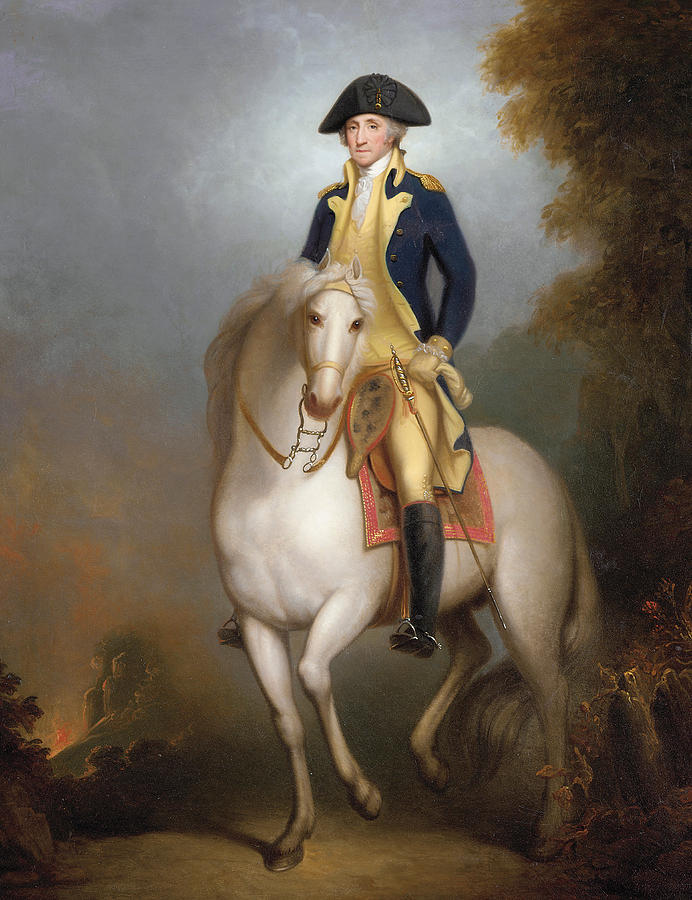
It is the same today, yet this is a lesson we have seemingly forgotten. If we wish to be free, we must rely upon God as firmly as George Washington did and then act with courage in a holy cause.
Previously, in January 1776, during the limbo between the shot heard ‘round the world and the Declaration of Independence, Washington had written to Joseph Reed:
“Thus it is that for more than two Months past I have scarcely immerged from one difficulty before I have plunged into another – how it will end God in his great goodness will direct, I am thankful for his protection to this time” (George Washington to Joseph Reed, January 4, 1776).
The Lord had protected Washington through the bloody battles of the French and Indian War when all signs pointed to his death. During the Battle of Monongahela, Washington should have been killed. Every other officer was in fact shot. Miraculously, Washington survived unscathed, writing later:
“But by the all-powerful dispensations of Providence, I have been protected beyond all human probability or expectation; for I had four bullets through my coat, and two horses shot under me, yet escaped unhurt, although death was leveling my companions on every side of me” (George Washington to John A. Washington, July 18, 1755).
Years later, in 1770, Washington met the Indian chief who led the Indians warriors who killed the other officers at the Battle of Monongahela. He gave this account:
“I have traveled a long and weary path that I might see the young warrior of the great battle. It was on the day when the white man’s blood mixed with the streams of our forests that I first beheld this chief [Washington].
“I called to my young men and said, mark yon tall and darling warrior? He is of the red-coat tribe – he hath an Indian’s wisdom, and his warriors fight as we do – himself alone exposed.
“Quick, let your aim be certain, and he dies. Our rifles were leveled, rifles which, but for you, knew not how to miss – ‘twas all in vain, a power mightier far than we, shielded you.
“Seeing you were under the special guardianship of the Great Spirit, we immediately ceased to fire at you. I am old and soon shall be gathered to the great council fire of my fathers in the land of shades, but ere I go, there is something bids me speak in the voice of prophecy: Listen! The Great Spirit protects that man, and guides his destinies – he will become the chief of nations, and a people yet unborn will hail him as the founder of a mighty empire. I am come to pay homage to the man who is the particular favorite of Heaven, and who can never die in battle” (Bob Gingrich, Founding Fathers vs. History Revisionists: In their own words, Founding Fathers SET THE RECORD STRAIGHT, AuthorHouse: Bloomington, IN, 2008, 29-30).
This account is often dismissed as a myth. It was recorded, however, by the step-grandson of General Washington, George Washington Parke Custis, who wrote of it:
“Dr. Craik then related the romantic and imposing incident of the old Indian’s prophecy, as it occurred on the banks of the Ohio in 1770, observing that, bred, as he himself was, in the rigid discipline of the Kirk of Scotland, he possessed as little superstition as any one, but that really there was a something in the air and manner of an old savage chief delivering his oracle amid the depths of the forest, that time or circumstances would never erase from his memory, and that he believed with the tawny prophet of the wilderness, that their beloved Washington was the spirit-protected being described by the savage, that the enemy could not kill him, and that while he lived the glorious cause of American Independence would never die” (G.W. Parke Custis, Recollections and Private Memoirs of Washington).
Dr. Craik was a friend of Washington’s who had been with him in 1755 and later in 1770 when the Indian chief gave his prophecy. Judge for yourself the veracity of his account. Nevertheless, it is factual that Washington was the only officer who somehow managed to avoid being shot during the disastrous Battle of Monongahela. Washington’s own account, cited earlier, that he had four bullets pierce his coat yet received no harm must also be reckoned with.
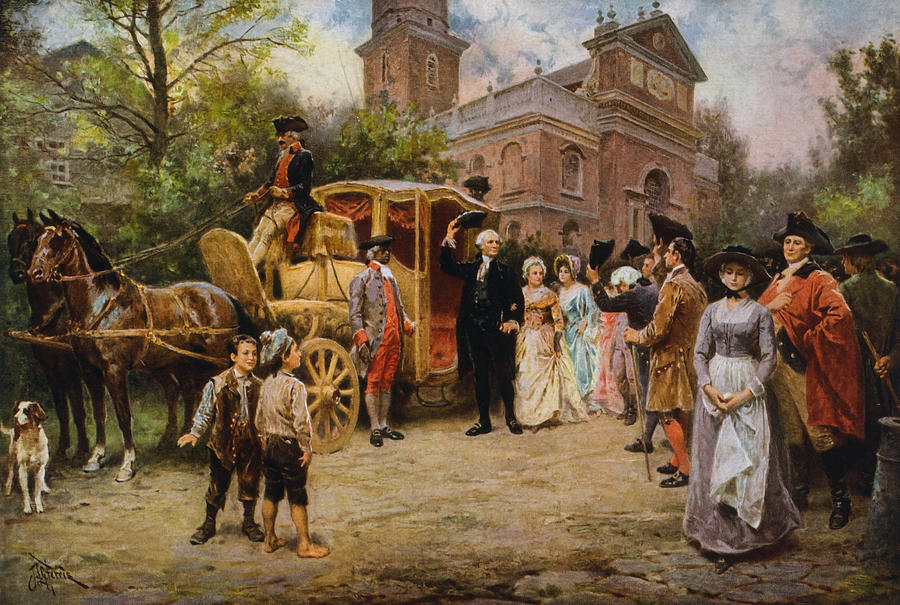
Is it really so hard to believe that God intervened to protect Washington? I submit that there are too many incidents in Washington’s life of supernatural protection and what skeptics would consider “coincidental” or “lucky” happenstances to be casually brushed aside. They must be dealt with. Washington’s own conviction that he was protected by Providence must also be treated. It is my undying conviction as well that Washington was the “particular favorite of Heaven” – a special instrument in God’s hands – and that America herself has been God’s “particular favorite” among the nations and remains humanity’s best hope.
It is a malicious myth that Georg Washington was an atheist or deist. The documentation is so great as to satisfy any honest inquirer that Washington was a Christian. Various facts about Washington are public knowledge. Washington was an Anglican who attended church at Christ Church in Alexandria, Virginia, and at Pohick Church. In both locations, he had special pews reserved for him. He was selected as a vestryman. He purchased a Bible for his wife. He maintained his own prayer book. And so on and so forth.
One of Washington’s prayer books is called Daily Sacrifice. It was discovered among Washington’s items years after his death. It is therefore disputed. Those who claim Washington was a deist reject its authenticity while others believe it genuine. Even though no one can definitively prove that Washington wrote the prayers, they are plausibly his. One of the prayers reads:
“Almighty God, and most merciful father, who didst command the children of Israel to offer a daily sacrifice to thee, that thereby they might glorify and praise thee for thy protection both night and day, receive, O Lord, my morning sacrifice which I now offer up to thee; I yield thee humble and hearty thanks that thou has preserved me from the danger of the night past, and brought me to the light of the day, and the comforts thereof, a day which is consecrated to thine own service and for thine own honor. Let my heart, therefore, Gracious God, be so affected with the glory and majesty of it, that I may not do mine own works, but wait on thee, and discharge those weighty duties thou requirest of me, and since thou art a God of pure eyes, and wilt be sanctified in all who draw near unto thee, who doest not regard the sacrifice of fools, nor hear sinners who tread in thy courts, pardon, I beseech thee, my sins, remove them from thy presence, as far as the east is from the west, and accept of me for the merits of thy son Jesus Christ, that when I come into thy temple, and compass thine altar, my prayers may come before thee as incense; and as thou wouldst hear me calling upon thee in my prayers, so give me grace to hear thee calling on me in thy word, that it may be wisdom, righteousness, reconciliation and peace to the saving of the soul in the day of the Lord Jesus. Grant that I may hear it with reverence, receive it with meekness, mingle it with faith, and that it may accomplish in me, Gracious God, the good work for which thou has sent it. Bless my family, kindred, friends and country, be our God & guide this day and for ever for his sake, who lay down in the Grave and arose again for us, Jesus Christ our Lord, Amen.”

If written by Washington, this is a beautiful testament to his faith. Laying aside this particular prayer book, the evidence is overwhelming that Washington believed in God and led a Christian life. I recite only a few points of a summary of the matter given by historian Peter Lillback in his excellent tome George Washington’s Sacred Fire. He wrote:
“His home training was clearly Christian in orientation, in terms of the tutors and texts, as evidenced by extant schoolbooks and school papers. His childhood education was conducted under a Christian father, until Augustine Washington died when George was eleven, and then under his devout Christian mother.
“He pursued a career in the military that brought him into a highly structured environment that regularly had morning and evening prayers in accordance with the liturgical Christian “divine service” of the Book of Common Prayer. The military vocabulary of his era was marked by a direct use of Christian theological terms: pardon, redemption, the atonement, grace, mercy, forgiveness, salvation, justification, imputation, of guilt, appeal to heaven.
“He married a devout Christian woman and raised his adopted children under the tutorship of Anglican clergy, buying for his children not only explicitly Christian text books, but also prayer books and Bibles, with their names personally gilded upon them.
“He served in the leadership of the Anglican Church, taking vows not only to the worship and doctrines of the Christianity expressed by the Anglican Church, but his attendance, contributions, and involvement in issues concerning the church in terms of church government and the House of Burgesses were exemplary. His ecclesiastical vocabulary is extensive.
“He served in the role of sponsor of eight children in the sacrament of Christian baptism. . . .
“He openly encouraged the work of the clergy and chaplains in his roles as military, ecclesiastical, and civil leader. When such were not available to do their work, he performed their functions, both leading in prayers, and, even conducting a Christian funeral in the case of General Braddock in 1755.
“His vocabulary is replete with theological concerns. He speaks of God some 140 times, the divine 95 times, heaven 133 times, Providence 270 times, and uses various honorific titles for God some 95 times. He alludes to approximately 200 different biblical texts, some of them scores of times, and does so in a way that shows that he was remarkably biblically literate.
“He was explicitly a praying man, as evidenced by a custom-size prayer book that he ordered to fit comfortably in his pocket. More than 100 different prayers (or references to prayer) in his own hand were found throughout his private and public letters” (Peter A. Lillback, George Washington’s Sacred Fire, Bryn Mawr, Pennsylvania: Providence Forum Press, 2006, 612-615).

Washington, the great General of the Revolution and the Father of Our County, was a Bible-believing Christian who relied upon God, called upon God in prayer, and walked in the faith of Jesus Christ. The golden thread of faith in God runs throughout Washington’s public and private life. I call upon two more witnesses to Washington’s deep-seated faith. In his First Inaugural Address, Washington said:
“[I]t would be peculiarly improper to omit in this first official act my fervent supplications to that Almighty Being who rules over the universe, who presides in the councils of nations, and whose providential aids can supply every human defect, that His benediction may consecrate to the liberties and happiness of the people of the United States a Government instituted by themselves for these essential purposes, and may enable every instrument employed in its administration to execute with success the functions allotted to his charge. In tendering this homage to the Great Author of every public and private good, I assure myself that it expresses your sentiments not less than my own, nor those of my fellow-citizens at large less than either. No people can be bound to acknowledge and adore the Invisible Hand which conducts the affairs of men more than those of the United States. Every step by which they have advanced to the character of an independent nation seems to have been distinguished by some token of providential agency; and in the important revolution just accomplished in the system of their united government the tranquil deliberations and voluntary consent of so many distinct communities from which the event has resulted can not be compared with the means by which most governments have been established without some return of pious gratitude, along with an humble anticipation of the future blessings which the past seem to presage” (George Washington, First Inaugural Address, April 30, 1789).
Washington often expressed the idea that to not acknowledge God’s hand in the rise of the United States was as impossible as it was ungrateful. For Washington’s part, he declared his public belief in and reliance upon the God of Heaven whose conspicuous miracles had brought the United States to their happy state of Independence.
It is this unshakable belief in the Almighty that led President Washington to give the following admonition in his Farewell Address to the nation:
“Of all the dispositions and habits which lead to political prosperity, religion and morality are indispensable supports. In vain would that man claim the tribute of patriotism, who should labor to subvert these great pillars of human happiness, these firmest props of the duties of men and citizens. The mere politician, equally with the pious man, ought to respect and to cherish them. A volume could not trace all their connections with private and public felicity. Let it simply be asked: Where is the security for property, for reputation, for life, if the sense of religious obligation desert the oaths which are the instruments of investigation in courts of justice? And let us with caution indulge the supposition that morality can be maintained without religion. Whatever may be conceded to the influence of refined education on minds of peculiar structure, reason and experience both forbid us to expect that national morality can prevail in exclusion of religious principle.
“It is substantially true that virtue or morality is a necessary spring of popular government. The rule, indeed, extends with more or less force to every species of free government. Who that is a sincere friend to it can look with indifference upon attempts to shake the foundation of the fabric?
“Promote then, as an object of primary importance, institutions for the general diffusion of knowledge. In proportion as the structure of a government gives force to public opinion, it is essential that public opinion should be enlightened” (George Washington, Farewell Address, 1796).
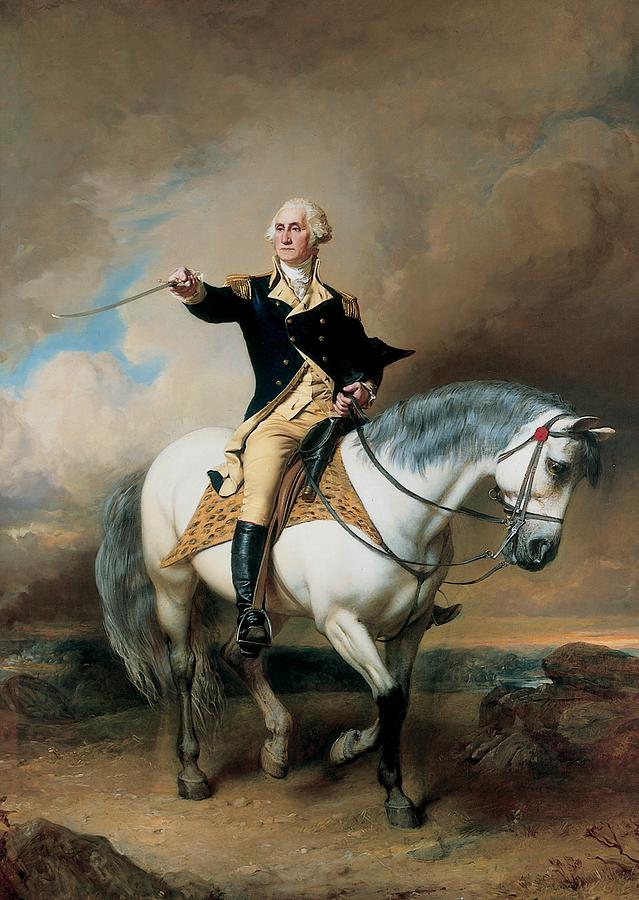
What did the departing Washington urge his country to do? He urged them to do as he had always done and trust in God. He warned them not to trust anyone who would “shake the foundation” of “religion and morality” that undergirded the United States. Religion and morality, not armies, navies, Congress, courts, or wealth, are the “indispensable supports” of the nation. They are the “pillars” of civil society, happiness, and progress, and ultimately the “necessary spring of popular government.”
We have failed to heed Washington’s warnings. We have elected unprincipled people to positions of power. We have become an immoral society that revels in its immorality. We have hurled God headlong from public discourse, the courts, and the halls of government. We look upon Christians and people of faith, piety, and goodness as aberrations, weird, old-fashioned, “prudish,” and even dangerous. George Washington would be hated and attacked by America in 2024. What a sad commentary on this nation’s steep decline.
Some readers may ask why I have written on this topic. It is not merely fun history. All of this is imperative to understand because history repeats itself in cycles and patterns. We are now on the brink of civil war and revolution and saddled with a wretched government whose tyranny far surpasses King George III’s. In my estimation, we stand in approximately the same position as the colonies stood in early 1775 prior to the Battles of Lexington and Concord. As we embark on the course of restoring our Republic and purging the government of the traitors and tyrants who have ensconced themselves in it and have despicably draped themselves in the flag, our trust and hope must be in the right place – in God.
When Washington waded through the limbo of conflict prior to war being declared, he trusted in “the great goodness” of God for his protection. When he learned of the Declaration of Independence, he called upon his men to “so to live, and act, as becomes a Christian Soldier defending the dearest Rights and Liberties of his country” and to “attend carefully upon religious exercises” so that the “blessing and protection of Heaven” could grace them. On the eve of battle, he inspired his soldiers to believe in “the aid of the supreme Being, in whose hands Victory is.” When he accepted the call to serve as our first President, he reminded us that we owed our Independence to that “Almighty Being who rules over the universe” and whose “Invisible Hand” had overshadowed and guided “every step” of the process. When he left public service, he again told the American People that “religion and morality” were the “firmest props” of society and happiness and that no “sincere friend” to Liberty would dare demean them.

If we wish to ever be a free nation again that is the particular favorite of Heaven, we will follow George Washington’s example and trust in that same God who protected General Washington against all odds, who carried him through the hardships of Revolution, and who made America free. As the sounds of war rumble closer, we will best prepare by humbling ourselves before our Maker and His Son Jesus Christ and by coupling our patriotic exertions with faith and virtue. That is what our beloved General Washington did. Washington’s firm reliance upon the Almighty Ruler of Heaven made America and only the same level of unshakable trust in God will preserve America.
Zack Strong
February 19, 2024
 The American Citadel
This is so good. I enjoyed it. We really need a Washington today.
LikeLiked by 1 person