This week is Holy Week – the commemoration of the Lord’s final week in mortality before He redeemed all mankind who believe in Him in the Garden of Gethsemane and on the Cross of Calvary. We all have need of being cleansed, redeemed, saved, and perfected by the Savior. All of us have “sinned, and come short of the glory of God” (Romans 3:23) and have deviated at times from His “way of holiness” (Isaiah 35:8). Only Satan, however, wants us to define ourselves by our sins and shortcomings. The Lord wants us to define ourselves by our acceptance of Him, by our sincere striving to follow Him, and by the redemption He freely offers us.
I repeat, we all “have sinned, and come short of the glory of God.” Because of that basic fact and our inability to save ourselves because we have violated divine law and removed ourselves from God, we have need of a Redeemer to satisfy the demands of justice against us, to pay our debt and set us free, and to reconcile us to our Father in Heaven. Paul taught that we are “justified freely by his grace through the redemption that is in Christ Jesus: Whom God hath set forth to be a propitiation through faith in his blood, to declare his righteousness for the remission of sins that are past” (Romans 3:23-25).
During His final Passover seder, known as the Last Supper, the Lord gave us symbols of His redemption, bread and water (or wine). The bread represented “my body which is given for you” and the cup which “is the new testament in my blood, which is shed for you” (Luke 22:19-20). Matthew’s account of these words adds that the Lord’s blood, which symbolizes the “new testament,” “is shed for many for the remission of sins” (Matthew 26:28). The word testament means covenant. The Lord’s blood is the supreme covenant – that by which we are cleansed, redeemed, and saved from sin.
The Apostle Paul explained that we have been “purchased with his own blood” (Acts 20:28). He also taught of Jesus “in whom we have redemption through his blood, the forgiveness of sins, according to the riches of his grace” (Ephesians 1:7). Yes, we are saved by “the blood of Christ, who through the eternal Spirit offered himself without spot to God.” It is “for this cause he is the mediator of the new testament” that they who receive Him “might receive the promise of eternal inheritance” (Hebrews 9:14-15).
The practice of animal sacrifice was given to Adam and Eve, was practiced by the patriarchs such as Noah and Abraham, and was later codified under the Law of Moses given to Israel. This practice, though barbaric to some, was intended to point men’s souls to Christ. It was a foreshadowing of the final sacrifice to be made by the Son of God for mankind’s sins. It was a most hopeful act. Perhaps the gory nature of the blood and burning of animal flesh was intended to impress upon the practitioners the extreme suffering the Savior would endure for them.
John the Baptist identified Jesus as the “Lamb of God, which taketh away the sin of the world” (John 1:29). Peter also identified Him as the Lamb of God, stating that we were redeemed “with the precious blood of Christ, as a lamb without blemish and without spot” (1 Peter 1:18-19). It is through “obeying the truth” and having faith that we are “born again” and “purified” by the blood of the Lamb (1 Peter 1:21-23).
The ancient Israelite prophet Amulek testified boldly of the redemption of Christ and how it is absolutely imperative for our salvation. Here is his witness:
“I will testify unto you of myself that these things are true. Behold, I say unto you, that I do know that Christ shall come among the children of men, to take upon him the transgressions of his people, and that he shall atone for the sins of the world; for the Lord God hath spoken it.
“For it is expedient that an atonement should be made; for according to the great plan of the Eternal God there must be an atonement made, or else mall mankind must unavoidably perish; yea, all are hardened; yea, all are fallen and are lost, and must perish except it be through the atonement which it is expedient should be made.
“For it is expedient that there should be a great and last sacrifice; yea, not a sacrifice of man, neither of best, neither of any manner of fowl; for it shall not be a human sacrifice; but it must be an infinite and eternal sacrifice. . . .
“And behold, this is the whole meaning of the law, every whit pointing to that great and last sacrifice; and that great and last sacrifice will be the Son of God, yea, infinite and eternal.
“And thus he shall bring salvation to all those who shall believe on his name; this being the intent of this last sacrifice, to bring about the bowels of mercy, which overpowereth justice, and bringeth about means unto men that they may have faith unto repentance.
“And thus mercy can satisfy the demands of justice, and encircles them in the arms of safety, while he that exercises no faith unto repentance is exposed to the whole law of the demands of justice; therefore only unto him that has faith unto repentance is brought about the great and eternal plan of redemption.
“Therefore may God grant unto you, my brethren, that ye may begin to exercise your faith unto repentance, that ye begin to call upon his holy name, that he would have mercy upon you;
“Yea, cry unto him for mercy; for he is mighty to save” (Alma 34:8-10, 14-18).
Jesus is the Lamb of God who atoned for our sins, ransomed us by His blood, and gave His life for those who believe on His name. He was the last great sacrifice. He fulfilled the law of sacrifice by voluntarily spilling His blood to save us vicariously. His redemptive act placed Him in the position of Mediator. As the Mediator, He sets the terms and conditions by which His blood and grace may save us. At their core, these conditions are faith and repentance. When we exercise faith enough to sincerely repent, which means abandoning bad behaviors and striving to follow the Lord, we are encircled in “the arms of safety” by the One who is “mighty to save.”
Knowledge of the Lord’s sacrifice was given to Adam and Eve. Adam was commanded to teach his children this doctrine:
“Wherefore teach it unto your children, that all men, everywhere, must repent, or they can in nowise inherit the kingdom of God, for no unclean thing can dwell there, or dwell in his presence; for, in the language of Adam, Man of Holiness is his name, and the name of his Only Begotten is the Son of Man, even Jesus Christ, a righteous Judge, who shall come in the meridian of time.
“Therefore I give unto you a commandment, to teach these things freely unto your children, saying:
“That by reason of transgression cometh the fall, which fall bringeth death, and inasmuch as y e were born in to the world by water, and blood, and the spirit, which I have made, and so became of dust a living soul, even so ye must be born again into the kingdom of heaven, of water, and of the Spirit, and be cleansed by blood, even the blood of mine Only Begotten; that ye might be sanctified from all sin, and enjoy the words of eternal life in this world, and eternal life in the world to come, even immortal glory;
“For by the water ye keep the commandment; by the Spirit ye are justified, and by the blood ye are sanctified. . . .
“And now, behold, I say unto you: This is the plan of salvation unto all men, through the blood of mine Only Begotten, who shall come in the meridian of time” (Moses 6:57-60, 62).
I hope you see how incomparably important the blood of Jesus Christ is in the Plan of Salvation. It is the element which cleanses and sanctifies us. Without the blood of Christ, we would be forever lost and without the possibility of salvation. His blood reconciles us with God, redeems us from sin by answering the demands of a broken law and by purifying us and purging away our sins, and is the supreme token that we are His. The blood token was key in the ancient Israelite Passover ritual precisely because it foretold the Lord’s Atonement in Gethsemane and His sacrifice on the Cross. It is to Christ and Him alone that we must look for redemption.
I witness with all my soul that Jesus is the Lamb of God and that during Holy Week He fulfilled the Plan by which we may become holier. From the cleansing of the temple to the washing of the apostles’ feet to the administration of the sacrament to the final acts of Atonement, death on the Cross, and rising from the tomb, everything about Holy Week implies cleansing, purifying, and redemption. The Lord wishes us to be holier than we are, better than we have been, and more than we have imagined. We do it through His blood freely given for us. We access His blood through faith, repentance, and sincere striving to follow our Master, the King of Israel, the Lamb of God. This week, and forever, let us rely upon our Savior and with His cleansing grace become a little holier.
When the ancient House of Israel was in bondage in Egypt, the Lord sent progressively worse plagues upon Egypt until wicked pharaoh finally agreed to let Moses and the Israelites depart and be at Liberty. The last plague was the most severe of all – the killing of the firstborn of every family that did not possess a special token. The token was symbolic – the blood of a lamb. The scriptures recount what the Lord told His prophet, the indomitable Moses:
“I will pass through the land of Egypt this night, and will smite all the firstborn in the land of Egypt, both man and beast; and against all the gods of Egypt I will execute judgment: I am the Lord.
“And the blood shall be to you for a token upon the houses where ye are: and when I see the blood, I will pass over you, and the plague shall not be upon you to destroy you, when I smite the land of Egypt.
“And this day shall be unto you for a memorial; and ye shall keep it a feast to the Lord throughout your generations; ye shall keep it a feast by an ordinance for ever” (Exodus 12:12-14).
After receiving these harrowing instructions, Moses relayed them to the Israelites. What he said bears repeating:
“Then Moses called for all the elders of Israel, and said unto them, Draw out and take you a lamb according to your families, and kill the passover.
“And ye shall take a bunch of hyssop, and dip it in the blood that is in the basin, and strike the lintel and the two side posts with the blood that is in the basin; and none of you shall go out at the door of his house until the morning.
“For the Lord will pass through to smite the Egyptians; and when he seeth the blood upon the lintel, and on the two side posts, the Lord will pass over the door, and will not suffer the destroyer to come in unto your houses to smite you.
“And ye shall observe this thing for an ordinance to thee and to thy sons for ever.
“And it shall come to pass, when ye be come to the land which the Lord will give you, according as he hath promised, that ye shall keep this service.
“And it shall come to pass, when your children shall say unto you, What mean ye by this service?
“That ye shall say, It is the sacrifice of the Lord’s passover, who passed over the houses of the children of Israel in Egypt, when he smote the Egyptians, and delivered our houses. And the people bowed the head and worshipped” (Exodus 12:21-27).
What was it that saved the Israelites? Was it Moses? Was it their sheltering at home? Was it the blood of the slain lambs? No. What saved them was their faith in, and obedience to, Jesus Christ who was the true Lamb who would be willingly sacrifice Himself to atone for the world. The blood of Christ, not the blood of beasts, redeemed the Israelites.
Blood is an important symbol in the Gospel of Jesus Christ. In the passage cited above, it is called a “token.” A token may be defined as “a sign,” “a mark,” or “a memorial of friendship.” The sign of the slain lamb’s blood is a foreshadowing of the death and Atonement of Jesus Christ. The mark of the blood is an identifier of true disciples. The memorial of friendship of the blood is an eternal covenant between Israel and the Savior of mankind.
“Gethsemane” by J. Kirk Richards.
Several scriptural references to the redeeming blood of Christ seem appropriate. The Apostle Paul taught of Christ Jesus that “we have redemption through his blood, the forgiveness of sins, according to the riches of his grace” (Ephesians 1:7).
The same man of God also told the Romans:
“[A] all have sinned, and come short of the glory of God;
“Being justified freely by his grace through the redemption that is in Christ Jesus:
“Whom God hath set forth to be a propitiation through faith in his blood, to declare his righteousness for the remission of sins that are past, through the forbearance of God;
“To declare, I say, at this time his righteousness: that he might be just, and the justifier of him which believeth in Jesus” (Romans 3:23-26).
Paul then told the Colossians to give:
“thanks unto the Father, which hath made us meet to be partakers of the inheritance of the saints in light:
“Who hath delivered us from the power of darkness, and hath translated us into the kingdom of his dear Son:
“In whom we have redemption through his blood, even the forgiveness of sins. . . .
“For it pleased the Father that in him should all fulness dwell;
“And, having made peace through the blood of his cross, by him to reconcile all things unto himself” (Colossians 1:12-14, 19-20).
Writing to the Hebrews, Paul explained that the Lord had to sacrifice His own blood to bring about the redemption of the world. The eternal law of God required a blood sacrifice. Paul taught in the context of the Passover, Moses, and the sacrifice of lambs under the ancient law. He explained that redemption comes:
“Neither by the blood of goats and calves, but by his own blood he entered in once into the holy place, having obtained eternal redemption for us.
“For if the blood of bulls and of goats, and the ashes of an heifer sprinkling the unclean, sanctifieth to the purifying of the flesh:
“How much more shall the blood of Christ, who through the eternal Spirit offered himself without spot to God, purge your conscience from dead works to serve the living God?
“And for this cause he is the mediator of the new testament, that by means of death, for the redemption of the transgressions that were under the first testament, they which are called might receive the promise of eternal inheritance.
“For where a testament is, there must also of necessity be the death of the testator.
“For a testament is of force after men are dead: otherwise it is of no strength at all while the testator liveth. . . .
“And almost all things are by the law purged with blood; and without shedding of blood is no remission. . . .
“. . . now once in the bend of the world hath [Christ] appeared to put away sin by the sacrifice of himself.
“And as it is appointed unto men once to die, but after this the judgment:
“So Christ was once offered to bear the sins of many; and unto them that look for him shall he appear the second time without sin unto salvation” (Hebrews 9:12-17, 22, 26-28).
Jesus sacrificed Himself because the eternal law by which even God is bound required it. It is by the blood of a God that man is purged of wickedness. It is by the shedding of blood that remission of sins is possible. It is by the Garden of Gethsemane, the Cross of Calvary, and the empty Tomb, that mankind could, if they would have faith in the Lord and heed His counsel to “follow me,” ascend with their Redeemer into Heaven to inherit all that God their Father is and has.
The Savior foretold His own death and the purpose His shed blood would serve. He told those who would listen:
“Verily, verily, I say unto you, Except ye eat the flesh of the Son of man, and drink his blood, ye have no life in you.
“Whoso eateth my flesh, and drinketh my blood, hath eternal life; cand I will raise him up at the last day.
“For my flesh is meat indeed, and my blood is drink indeed.
“He that eateth my flesh, and drinketh my blood, dwelleth in me, and I in him. . . .
“It is the spirit that quickeneth; the flesh profiteth nothing: the words that I speak unto you, they are spirit, and they are life.” (John 6:53-56, 63).
Note that the Savior was not speaking literally. No one drinks His blood or eats His flesh when they partake of the sacraments of the Lord’s supper. This is figurative and symbolic – a token. A blood token. The Lord was simply confirming what all the prophets had prophesied about His death and Atonement, and further teaching that only by looking to Him, doing His words, and partaking of His spirit, could man be saved.
An Israelite prophet-king named Benjamin, who lived in ancient America in the second century B.C., gave an amazing sermon about the Atonement of Jesus Christ scarcely equaled in holy writ. He persuasively and powerfully taught:
“For behold, the time cometh, and is not far distant, that with power, the Lord Omnipotent who reigneth, who was, and is from all eternity to all eternity, shall come down from heaven among the children of men, and shall dwell in a tabernacle of clay, and shall go forth amongst men, working mighty miracles, such as healing the sick, raising the dead, causing the lame to walk, the blind to receive their sight, and the deaf to hear, and curing all manner of diseases.
“And he shall cast out devils, or the evil spirits which dwell in the hearts of the children of men.
“And lo, he shall suffer temptations, and pain of body, hunger, thirst, and fatigue, even more than man can suffer, except it be unto death; for behold, blood cometh from every pore, so great shall be his anguish for the wickedness and the abominations of his people.
“And he shall be called Jesus Christ, the Son of God, the Father of heaven and earth, the Creator of all things from the beginning; and his mother shall be called Mary.
“And lo, he cometh unto his own, that salvation might come unto the children of men even through faith on his name; and even after all this they shall consider him a man, and say that he hath a devil, and shall scourge him, and shall crucify him.
“And he shall rise the third day from the dead; and behold, he standeth to judge the world; and behold, all these things are done that a righteous judgment might come upon the children of men.
“For behold, and also his blood atoneth for the sins of those who have fallen by the transgression of Adam, who have died not knowing the will of God concerning them, or who have ignorantly sinned.
“But wo, wo unto him who knoweth that he rebelleth against God! For salvation cometh to none such except it be through repentance and faith on the Lord Jesus Christ.
“And the Lord God hath sent his holy prophets among all the children of men, to declare these things to every kindred, nation, and tongue, that thereby whosoever should believe that Christ should come, the same might receive remission of their sins, and rejoice with exceedingly great joy, even as though he had already come among them.
“Yet the Lord God saw that his people were a stiffnecked people, and he appointed unto them a law, even the law of Moses.
“And many signs, and wonders, and types, and shadows showed he unto them, concerning his coming; and also holy prophets spake unto them concerning his coming; and yet they hardened their hearts, and understood not that the law of Moses availeth nothing except it were through the atonement of his blood. . . .
“. . . I say unto you, that there shall be no other name given nor any other way nor means whereby salvation can come unto the children of men, only in and through the name of Christ, the Lord Omnipotent.
“For behold he judgeth, and his judgment is just; and the infant perisheth not that dieth in his infancy; but men drink damnation to their own souls except they humble themselves and become as little children, and believe that salvation was, and is, and is to come, in and through the atoning blood of Christ, the Lord Omnipotent” (Mosiah 3:5-15, 17-18).
Jesus Christ is the only One who can save us. His redemption is for all who will believe in Him, repent of their sins, and walk in faithful obedience to the commandments. A remission of sins comes only through His blood, on His terms, in His way. Unless we humble ourselves and trust in “the atoning blood of Christ, the Lord Omnipotent,” we have no promise of salvation.
Some fifty years after King Benjamin delivered those inspired words, a great missionary named Amulek also testified of the necessity of the Savior’s atoning sacrifice. He preached:
“Behold, I say unto you, that I do know that Christ shall come among the children of men, to take upon him the transgressions of his people, and that he shall atone for the sins of the world; for the Lord God hath spoken it.
“For it is expedient that an atonement should be made; for according to the great plan of the Eternal God there must be an atonement made, or else all mankind must unavoidably perish; yea, all are hardened; yea, all are fallen and are lost, and must perish except it be through the atonement which it is expedient should be made.
“For it is expedient that there should be a great and last sacrifice; yea, not a sacrifice of man, neither of beast, neither of any manner of fowl; for it shall not be a human sacrifice; but it must be an infinite and eternal sacrifice.
“Now there is not any man that can sacrifice his own blood which will atone for the sins of another. . . . .
“And behold, this is the whole meaning of the law [of Moses], every whit pointing to that great and last sacrifice; and that great and last sacrifice will be the Son of God, yea, infinite and eternal.
“And thus he shall bring salvation to all those who shall believe on his name; this being the intent of this last sacrifice, to bring about the bowels of mercy, which overpowereth justice, and bringeth about means unto men that they may have faith unto repentance.
“And thus mercy can satisfy the demands of justice, and encircles them in the arms of safety, while he that exercises no faith unto repentance is exposed to the whole law of the demands of justice; therefore only unto him that has faith unto repentance is brought about the great and eternal plan of redemption.
“Therefore may God grant unto you, my brethren, that ye may begin to exercise your faith unto repentance, that ye begin to call upon his holy name, that he would have mercy upon you;
“Yea, cry unto him for mercy; for he is mighty to save. . . .
“Yea, I would that ye would come forth and harden not your hearts any longer; for behold, now is the time and the day of your salvation; and therefore, if ye will repent and harden not your hearts, immediately shall the great plan of redemption be brought about unto you. . . .
“For behold, if ye have procrastinated the day of your repentance even until death, behold, ye have become subjected to the spirit of the devil, and he doth seal you his; therefore, the Spirit of the Lord hath withdrawn from you, and hath no place in you, and the devil hath all power over you; and this is the final state of the wicked.
“And this I know, because the Lord hath said he dwelleth not in unholy temples, but in the hearts of the righteous doth he dwell; yea, and he has also said that the righteous shall sit down in his kingdom, to go no more out; but their garments should be made white through the blood of the Lamb” (Alma 34:8-11, 14-18, 31, 35-36).
Powerful doctrine. An atonement was necessary to redeem fallen man. In our fallen state, we could not save ourselves. We had to rely upon the mercy of the Son of God. We had to exercise faith in Him and repent, per the terms and conditions He set in the beginning. Those who do not follow the terms and conditions are subject to the justice of the law. Those who follow the Lord in faith are surrounded by mercy and grace and are redeemed by the Redeemer.
Without the blood of the Lamb of God, ancient Israel could not have escaped Egypt. Without the blood of the Lamb of God today, none of us can escape our fallen natures and our sins. It is only by the blood of Jesus Christ, and the faith we have in Him which activates it on our behalf, that we are saved.
One of the clearest teachings on the salvific nature of the Lord’s sinless blood comes from Enoch. Enoch related that the following instruction was given to Adam by the Lord:
“[B]y reason of transgression cometh the fall, which fall bringeth death, and inasmuch as ye were born into the world by water, and blood, and the spirit, which I have made, and so became of dust a living soul, even so ye must be born again into the kingdom of heaven, of water, and of the Spirit, and be cleansed by blood, even the blood of mine Only Begotten; that ye might be sanctified from all sin, and enjoy the words of eternal life in this world, and eternal life in the world to come, even immortal glory;
“For by the water ye keep the commandment; by the Spirit ye are justified, and by the blood ye are sanctified” (Moses 6:59-60).
When we keep the commandments, we receive the Spirit as our companion and the blood of Jesus redeems us, cleanses us, and sanctifies us. Whereas we are born into earth life in blood, we are reborn into eternal life in the blood of Christ. Unless we do as the Savior commands, we have no life in us, no Spirit to abide with us, and no blood to cleanse us.
“The Angel of Death and the First Passover” by C. Schonhew, 1897
We now bring this full circle by a quote from a modern prophet of the Lord, John Taylor, who wrote in The Mediation and the Atonement the following:
“[W]hen the destroying angel passed by the houses of the children of Israel he found the blood of a lamb sprinkled on the door post; which was a type of the blood of Christ, the Lamb of God. The angel who was the executor of justice could not touch those who were protected by that sacred symbol; because that prefigured the sacrifice of the Son of God, which was provided at the beginning of creation for the redemption of the human family, and which was strictly in accordance with provisions then made by the Almighty for that purpose — “the Lamb slain from before the foundation of the world” —and accepted in full as an atonement for the transgressions of mankind, according to the requirements of eternal justice and agreed to by the Savior and His Father. A proposition is made to meet the requirements of justice, which proposal is accepted by the contracting parties, all these contracting parties being satisfied with the arrangement thus made. . . .
“Who the redeemed, except those who have accepted the terms of the ransom thus provided? The ransom being provided and accepted, the requirements of justice are met, for those contracts are provided and sanctioned by the highest contracting parties that can be found in the heavens, and the strongest, most indubitable and infinite assurances are given for the fulfilment of that contract, and until the contract is fulfilled the sacrifices are offered as a token and remembrance of the engagements and covenants entered into. God gave a token to Noah, of a rainbow, which should be a sign between Him and mankind that He would nevermore destroy the earth by water; He accepted these sacrifices as a token of the covenant that the Messiah should come to take away sin by the sacrifice of Himself, and thus fulfil the covenant, pertaining to this matter, made before the world was. . . .
“. . . the Lord, through the sprinkling of the blood of a lamb on the door- posts of the Israelites, having saved the lives of all the first-born of Israel, made a, claim upon them for their services in His cause. It is written:
““And I, behold, I have taken the Levites from among the children of Israel instead of all the first- born that openeth the matrix among the children of Israel; therefore the Levites shall be mine; because all the first- born are mine; for on the day that I smote all the first-born in the land of Egypt I hallowed unto me all the first -born in Israel, both man and beast; mine they shall be : I am the Lord.” — Num., iii, 12, 13.
“But the first-born of the Egyptians, for whom no lamb as a token of the propitiation was offered, were destroyed. It was through the propitiation and atonement alone that the Israelites were saved, and, under the circumstances they must have perished with the Egyptians, who were doomed, had it not been for the contemplated atonement and propitiation of Christ, of which this was a figure” (John Taylor, An Examination Into and an Elucidation of the Great Principle of the Mediation and Atonement of Our Lord and Savior Jesus Christ, 106-108).
Israel would have been lot without the Lord and the promise of His redemption, just as the Egyptians were lost and cursed without it. We, too, sit in an apostate condition if we reject the Lord Jesus Christ, His living oracles, His Priesthood authority, and His revealed words, laws, and ordinances. His blood does not redeem those who do not obey His terms and conditions. Those who voluntarily use their agency to submit to Him, have faith in Him, and give service in His cause, have the supreme token of God’s friendship, blessing, and approval to rely upon – the blood of the Lamb of God.
As Passover and Easter approach, we can worship the Lord, and show authentic appreciation for His atoning blood, by rekindling our faith in His holy name, repenting of our sins, humbling ourselves as an innocent little child, and following the teachings which come from His lips and from the mouths of the men He has set as prophets and apostles in His Church.
I testify that Jesus is the Christ, that He lives, that He loves each of us, that He died for all mankind, and that His blood will protect, purge, purify, and eventually perfect those who follow Him in faith. If, at the Judgment Day, the blood of the Lamb of God is found upon the doorposts of our heart, we will hear the Lord say to us, “Well done, thou good and faithful servant: thou hast been faithful over a few things, I will make thee ruler over many things: enter thou into the joy of thy lord” (Matthew 25:21).
The internet is full of feel-good phrases that, on the surface, sound warm and fuzzy, but which fall apart when you give them more than two seconds of thought. Such is the fallacy “you’re enough.” No, you’re not enough! If you were enough, there would have been no need for Jesus Christ to have suffered and died for you. The very fact that the sinless Son of God had to suffer so exquisitely for you to become clean is evidence enough that you are simply not enough without Him.
The Fall of Adam is one of the least understood doctrines in Christendom. Yet, it’s a core tenet of the Gospel of Jesus Christ. If we don’t understand the Fall, we can’t possibly comprehend the need for a Savior. And without comprehending the need for a Redeemer, we won’t ever muster the faith necessary to come to Him, repent, and be sealed eternally as one of His children.
The Apostle Paul taught of the Fall:
“For since by man came death, by man came also the resurrection of the dead.
“For as in Adam all die, even so in Christ shall all be made alive” (1 Corinthians 15:21-22).
Because of the Fall, then, it became necessary for Christ to come. Because we “died” through the Fall, both spiritually and physically, Christ had to abolish death through His resurrection and make us spiritually alive in Him through His Atonement.
The great Christian scholar Elder Bruce R. McConkie called the Fall one of the “three pillars of eternity.” Said he:
“The atonement is part of the eternal plan of the Father. It came at the appointed time, according to the will of the Father, to do for man that which could not have been done in any other way. The atonement is the child of the fall, and the fall is the father of the atonement. Neither of them, without the other, could have brought to pass the eternal purposes of the Father.
“The fall of Adam and the atonement of Christ are linked together—inseparably, everlastingly, never to be parted. They are as much a part of the same body as are the head and the heart, and each plays its part in the eternal scheme of things.
“The fall of Adam brought temporal and spiritual death into the world, and the atonement of Christ ransomed men from these two deaths by bringing to pass the immortality and eternal life of man. This makes the fall as essential a part of the plan of salvation as the very atonement itself. . . .
“Truly, salvation comes because of the fall, and it is just as important to believe in the fall as it is to believe in the atonement, and, indeed, it is not possible to believe in the atonement without believing in the fall.”
The Fall necessitated the coming Christ, and by Christ comes salvation. The salvation of mankind “could not have been done in any other way.” We had to fall in order to rise! It was the only way. Adam and Eve, therefore, blazed the path which was necessary for us to follow. Christendom has condemned Adam and Eve, yet they were blessed souls who actually fulfilled the Father’s Plan of Happiness by using their agency to choose a hard life in mortality.
Think of the blessings and privileges this turbulent mortality offers: Pain, but progress; sexual intimacy and procreation; children and the joys of family life; learning lessons that could have been gained in no other way; a complete knowledge of good and evil, with the ability to fully choose our own destiny; a chance to prove our faithfulness to God in a world of opposition and temptation; and, finally, an opportunity to come to Christ, partake of His salvation, and, through Him and the ordinances of His Gospel, rise to become “heirs of God ” (Romans 8:16-17; Psalm 82:6).
Adam and Eve chose a harder life to fulfill a higher Plan; a greater struggle to earn greater rewards. A text that Christendom doesn’t yet accept as authentic, but which is a true account, contains statements from both Adam and Eve given after the Fall, which were recorded by the Hebrew prophet Moses in what was once a passage found in Genesis:
“And in that day the Holy Ghost fell upon Adam, which beareth record of the Father and the Son, saying: I am the Only Begotten of the Father from the beginning, henceforth and forever, that as thou hast fallen thou mayest be redeemed, and all mankind, even as many as will.
“And in that day Adam blessed God and was filled, and began to prophesy concerning all the families of the earth, saying: Blessed be the name of God, for because of my transgression my eyes are opened, and in this life I shall have joy, and again in the flesh I shall see God.
“And Eve, his wife, heard all these things and was glad, saying: Were it not for our transgression we never should have had seed, and never should have known good and evil, and the joy of our redemption, and the eternal life which God giveth unto all the obedient.
“And Adam and Eve blessed the name of God, and they made all things known unto their sons and their daughters” (Moses 5:9-12).
We should honor Adam and Eve. They were the parents of the human race. They are role models of each of us. And they were righteous Christians who were redeemed through the blood of Christ the same as anyone can be.
The Fall, as you can see, was not the horrible tragedy most people assume it was. It was a necessary part of the Father’s Plan of Salvation. Had Adam and Eve remained in their infantile and innocent state in the Garden of Eden, they would’ve never had children, would’ve never fully known good from evil and thus would’ve never truly been free agents to choose their own destiny, and there would’ve been no progression because there would’ve been precious little opposition and opportunity to prove their faithfulness to God’s commands.
Life is a test in which we are to prove to our Father in Heaven that we willingly acknowledge His laws and choose to follow them in spite of opposition. This could’ve never happened had there been no Fall. The salvation of mankind was impossible in the Garden of Eden. It was only possible to attain in the Garden of Gethsemane. Again, I say, we ought to honor Adam and Eve!
Mortal life isn’t all sunshine and roses, of course. The Fall brought negative consequences, too. Instead of growing spontaneously, food now had to be cultivated. This requires a lot of physical labor. The Fall had a corrupting influence on our physical bodies, our internal composition, and on nature in general. Instead of possessing the luster of Heaven, all things now have the taint of death and corruption. This includes us. Human death became a reality because of the Fall. Death often brings sorrow and heartache. But the reverse is also true. The Fall brought life, love, intimacy, and joy into the world. These exquisite and extreme emotions were impossible in Eden.
The Fall not only brought physical, but spiritual death into the world. Because of our fallen state, our natures gravitate more easily towards sin and darkness. It is, in a measure, unavoidable. We all sin. We all run away from the light on occasion. We are all fallen and would remain so if Jesus Christ had not interceded on our behalf.
Ancient Hebrew prophets taught how fallen we truly are without Christ. One explained that the Fall:
“was the cause of all mankind becoming carnal, sensual, devilish, knowing evil from good, subjecting themselves to the devil.
“Thus all mankind were lost; and behold, they would have been endlessly lost were it not that God redeemed his people from their lost and fallen state.
“But remember that he that persists in his own carnal nature, and goes on in the ways of sin and rebellion against God, remaineth in his fallen state and the devil hath all power over him. Therefore he is as though there was no redemption made, being an enemy to God; and also is the devil an enemy to God.
“And now if Christ had not come into the world . . . there could have been no redemption.
“And if Christ had not risen from the dead, or have broken the bands of death that the grave should have no victory, and that death should have no sting, there could have been no resurrection.
“But there is a resurrection, therefore the grave hath no victory, and the sting of death is swallowed up in Christ” (Mosiah 16:3-8).
Another ancient man of God taught:
“For it is expedient that an atonement should be made; for according to the great plan of the Eternal God there must be an atonement made, or else all mankind must unavoidably perish; yea, all are hardened; yea, all are fallen and are lost, and must perish except it be through the atonement which it is expedient should be made. . . .
“And behold, this is the whole meaning of the law, every whit pointing to that great and last sacrifice; and that great and last sacrifice will be the Son of God, yea, infinite and eternal.
“And thus he shall bring salvation to all those who shall believe on his name; this being the intent of this last sacrifice, to bring about the bowels of mercy, which overpowereth justice, and bringeth about means unto men that they may have faith unto repentance.
“And thus mercy can satisfy the demands of justice, and encircles them in the arms of safety, while he that exercises no faith unto repentance is exposed to the whole law of the demands of justice; therefore only unto him that has faith unto repentance is brought about the great and eternal plan of redemption. (Alma 34:9,14-16).
And a third prophet explained:
“For as death hath passed upon all men, to fulfil the merciful plan of the great Creator, there must needs be a power of resurrection, and the resurrection must needs come unto man by reason of the fall; and the fall came by reason of transgression; and because man became fallen they were cut off from the presence of the Lord.
“Wherefore, it must needs be an infinite atonement—save it should be an infinite atonement this corruption could not put on incorruption. Wherefore, the first judgment which came upon man must needs have remained to an endless duration. And if so, this flesh must have laid down to rot and to crumble to its mother earth, to rise no more.
“O the wisdom of God, his mercy and grace! For behold, if the flesh should rise no more our spirits must become subject to that angel who fell from before the presence of the Eternal God, and became the devil, to rise no more. . . .
“O how great the goodness of our God, who prepareth a way for our escape from the grasp of this awful monster; yea, that monster, death and hell, which I call the death of the body, and also the death of the spirit” (2 Nephi 9:6-8,10).
Another prophet expounded:
“[I]t behooveth the great Creator that he suffereth himself to become subject unto man in the flesh, and die for all men, that all men might become subject unto him.
“For as death hath passed upon all men, to fulfil the merciful plan of the great Creator, there must needs be a power of resurrection, and the resurrection must needs come unto man by reason of the fall; and the fall came by reason of transgression; and because man became fallen they were cut off from the presence of the Lord. . . .
“And the days of the children of men were prolonged, according to the will of God, that they might repent while in the flesh; wherefore, their state became a state of probation, and their time was lengthened, according to the commandments which the Lord God gave unto the children of men. For he gave commandment that all men must repent; for he showed unto all men that they were lost, because of the transgression of their parents.
“And now, behold, if Adam had not transgressed he would not have fallen, but he would have remained in the garden of Eden. And all things which were created must have remained in the same state in which they were after they were created; and they must have remained forever, and had no end.
“And they would have had no children; wherefore they would have remained in a state of innocence, having no joy, for they knew no misery; doing no good, for they knew no sin.
“But behold, all things have been done in the wisdom of him who knoweth all things.
“Adam fell that men might be; and men are, that they might have joy.
“And the Messiah cometh in the fulness of time, that he may redeem the children of men from the fall. And because that they are redeemed from the fall they have become free forever, knowing good from evil; to act for themselves and not to be acted upon, save it be by the punishment of the law at the great and last day, according to the commandments which God hath given.
“Wherefore, men are free according to the flesh; and call things are given them which are expedient unto man. And they are free to choose liberty and eternal life, through the great Mediator of all men, or to choose captivity and death, according to the captivity and power of the devil; for he seeketh that all men might be miserable like unto himself” (2 Nephi 2:5-6,21-27).
Finally, a fifth Hebrew prophet elucidated the interconnection between the Fall and the Atonement thus:
“[H]is blood atoneth for the sins of those who have fallen by the transgression of Adam, who have died not knowing the will of God concerning them, or who have ignorantly sinned.
“But wo, wo unto him who knoweth that he rebelleth against God! For salvation cometh to none such except it be through repentance and faith on the Lord Jesus Christ. . . .
“. . . men drink damnation to their own souls except they humble themselves and become as little children, and believe that salvation was, and is, and is to come, in and through the atoning blood of Christ, the Lord Omnipotent.
“For the natural man is an enemy to God, and has been from the fall of Adam, and will be, forever and ever, unless he yields to the enticings of the Holy Spirit, and putteth off the natural man and becometh a saint through the atonement of Christ the Lord, and becometh as a child, submissive, meek, humble, patient, full of love, willing to submit to all things which the Lord seeth fit to inflict upon him, even as a child doth submit to his father.
“And moreover, I say unto you, that the time shall come when the knowledge of a Savior shall spread throughout every nation, kindred, tongue, and people.
“And behold, when that time cometh, none shall be found blameless before God, except it be little children, only through repentance and faith on the name of the Lord God Omnipotent” (Mosiah 3:11-12,18-21).
This doctrine is rich, pure, and fulfilling. It empowers us to know that the Fall was not some cosmic mistake, but that God knew all about it advance, needed for it to happen, and prepared a means by which we could overcome the Fall and rise to Heaven. We truly can “put off the natural man” and overcome our corrupt, fallen, and lost natures. We can use this fallen testing ground as a showcase for our obedience and faith. We can “choose liberty and eternal life, through the great Mediator of all men,” Jesus Christ, and avoid eternal death.
Our bodies will automatically be renewed through Christ’s resurrection. Spirit will join together again with an immortal body, just as Christ received when He rose from the tomb. This is a gift He gives us freely regardless of our faith or goodness. But the spirit is more important. The state of our soul in the eternities depends very much upon our acts and faith.
We may, if we repent, renew our spirits and avoid a second spiritual death. Whereas mankind was cut off from God because of the Fall, we may come back into His presence by virtue of the Atonement of Jesus Christ. And that’s the key to it all – that the Messiah came to earth to fulfill the Atonement for fallen humanity so that His “mercy can satisfy the demands of justice, and encircles them in the arms of safety.”
Justice demanded that we fall, and we did. We put ourselves in a pit that we could not extricate ourselves from. We couldn’t earn our way out of it. We couldn’t wish ourselves to safety. We couldn’t get out by any effort of our own. We needed outside help. Jesus is that help. Because of Christ’s perfection, grace, virtue, honor, and goodness, we may, through faith in Him and obedience to His commands, access His mercy which overpowers justice and brings us back to our Father. But please understand – it’s not your good works, which God required, that save you, but Jesus Christ.
Why could Jesus save us? What made Him so different? Wasn’t He a man like us? Wasn’t He created as we are and born of a mortal mother? Yes and no. It’s true that God is the literal Father of our spirits and, as such, we have an amazing potential that can be realized through Jesus Christ. I wrote an entire book on that topic and I hope you keep that verity in mind as you go throughout life and as you face hard times. But Christ’s relationship with the Father was different and unique in at least one major way.
The Savior Jesus Christ was fully human, through his literal mother Mary, but He was also fully God through His literal Father. Though we are spirit children of God, we have fully mortal parents. Jesus, however, was the “only begotten” Son of God in the flesh. Because He was fully God, the Lord had the ability to be fully perfect and to conquer death, thus giving Him the tools to rescue us from the Fall.
For clarification, the literal Father of Jesus’ earthly body was our Heavenly Father. The Father endowed Jesus with the matchless power of God – a power you and I lack in our fallen state and can only access conditionally in accordance with His will. He was therefore the only One who had the possibility of redeeming us and reconciling us with God. Jesus was the Creator of Heaven and earth, the Jehovah of old, the promised Messiah, the Lamb of God, and the Redeemer of Israel. He was the only one empowered and authorized to save humanity.
Thankfully, the Lord kept His ancient promises, worked out His excruciating Atonement, and put Himself in a position to extend mercy and grace to you and me on certain conditions. These conditions are plainly listed in the holy scriptures. They include having faith, forsaking sin, confessing to correctly-constituted Priesthood authority, being baptized in the proper way, receiving the Holy Ghost by the laying on of hands of the Lord’s authorized servants, paying tithes and offerings, standing up for the Liberty wherein Christ makes us free, doing good to others, loving one another, being humble and meek and submissive, enduring to the end of our lives in righteousness and repenting again when we slip up, etc. It’s a tall order, but it’s the only path that leads to eternal joy, salvation, and exaltation with our families in God’s Kingdom. What could be better?
In conclusion, I want you to remember something. You are fallen. You are broken. You are imperfect. You are in a lost state. You are not enough. But the silver lining is that you don’t have to be! The Son of God, our Savior and Redeemer, is enough. He doesn’t merely make up what you lack – He gives you everything you need. He extends His nail-pierced hand and offers you eternal life, peace, and eventual perfection. More accurately, then, we can say that you are not enough without Christ. But through Him and by His incomparable power, you may do all things.
I love my Savior. I don’t live up to His laws as perfectly as I ought to, but He knew I wouldn’t. He knew you wouldn’t. He knew that none of us could do it by ourselves no matter how much we desperately want to and try to. Because He loves us so strongly, He chose to suffer so terribly for us to provide a means of deliverance and salvation. He bled from every pore and gave His life to wash away our sins and imperfections so that we could enjoy peace, happiness, Light, Love, and Liberty with Him for eternity.
Again, I say, you’re not enough and you don’t have to be – Jesus Christ is enough. Turn to Him. Trust Him. Follow Him. Honor Him. And let Him encircle you in the arms of safety forevermore.
“Let us therefore come boldly unto the throne of grace, that we may obtain mercy, and find grace to help in time of need.” – Hebrews 4:16
One of the enduring controversies in Christendom is whether man is saved by faith or works. This article is a modest contribution to my fellow Christians’ understanding – a testimony that we are saved neither by faith nor works, but by the redemptive power and mercy of the Savior Jesus Christ.
The controversy stems from the seeming contradictions that riddle the Bible, as well as the divergent ways various Biblical passages have been translated and passed down by the 40,000 competing Christian denominations in the world. For instance, the Apostle Paul taught that “not the hearers of the law are just before God, but the doers of the law shall be justified” (Romans 2:13) and, then, a few verses later, concluded that “a man is justified by faith without the deeds of the law” (Romans 3:28). A different time, Paul noted that we are “justified by his grace” (Titus 3:7) while immediately thereafter urging believers to “be careful to maintain good works” (Titus 3:8). If you take one of these four statements out of context, it can appear to justify either of the two opposing schools of thought.
The Apostle James added to the debate when he taught “faith without works is dead” (James 2:20). Indeed, he rhetorically asked “was not Abraham our father justified by works. . .?” James 2:21). Then he followed this with the idea that “by works a man is justified, and not by faith only” (James 2:24). If you were to look only at James’ writings, you might be led to adopt the “we are saved by works” point of view.
Let’s add two additional insights to the mix. In Acts, it is explained that “by him [Jesus] all that believe are justified from all things, from which ye could not be justified by the law of Moses” (Acts 13:39). And, finally, the Lord Himself taught: “He that believeth and is baptized shall be saved; but he that believeth not shall be damned” (Mark 16:16).
Again, if you were to take one verse out of context, such as that from Acts, you may think that faith alone saves, whereas a different verse leads to a different conclusion. Contrary positions are easy to find when we narrowly focus on some aspects of the Gospel to the exclusion of others of equal validity. What this means, then, is that we must come to comprehend the Gospel Plan in its entirety, checking one verse against another, and making sure there is no disharmony. True principles always harmonize with each other. When you find principles that do not, either they are not true, or your understanding is flawed. This is why it is so crucial to take these matters to God in prayer, relying on the Holy Spirit to confirm the reality to you.
On close inspection, we find that the various passages cited are not contradictions at all. Rather, the error lies in uninspired interpretations of these correct teachings, and a failure to place these declarations in the broader context of the Gospel Plan of Salvation. James was correct that faith means nothing without accompanying works. Paul was likewise accurate that only grace saves us. And the Lord, of course, spoke the truth when He said that you must believe (i.e. have faith) and be baptized (i.e. do the works) in order to be saved.
These ideas are reconciled when we remember that it is not the faith or the works, not the belief or the law, not our hope or our deeds, which save us, but, rather, Jesus Christ. I started this piece with what is perhaps my favorite statement made by the Apostle Paul: “Let us therefore come boldly unto the throne of grace, that we may obtain mercy, and find grace to help in time of need” (Hebrews 4:16). It is Christ’s grace, His never-ending mercy, which saves us. Knowing this should embolden us to come to Him as our sole hope for salvation in our Heavenly Father’s Kingdom.
We may conceptualize this all-important principle like this. Sinful individuals are held captive by justice and cannot free themselves. Justice demands a price for their liberation. But inasmuch as they are in spiritual prison, they cannot pay the price. Jesus Christ, however, did not sin and stands in a position to free, or save, us by offering to pay the price justice demands. With the voluntary sacrifice of His sinless blood – the unassailable honor and perfect virtue of God poured out in compassion on behalf of those who could not save themselves – Jesus appeased the demands of justice.
The Redeemer’s sacrifice, known as the Atonement, served as a ransom for the captives. It opened the prison gates and gave the captives a chance, if they so choose, to claim their Freedom by walking through the unlocked door. His gift of Freedom, or salvation, from spiritual death placed the Lord in a position to mediate between the sinner and justice. As the Mediator, He sets the conditions whereby His voluntary gift may be received and applied.
As our Savior, the Son of God has laid out requirements. We freely receive salvation when we fulfill the terms and conditions set by Him. For instance, He has commanded us to love God, love our fellow man as ourselves, be meek, have faith in Him, do good to others, pray for our enemies, forgive all who trespass against us, be married according to His law, repent of our sins, be baptized, and, covering all the bases, to keep His commandments. We cannot claim the gift of salvation unless we do these things which our Savior, Mediator, and Redeemer requires.
As should be obvious, it’s not a matter of picking one or the other, but of doing both. We must have faith and works because the One who ransomed and saved us and who alone can set the terms of repentance, forgiveness, and salvation, has commanded it. It is not faith which saves, but the object of faith – Jesus Christ – which saves. It is not our works that redeem us, but we cannot please and honestly follow the One who does unless we do the works He has required and entered into the ordinances He has ordained.
In the narrow sense that we are fulfilling the requirements set by our Redeemer, we may perhaps say that we are saved by works, ordinances, or the law. And in the specific sense that the Master said, “Be not afraid, only believe” (Mark 5:36), we may perhaps say that “only” faith redeems us. But He that gave the law and enjoined us to believe in Him is truly the One who saves. His blood, His mercy, His grace, and not any good deed or particle of faith of our own, cleanses, frees, and saves us.
The Apostle Paul explained:
“For all have sinned, and come short of the glory of God;
“Being justified freely by his grace through the redemption that is in Christ Jesus:
“Whom God hath set forth to be a propitiation through faith in his blood, to declare his righteousness for the remission of sins that are past” (Romans 3:23-25).
The Lord Himself put it even simpler. He combined faith and works together when He said:
“For God so loved the world, that he gave his only begotten Son, that whosoever believeth in him should not perish, but have everlasting life. . . .
“He that believeth on him is not condemned. . . .
“. . . he that doeth truth cometh to the light, that his deeds may be made manifest, that they are wrought in God” (John3:16, 18, 21).
Note that we don’t secure salvation by simply saying, “I believe!” Faith alone does not save us. We must believe in Jesus Christ, yes, but we must also do truth, keep the commandments, and perform good deeds. Faith without works surely is dead.
Earlier in the above discourse, Jesus made clear that: “Except a man be born of water and of the spirit, he cannot enter into the kingdom of God” (John 3:5). Evidently, words and theoretical faith are not enough. There must be works. We must enter into sacred ordinances, like baptism, or we cannot enter into the Kingdom of God. There is no salvation without both works and faith in the Savior Jesus Christ.
It is perhaps beneficial to define “faith.” The 1835 Lectures on Faith gives my favorite rendering. It says that faith “the principle of action in all intelligent beings” (Lectures on Faith, 1:9). Faith is a verb. It is an action word. At its core, it denotes action. This being true, it is impossible to claim to have faith while not producing good works. When the Lord tells us to believe and exercise faith, He is telling us to do something more than merely trust in Him. He is telling us to follow Him and do those things that He does.
After all, “every tree is known by his own fruit” (Luke 6:44) and “every man shall receive his own reward according to his own labour” (1 Corinthians 3:8). We are known by our deeds and will ultimately be judged for them, not for our level of lifeless faith.
Those filled with living faith in the Savior Jesus Christ, by default, yield certain distinguishing fruits, or works. Paul expounded:
“[T]he fruit of the Spirit is love, joy, peace, longsuffering, gentleness, goodness, faith,
“Meekness, temperance. . .” (Galatians 5:22-23).
Those who walk in the faith of Christ love others, are happy, promote harmony, are patient and calm, do good and are good, exercise trust in the Lord, are humble, and have self-control, among other desirable qualities. The Lord also taught: “By this shall all men know that ye are my disciples, if ye have love one to another” (John 13:35). To love is certainly a course of constant action and not mere hope, faith, or intellectual longing.
The Redeemer instructed those of us who take upon ourselves His holy name:
“Believe me that I am in the Father, and the Father in me: or else believe for the very works’ sake.
“Verily, verily, I say unto you, He that believeth on me, the works that I do shall he do also. . . .
“If ye love me, keep my commandments” (John 14:11-12, 15).
Who can read this instruction from the lips of the Lord and not be convinced that works are every bit as necessary as faith? To love the Lord, by His own definition, is to keep the commandments and do the same works He did in His mortal ministry. Truly, faith is a principle of action, and without action, there is no faith.
Coming at this from a different angle, Jesus also taught that salvation comes only to those who know the Father and the Son (John 17:3). Can you know God except through some exertion on your part? James taught that to gain knowledge, we must ask of God; that is, we must pray (James 1:5). Prayer is an intensive process, as is the fasting that so often accompanies it. Reading the holy scriptures, which is one of the most basic ways we learn of God and His will, is also an action. Our Lord is the perfect example of how much effort goes into prayer, fasting, and spiritual discovering. To know Him and the Father, we cannot neglect to do those same things He did as He walked the streets of Palestine two thousand years ago.
Though it’s a tall order, He intends us to follow in His path. He taught:
“I have given you an example, that ye should do as I have done. . . .
“If ye know these things, happy are ye if ye do them” (John 13:15, 17).
In one of His greatest sermons, the humble Man of Nazareth spoke repeatedly of the need for works to accompany our faith. Said He:
“Labour not for the meat which perisheth, but for that meat which endureth unto everlasting life. . . .
“. . . This is the work of God, that ye believe on him whom he hath sent. . . .
“. . . I am the bread of life: he that cometh to me shall never hunger; and he that beliveth on me shall never thirst” (John 6:27, 29, 35).
Herein Jesus used the words “believe,” “come,” and “work” interchangeably. The work of God, and, hence, our work, is to believe in Christ. To believe in Christ is to come to Him. To come to Christ means to follow Him, do His works, keep His commandments, exercise faith in His atoning power, and to become gradually more like Him. You simply cannot believe without ding the works of Him in whom you believe. If so, your faith is hollow and lifeless.
To recapitulate what we’ve covered thus far, there is no choice between faith and works; only between following Jesus Christ or not following Him. Those who believe in Him, faithfully do the works He did. Faith itself is a principle of action and cannot be divorced from works. Faith is always demonstrated through works and a willingness to enter into the Lord’s ordinances, keep His commandments, and walk in His paths. When we exercise faith in this manner, the Lord pours out His mercy and redeems us.
I now appeal to a secondary witness besides the Bible. As imperative and powerful as the Bible’s witness of Jesus Christ is, it is foolish to think God has not furnished the world with a multiplicity of witnesses to the fact that salvation rests only in His Son Jesus Christ. Indeed, if the Bible is true, which it is, then there must be additional scripture and ongoing revelation.
Did not Peter testify:
“God is no respecter of persons:
“But in every nation he that feareth him, and worketh righteousness is accepted with him” (Acts 10:34-35).
Did not Paul say:
“[T]here is no difference between the Jew and the Greek: for the same Lor over al is rich unto all that cal upon him” (Romans 10:12).
Do not we read:
“And it shall come to pass in the last days, saith God, I will pour out of my Spirit upon all flesh: and your sons and your daughters shall prophesy, and your young men shall see visions, and your old men shall dream dreams:
“And on my servants and on my handmaidens I will pour out in those days of my Spirit; and they shall prophesy” (Acts 2:17-18; Joel 2:28).
And did not the prophet pledge:
“Surely the Lord God will do nothing, but he revealeth his secret unto his servants the prophets” (Amos 3:7).
In numerous places in the Old Testament, we learn that there were many prophets, some unidentified, sent by God to warn and teach Israel at various times. Their warnings are not recorded in the present Bible. Many of their teachings have been lost. Yet, their words were inspired by God as much as any preserved in the Holy Bible. The Lord always has and always will speak to man through prophets. Their words, when inspired, have and always will constitute scripture. It is of the utmost importance that we seek out all that which has been inspired by Heaven and incorporate it into our belief in the Savior for, as noted earlier, true principles are always in harmony one with another regardless of their source.
Concerning the host of prophets sent by God at various times, 2 Kings 17:3 states:
“[T]he Lord testified against Israel, and against Judah, by all the prophets, and by all the seers, saying, Turn ye from your evil ways, and keep my commandments and my statutes, according to all the law which I commanded your fathers, and which I sent to you by my servants the prophets.”
2 Chronicles 36:15-16 also explains:
“And the Lord God of their fathers sent to them by his messengers, rising up betimes, and sending; because he had compassion on his people, and on his dwelling place;
“But they mocked the messengers of God, and despised his word, and misused his prophets, until the wrath of the Lord arose against his people, till there was no remedy.”
Around 600 B.C., at the time the prophet Jeremiah was preaching, the Lord sent a man named Lehi to prophecy of the destruction of Jerusalem and the scattering of the tribes. Jeremiah wrote that the Lord was continuously sending prophets like himself and Lehi to wicked Israel:
“Since the day that your fathers came forth out of the land of Egypt unto this day I have even sent unto you all my servants the prophets, daily rising up early and sending them” (Jeremiah 7:25).
Like Jeremiah, Lehi was rejected and the Jews tried to kill him. Being warned by the Lord, Lehi took his family and fled into the south wilderness. Through the instrumentality of his son Nephi, who became a prophet as like his father, Lehi’s family and the family of another Israelite named Ishmael, built a ship and crossed the ocean, landing in the Americas. The family eventually split into two groups, one led by righteous Nephi, and the other by his unbelieving brother Laman.
The Nephite people, as they called themselves, were a Christian society of Israelites scattered to the Americas by the Lord. From 600 B.C. to almost 400 A.D., they flourished. Tragically, they eventually rebelled against the Lord and were destroyed by the Lamanites. Per the ancient custom of many cultures, the Nephite prophets recorded a cursory history of their people, and also many of their sacred teachings about Jesus Christ, in a metallic book.
This book is the “stick of Joseph” seen by Ezekiel (Ezekiel 37:15-19). The “stick of Judah” seen by the same prophet became the Bible. Ezekiel prophesied that the “stick of Joseph” was to join the “stick of Judah” and be “one” in God’s hands (Ezekiel 37:19). Together, the two Israelite records would confound false doctrines and establish the truth that Jesus is the Messiah, the Redeemer of mankind.
The “stick of Joseph,” or, rather, the Nephite record, was compiled chiefly by a prophet named Mormon, and by his son Moroni. As his people was destroyed, Moroni buried the record in the earth to come forth in the due time of the Lord. That time was 1830. In that year, a young man named Joseph Smith was led to and translated by the power of God the ancient record. In its translated form, the “stick of Joseph” has taken on the nameThe Book of Mormon: Another Testament of Jesus Christ. Together with the Bible, it bears witness of the divinity of Jesus Christ and urges all to come to Him for salvation.
The Book of Mormon, which I testify from the bottom of my soul is a true book given by inspiration, enlightens the understanding, teaches of God, increases our faith in Jesus Christ, contains precious gems of doctrine and wisdom, and is as indispensable as the Bible in fortifying our faith in the Savior. Among other things, it helps clarify, in unmistakable terms, the “faith vs works” controversy.
For instance, The Book of Mormon explains:
“[T]here is none other name given under heaven save it be this Jesus Christ, of which I have spoken, whereby man can be saved. . . .
“For we labor diligently to write, to persuade our children, and also our brethren, to believe in Christ, and to be reconciled to God; for we know that it is by grace that we are saved, after all we can do.
“And, notwithstanding we believe in Christ, we keep the law of Moses, and look forward with steadfastness unto Christ, until the law shall be fulfilled.
“For, for this end was the law given; wherefore the law hath become dead unto us, and we are made alive in Christ because of our faith; yet we keep the law because of the commandments.
“And we talk of Christ, we rejoice in Christ, we preach of Christ, we prophesy of Christ, and we write according to our prophecies, that our children may know to what source they may look for a remission of their sins. . . .
“And now behold, I say unto you that the right way is to believe in Christ, and deny him not; and Christ is the Holy One of Israel; wherefore ye must bow down before him, and worship him with all your might, mind, and strength, and your whole soul; and if ye do this ye shall in nowise be cast out” (2 Nephi 25:20, 23-26, 29).
In this powerful passage, Nephi clearly taught that we are saved by Jesus Christ and by Him alone. It is Him whom we must worship, serve, follow, testify of, and believe in. Nor our faith or works, but His “grace” saves us, “after all we can do.” In the vernacular of the time when Joseph Smith translated the record, the word “after” could mean “notwithstanding.” Thus, the correct understanding is that we are saved by the Lord’s grace, notwithstanding all we can do.
Yet, we must still keep the commandments and observe the laws and ordinances of God – baptism, giving tithes, helping the needy, observing the Sabbath day, and so forth. But these laws are, in a sense, dead to us. Without the Lord’s grace and power, these works and observances are lifeless and vain. Rather, true spiritual life comes through Christ’s mercy when we “bow down before him, and worship him will all [our] might, mind, and strength, and [our] whole soul.”
The prophet-historian Mormon gave us valuable insight when he took to task those who tried to baptize little children, supposing that they were sinful and would be lost without baptism. His explanation tells us much about the interplay of faith and works:
“Little children cannot repent; wherefore, it is awful wickedness to deny the pure mercies of God unto them, for they are all alive in him because of his mercy.
“And he that saith that little children need baptism denieth the mercies of Christ, and setteth at naught the atonement of him and the power of his redemption. . . .
“For behold that all little children are alive in Christ, and also all they that are without the law. For the power of redemption cometh on all them that have no law; wherefore, he that is not condemned, or he that is under no condemnation, cannot repent; and unto such baptism availeth nothing –
“But it is mockery before God, denying the mercies of Christ, and the power of his Holy Spirit, and putting trust in dead works. . . .
“And the first fruits of repentance is baptism; and baptism cometh by faith unto the fulfilling the commandments; and the fulfilling the commandments bringeth remission of sins;
“And the remission of sins bringeth meekness, and lowliness of hearth; and because of meekness and lowliness of heat cometh the visitation of the Holy Ghost, which Comforter filleth with hope and perfect love, which love endureth by diligence unto prayer, until the end shall come, when all the saints shall dwell with God” (Moroni 8:19-20, 22-23, 25-26).
From this example, we can see that it is Christ’s mercy, not “dead works,” that save us. Yet, we can also see that when we have vibrant faith in the Savior, we do certain things, such as keeping the commandments, be baptized, repenting, being diligent to prayer, and enduring in faith until the end of our lives. To put our trust in works alone is the same as denying Christ’s mercy and Atonement. Redemption only comes by submitting to God’s will and, thereby, being covered by the Savior’s grace.
The life of the Nephite prophet named Alma also exemplified the correct habits of faith and works, as well as the process of receiving grace and transforming from a fallen man to a redeemed son of God. Alma, like Paul, actively attempted to destroy the Lord’s Church. As he was going about secretly with a band of followers to spread dissent, an angel appeared, rebuking him. Alma was so shocked and overcome by the realization that he had fought against God that he fell into a lifeless stupor for three agonizing days. He later spoke of his experience and what finally saved him:
“I was racked with eternal torment, for my soul was harrowed up to the greatest degree and racked with all my sins.
“. . . I saw that I had rebelled against my God, and that I had not kept his holy commandments.
“Yea, I had murdered many of his children, or rather led them away unto destruction; yea, and in fine so great had been my iniquities, that the very thought of coming into the presence of my God did rack my soul with inexpressible horror. . . .
“. . . while I was harrowed up by the memory of my many sins, behold, I remembered also to have heard my father prophesy unto the people concerning the coming of one Jesus Christ, a Son of God, to atone for the sins of the world.
“Now, as my mind caught hold upon this thought, I cried within my heart: O Jesus, thou Son of God, have mercy on me, who am in the gall of bitterness, and am encircled about by the everlasting chains of death.
“And now, behold, when I thought this, I could remember my pains no more; yea, I was harrowed up by the memory of my sins no more.
“And oh, what joy, and what marvelous light I did behold; yea, my soul was filled with joy as exceeding as was my pain!” (Alma 36:12-14, 17-20)
In another testimony of this same life-altering event, Alma noted:
“[A]nd never, until I did cry out unto the Lord Jesus Christ for mercy, did I receive a remission of my sins. But behold, I did cry unto him and I did find peace to my soul.
“. . . there is no other way or means whereby man can be saved, only in and through Jesus Christ” (Alma 38:8-9).
Alma’s redemption did not come by works, for he had been a wicked man. Neither did it come through faith, though he exercised at least a particle of faith when he cried in the anguish of his sufferings to Christ. Rather, it was the mercy, grace, and compassion of Jesus Christ alone which pulled Alma out of the pit of despair. Only Jesus can save. Only His mercy can heal us. Only His grace, which He can freely share to the penitent because of the Atonement which He worked out in Gethsemane and on the Cross, has the power to rescue us from our fallen state.
It is instructive to note that immediately after his life-changing experience with the Lord’s abundant goodness, Alma and his fellow ex-apostate companions, went about “zealously striving to repair all the injuries which they had done to the church, confessing their sins, and publishing all the things which they had seen, and explaining the prophecies and the scriptures to all who desired to hear them” (Mosiah 27:35). We are given to understand that these men became “instruments in the hands of God in bringing many to the knowledge of the truth, yea, to the knowledge of their Redeemer” (Mosiah 27:36).
Jesus’ titles Savior and Redeemer perhaps carry the most meaning. Above all, He lives to save and redeem us from our fallen natures, our sins, and the grasp of justice. The Book of Mormon explains:
“And behold, this is the whole meaning of the law, every whit pointing to that great and last sacrifice; and that great and last sacrifice will be the Son of God, yea, infinite and eternal.
“And thus he shall bring salvation to all those who shall believe on his name; this being the intent of this last sacrifice, to bring about the bowels of mercy, which overpowereth justice, and bringeth about means unto men that they may have faith unto repentance.
“And thus mercy can satisfy the demands of justice, and encircles them in the arms of safety, while he that exercises no faith unto repentance is exposed to the whole law of the demands of justice; therefore only unto him that has faith unto repentance is brought about the great and eternal plan of redemption. . . .
“. . . behold, now is the time and the day of your salvation; and therefore, if ye will repent and harden not your hearts, immediately shall the great plan of redemption be brought about unto you” (Alma 34:14-16, 31).
The Lord suffered beyond the power of words to describe so that you and I do not have to, if we will repent. His mercy can cover our weaknesses, blot our sins, and lift us out of the pit. We may be rebellious like Paul or Alma, yet, as in the case of these two stalwart disciples, if we are sincere, we may be forgiven and redeemed quickly.
A modern apostle of the Lord, Elder Jeffrey R. Holland, gave this thought about repentance, which hits upon both faith and works and the willingness of our Savior to quickly help us on our feet and give us a clean bill of spiritual health:
“You can change anything you want to change, and you can do it very fast. That’s another satanic suckerpunch—that it takes years and years and eons of eternity to repent. It takes exactly as long to repent as it takes you to say, “I’ll change”—and mean it. Of course there will be problems to work out and restitutions to make. You may well spend—indeed you had better spend—the rest of your life proving your repentance by its permanence. But change, growth, renewal, and repentance can come for you as instantaneously as for Alma and the sons of Mosiah. Even if you have serious amends to make, it is not likely that you would qualify for the term, “the vilest of sinners,” which is the phrase Mormon uses in describing these young men. Yet as Alma recounts his own experience in the thirty-sixth chapter of the book that bears his name, his repentance appears to have been as instantaneous as it was stunning.
“Do not misunderstand. Repentance is not easy or painless or convenient. It is a bitter cup from Hell. But only Satan, who dwells there, would have you think that a necessary and required acknowledgment is more distasteful than permanent residence. Only he would say, “You can’t change. You won’t change. It’s too long and too hard to change. Give up. Give in. Don’t repent. You are just the way you are.” That, my friends, is a lie born of desperation. Don’t fall for it” (Elder Jeffrey R. Holland, “For Times of Trouble,” BYU Address, March 18, 1980).
The works we do to prove the permanence of our repentance, and the sincerity of our souls, as indispensable as they are, still do not save us. Even the faith we exercise to call upon the Lord for mercy, doesn’t do the trick. The Lord’s redeeming blood saves us. When He knows that we repent “and mean it,” then His mercy is extended. He takes us by the hand and lifts us up. If we then prove our repentance by its permanence and continue our lives in faithful service, the Savior will carry us back to the Father’s Kingdom.
To stand blameless before God, we must have both faith and works. If we have faith in His Son, we will do the works He did. And if we keep His commandments and believe in Him, the “bowels of mercy” will redeem us. By Christ Jesus we are saved. His holy blood has atoned for all who will humble themselves, walk in His straight and narrow path, do His works, love as He loves, and trust in His promise and power to save.
I end with a passage from The Book of Mormon that speaks of my Savior and with a brief personal witness. The prophet-king Benjamin affirmed the following doctrine:
“And moreover, I say unto you, that there shall be no other name given nor any other way nor means whereby salvation can come unto the children of men, only in and through the name of Christ, the Lord Omnipotent.
“. . . men drink damnation to their own souls except they humble themselves and become as little children, and believe that salvation was, and is, and is to come, in and through the atoning blood of Christ. . . .
“And moreover, I say unto you, that the time shall come when the knowledge of a Savior shall spread throughout every nation, kindred, tongue, and people.
“And behold, when that time cometh, none shall be found blameless before God, except it be little children, only through repentance and faith on the name of the Lord God Omnipotent” (Mosiah 3:17-18, 20-21).
I know that the Bible and Book of Mormon are true books given of God. I know that Jesus Christ is our Lord, Redeemer, and Advocate with the Father. I know that He requires us to have faith in Him and to follow Him in doing His works. And I know that those who follow the Savior will be saved by Him for, notwithstanding all we can do, if we repent and have faith on His name, we are saved by Christ.



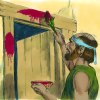




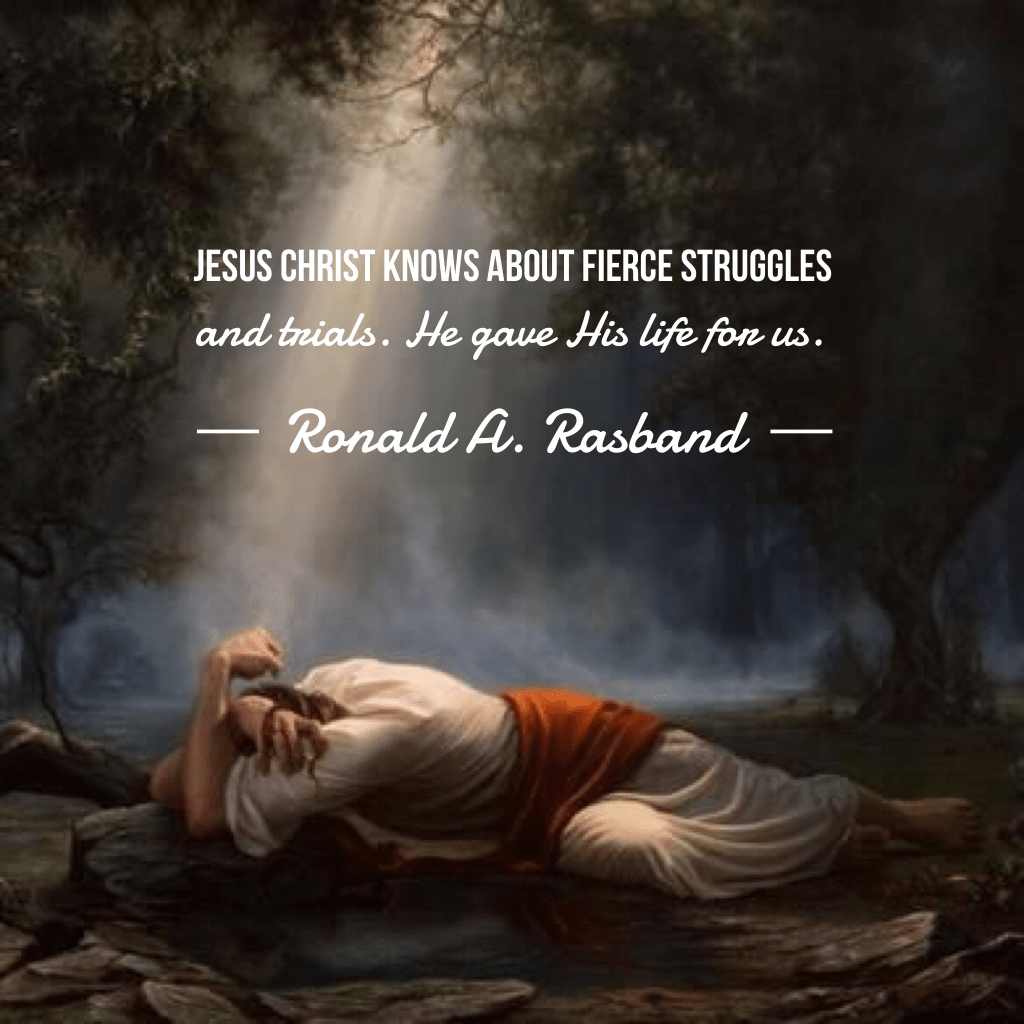

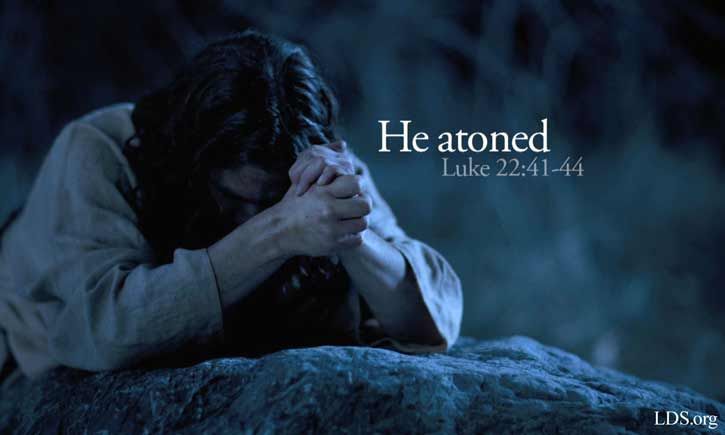
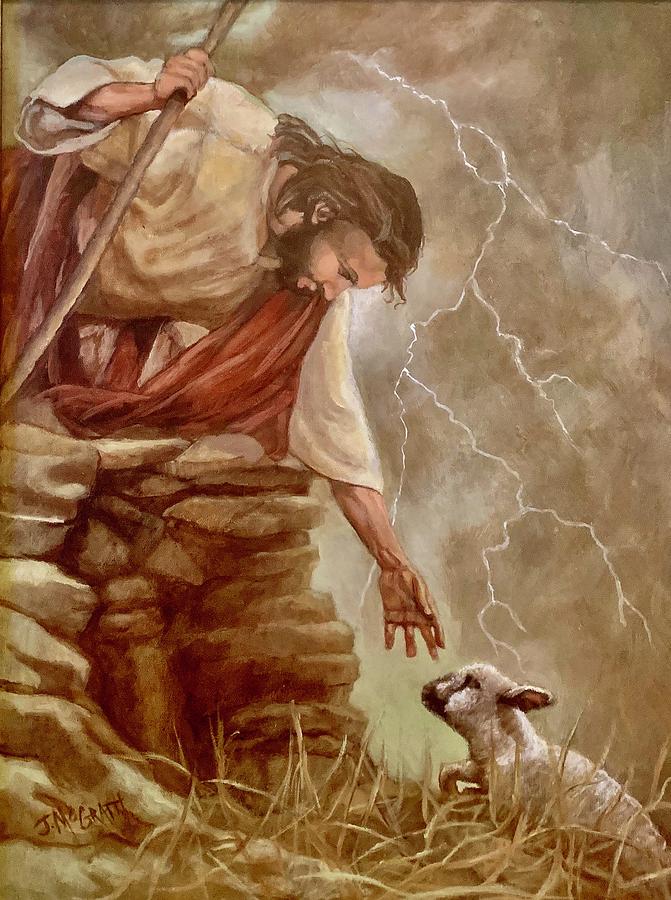
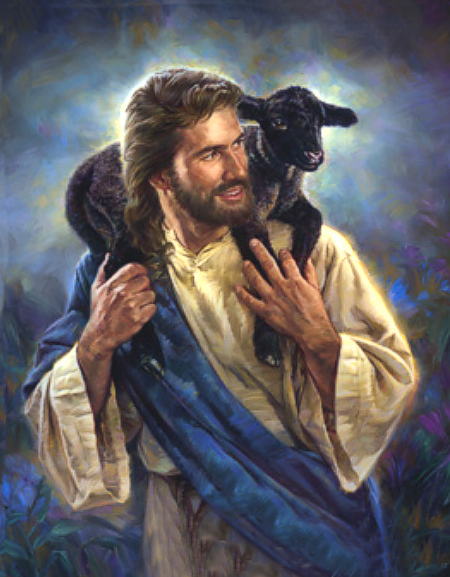




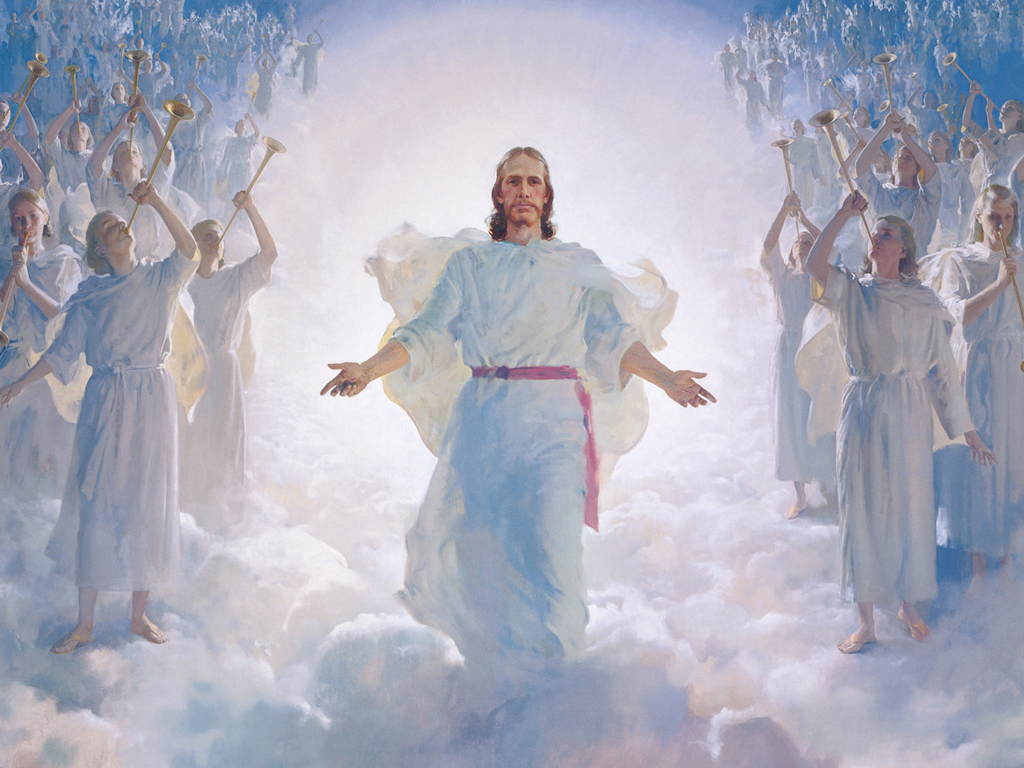
 The American Citadel