
There are two primary usages of the word “pride.” The first is a negative attribute and the second a positive virtue. In this piece, we cover them both and their relevance to our present day.
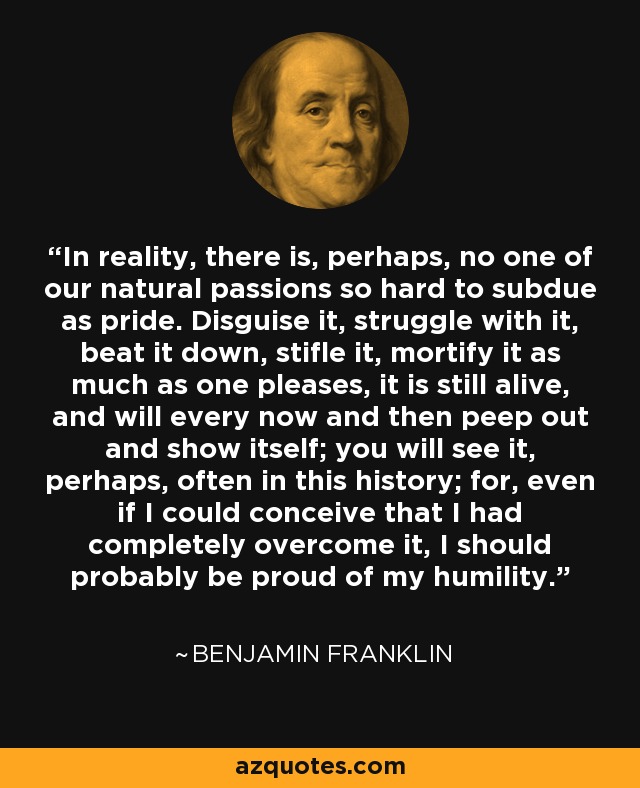
We turn to Webster’s 1828 dictionary for the two definitions. First, negative pride can be described thus:
“Inordinate self-esteem; an unreasonable conceit of one’s own superiority in talents, beauty, wealth, accomplishments, rank or elevation in office, which manifests itself in lofty airs, distance, reserve, and often in contempt of others. . . .
“PRIDE goeth before destruction. Proverbs 16:18. . . .
“Insolence; rude treatment of others; insolent exultation. . . .
“Elevation; loftiness. . . .
“That of which men are proud; that which excites boasting.”
The second definition of positive pride states:
“Generous elation of heart; a noble self-esteem springing from a consciousness of worth.
“The honest pride of conscious virtue.”
In the first instance, pride is a dangerous attribute. It is the hallmark of Satanic rebellion. Pride is what impelled Lucifer to rebel against the Father and Son in the pre-mortal realm. John the Revelator speaks of “war in heaven” in Revelation 12 in which 1/3 of our Heavenly Father’s children were lured away by Lucifer, rejecting the Father’s Plan and supporting Lucifer’s agency-destroying ideology. But why was there a War in Heaven? Why did Lucifer rebel? Pride.
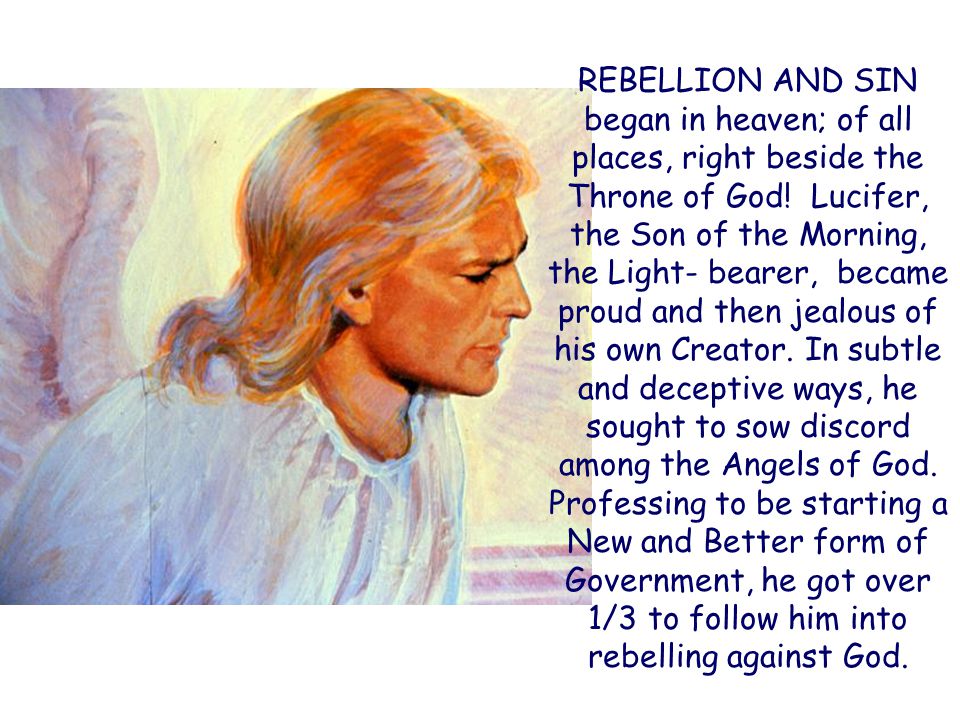
Isaiah described the reason for Lucifer’s downfall in a dramatic passage about his eternal banishment and defeat. He wrote:
“Hell from beneath is moved for thee to meet thee at thy coming: it stirreth up the dead for thee, even all the chief ones of the earth; it hath raised up from their thrones all the kings of the nations.
“All they shall speak and say unto thee, Art thou also become weak as we? art thou become like unto us?
“Thy pomp is brought down to the grave, and the noise of thy viols: the worm is spread under thee, and the worms cover thee.
“How art thou fallen from heaven, O Lucifer, son of the morning! how art thou cut down to the ground, which didst weaken the dations!
“For thou hast said in thine heart, I will ascend into heaven, I will exalt my throne above the stars of God: I will sit also upon the mount of the congregation, in the sides of the north:
“I will ascend above the heights of the clouds; I will be like the most High.
“Yet thou shalt be brought down to hell, to the sides of the pit” (Isaiah 14:9-15).
Lucifer is weak, foolish, and impotent. He was defeated in the War in Heaven, he has been defeated by Jesus successfully fulfilling the law and enduring the Atonement, and he will be bound forever with the chains he forged for others. The first link in that hellish chain is pride.
Lucifer boasted in his heart: “I will ascend into heaven, I will exalt m throne above the stars of God . . . I will ascend above the heights of the clouds; I will be like the most High.” This is pride, arrogance, and delusion. While it is possible, and a Biblically-substantiated fact, that we can become like God our Father through the grace and Atonement of Jesus Christ who is our Mediator and who has the power to bring us to Heaven with Him, it is false that we can do it on our own or in our own way.
Lucifer rejected the Father’s Plan and proposed another. Unlike Jesus who said “Thy will be done,” Lucifer rejected the Father’s preeminence and shouted, “My will be done!” He became a law unto himself precisely because he lusted after power, greatness, and glory. He not only wanted everything the Father has – which is one of Christ’s promises to the faithful who follow and obey Him – but he wanted to replace him and usurp His throne. Instead of rising with everyone else, he wanted to push others down to elevate himself. This is pride.
Rebellion is a defining trait of a prideful person. They think their ways are superior to God’s even though He has clearly stated:
“For my thoughts are not your thoughts, neither are your ways my ways, saith the Lord.
“For as the heavens are higher than the earth, so are my ways higher than your ways, and my thoughts than your thoughts” (Isaiah 55:8-9).
Nevertheless, because His thoughts and ways are far nobler and holier, He is willing and anxious to forgive those who sincerely try to change. He has promised:
“Seek ye the Lord while he may be found, call ye upon him while he is near:
“Let the wicked forsake his way, and the unrighteous man his thoughts: and let him return unto the Lord, and he will have mercy upon him; and to our God, for he will abundantly pardon” (Isaiah 55:6-7).

Lucifer didn’t want pardoned for his rebellion, however. He didn’t think he needed it. He scoffed at the notion that his ways were lower than the Almighty’s; he thought they were superior. He believed he was higher, holier, wiser, nobler, more compassionate, more far-sighted, and overall better. His pride made him elevate himself in his own estimation above God His Father to such an extreme degree that he rebelled, rejected the only path of salvation which Jesus later marked for us, sought the crown and glory and might of the Father, lusted after being worshiped and revered for his supposed superiority and greatness, and started a War in Heaven.
The Lord gave insight into Lucifer’s black heart when he compared the murderous Pharisees to him. He explained:
“Jesus said unto them, If God were your Father, ye would love me: for I proceeded forth and came from God; neither came I of myself, but he sent me.
“Why do ye not understand my speech? even because ye cannot hear [bear] my word.
“Ye are of your father the devil, and the lusts of your father ye will do. He was a murderer from the beginning, and abode not in the truth, because there is no truth in him. When he speaketh a lie, he speaketh of his own: for he is a liar, and the father of it.
“And because I tell you the truth, ye believe me not.
“Which of you convinceth me of sin? And if I say the truth, why do ye not believe me?
“He that is of God heareth [receiveth] God’s words: ye therefore hear [receive] them not, because ye are not of God” (John 8:42-47).
Rebellion born of pride was the Pharisee’s great sin. This is the same sin that led Lucifer to hell. They heard the word of the Lord – the word of truth – but they couldn’t bear it. Why? Because they were set in their own ways, satisfied with their own paltry knowledge, and too addicted to their lusts to admit their ways were wrong and God’s laws were right.
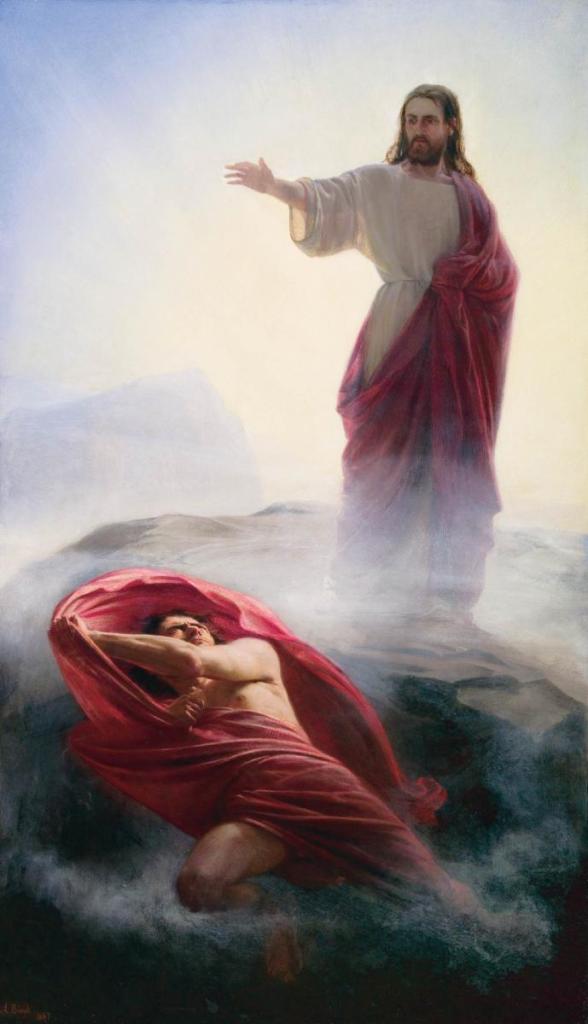
Lucifer was and is a liar. He is the Father of Lies. He proposed to take the Savior’s place in the Father’s Plan of Salvation. This is not because he truly believed his plan was better, but because it was a way for him to receive the worship and glory of all other beings – the worship and glory that was due the Father whom he rejected in his arrogance.
There is no truth in Satan. Yes, he will tell the truth, at the wrong time and in the wrong context, to hurt people and lead them astray. But he never tells the truth out of good intentions. He can’t do so because he has no conviction of truth in his heart. He has rejected the Father, rejected the truth, rejected the light, rejected the Plan of Salvation, rejected goodness, rejected love, rejected everything wholesome and beautiful and wise.
It becomes significant, then, that in opposition to this lying, lustful, power-hungry, conniving, raging being of darkness and despair, Jesus told us: “I am the light of the world: he that followeth me shall not walk in darkness, but shall have the light of life” (John 8:12). Do we want to walk in the darkness of pride or the light of truth? We can only walk in the light of truth when we have shed our pride which blinds us to the light and causes darkness to fill our souls.
Pride is the mainspring of all other sins. It is the one that allows us to justify all the others. If we think our ways, thoughts, and ideas are superior to what God has revealed and His prophets teach, then we will wander in forbidden paths. However, the Lord made it clear that there is only one path, one Plan, and one way to salvation. It is the covenant path of holiness which He marked for us by living a sinless, perfect life as an example:
“Enter ye in at the strait gate: for wide is the gate, and broad is the way, that leadeth to destruction, and many there be which go in thereat:
“Because strait is the gate, and narrow is the way, which leadeth unto life, and few there be that find it” (Matthew 7:13-14).
There are many roads that lead to hell, but only one that leads to Heaven. Satan doesn’t care which path you walk so long as it’s not the one that he rejected long ago that leads through Jesus to Heavenly Father. If you walk a contrary path, it takes you nearer to him. As you come nearer to him, you naturally become more like him, give him more glory, and become more blinded to the light which is father away and dimmer. As you walk any other path except the one covenant path, you become enveloped in mists of darkness and a profound fog of lies, lust, and rebellion. So enveloped, it’s difficult to break free and see well enough to find your way back to the one true path. It’s possible, but it’s extremely difficult; so difficult, in fact, that Lucifer, who was in Heaven and enjoyed the presence of the Father and Son, rebelled against them because he was so blinded by pride and power-seeking.
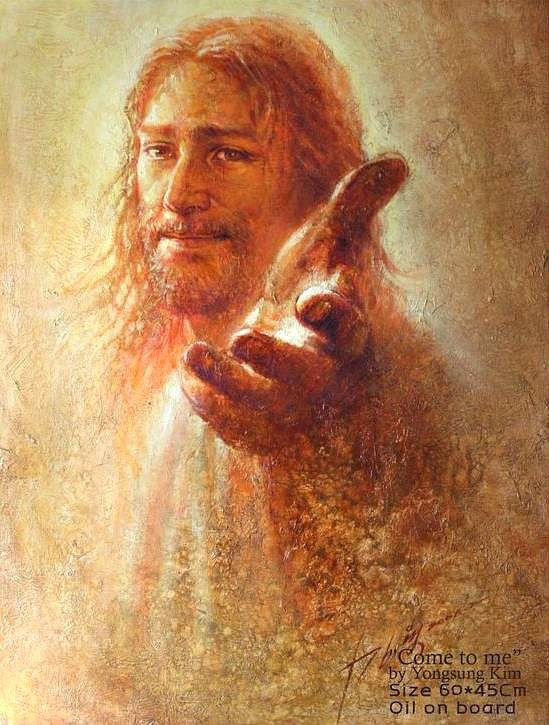
The antidote to pride and the ways of rebellion it engenders was written years ago:
“Let not mercy and truth forsake thee: bind them about thy neck; write them upon the table of thine heart:
“So shalt thou find favour and good understanding in the sight of God and man.
“Trust in the Lord with all thine heart; and lean not unto thine own understanding.
“In all thy ways acknowledge him, and he shall direct thy paths.
“Be not wise in thine own eyes: fear the Lord, and depart from evil.
“It shall be health to thy navel, and marrow to thy bones.
“Honour the Lord with thy substance, and with the firstfruits of all thine increase:
“So shall thy barns be filled with plenty, and thy presses shall burst out with new wine.
“My son, despise not the chastening of the Lord; neither be weary of his correction:
“For whom the Lord loveth he correcteth; even as a father the son in whom he delighteth.
“Happy is the man that findeth wisdom, and the man that getteth understanding” (Proverbs 3:3-13).
Humility is the antidote to pride. However, humility requires faith, and faith requires knowledge. You can’t be humble if you don’t exercise faith in something, or someone, higher. You can’t exercise that faith unless you know something about that higher someone you trust in. Perhaps this is why the Lord so emphatically taught that we must know Him and that knowing Him is eternal life:
“And this is life eternal, that they might know thee the only true God, and Jesus Christ, whom thou hast sent” (John 17:3).
We can’t worship, follow, be like, adore, listen to, or even love, a person or thing we do not know. If we don’t know the Father, we can’t worship Him or listen to Him. If we don’t know Jesus, we can’t follow Him or love Him. Knowledge of God, then, is the first step in salvation.
Authentic knowledge is truth and light. That which is truth and light does not reject God or His ways, but honors them. The worldly wise may know a great many things about science, math, the arts, politics, economics, and so forth, but may have an utterly infantile understanding of the ways of God. Yet, one who knows but little of the worldly arts and sciences may be profoundly wise in the things of eternity. Which is better? It is of course better to couple Godly knowledge with worldly, but the former is infinitely more valuable and important.
The great Pioneer leader and prophet Brigham Young gave this tremendous description of the Gospel of Jesus Christ. Said he:
“Our religion is simply the truth. It is all said in this one expression—it embraces all truth, wherever found, in all the works of God and man that are visible or invisible to mortal eye. It is the only system of religion known in heaven or on earth that can exalt a man to the Godhead, and this it will do to all those who embrace its laws and faithfully observe its precepts.” (Brigham Young, Journal of Discourses, Vol. 10, 251, October 6, 1863).
Even many occultists grasp the fact that truth is the ultimate. For instance, the Theosophists’ motto is: “There is no religion higher than truth.” Yet, their “truth” is foolishness and folly because it rejects Jesus Christ as the Redeemer, rejects His commands, and rejects His covenants and ordinances. Truth is not found apart from the Father and Son. Truth and light emanate from Them. When we reject Them, we reject truth automatically and walk in darkness with the Devil.
An understanding of eternal saving truths is thus the prerequisite to faith in Jesus Christ, which is required before one can trust Him and humbly walk in His ways devoid of pride. By rejecting truth, you reject proper faith, which prohibits you from exercising the childlike trust that is the anchor of humility. The Devil said, “My will be done,” but Jesus declared, “Thy will be done.” And that made all the difference between them. Which phrase we choose to say and do makes all the difference in our lives, too.

One of the greatest sermons ever given on pride was delivered by the outspoken patriot and prophet President Ezra Taft Benson. In “Beware of Pride,” he explained the true danger of this damning attribute in this way:
“Most of us think of pride as self-centeredness, conceit, boastfulness, arrogance, or haughtiness. All of these are elements of the sin, but the heart, or core, is still missing.
“The central feature of pride is enmity—enmity toward God and enmity toward our fellowmen. Enmity means “hatred toward, hostility to, or a state of opposition.” It is the power by which Satan wishes to reign over us.
“Pride is essentially competitive in nature. We pit our will against God’s. When we direct our pride toward God, it is in the spirit of “my will and not thine be done.” As Paul said, they “seek their own, not the things which are Jesus Christ’s.” (Philip. 2:21.)
“Our will in competition to God’s will allows desires, appetites, and passions to go unbridled. (See Alma 38:12; 3 Ne. 12:30.)
“The proud cannot accept the authority of God giving direction to their lives. (See Hel. 12:6.) They pit their perceptions of truth against God’s great knowledge, their abilities versus God’s priesthood power, their accomplishments against His mighty works.
“Our enmity toward God takes on many labels, such as rebellion, hard-heartedness, stiff-neckedness, unrepentant, puffed up, easily offended, and sign seekers. The proud wish God would agree with them. They aren’t interested in changing their opinions to agree with God’s.”
This is how the sin of pride makes us react to God – as irreconcilable enemies. We behave as rebellious teenagers who “know” more than our parents when we let pride rule over us. We reject them and follow our own path, which leads us into error, sin, and darkness. We wander around, eat the husks of self-righteous superiority, and eventually end up in rags and misery like the prodigal son (Luke 15:11-24).
However, like the prodigal son, if we “come to ourselves” and return to our Father, He will run to us, wrap us in the arms of His love, and joyfully accept us back home. How much better is it, though, to not have to squander our inheritance, wade through wickedness, and end up in despair, fear, and hopelessness before we come to ourselves!

President Benson’s talk next touched upon how pride makes us react towards our brothers and sisters:
“Another major portion of this very prevalent sin of pride is enmity toward our fellowmen. We are tempted daily to elevate ourselves above others and diminish them. (See Hel. 6:17; D&C 58:41.)
“The proud make every man their adversary by pitting their intellects, opinions, works, wealth, talents, or any other worldly measuring device against others. In the words of C. S. Lewis: “Pride gets no pleasure out of having something, only out of having more of it than the next man. … It is the comparison that makes you proud: the pleasure of being above the rest. Once the element of competition has gone, pride has gone.” (Mere Christianity, New York: Macmillan, 1952, pp. 109–10.)”
No one likes being around boastful people who judge and compare you with others you at every turn. Not everything is a competition; especially marriage. However, prideful people get a sick pleasure out of being better than others, having more than others, and receiving greater accolades – as if the praise of a fallen world is a worthy reward!
There’s no shame in aspiring to greatness and goodness. There’s nothing at all wrong with excelling in life. In fact, we should attempt to excel and attain mastery in as many areas of life as possible. However, this attainment should be for the sake of our own spiritual and temporal advancement, not because we seek to be better than others.
Too many people fail to realize, as they compete and vie with each other and grasp for power, position, and praise, that they can never rise higher by putting others down. Thet Lord taught:
“[H]e that is greatest among you shall be your servant.
“And whosoever shall exalt himself shall be abased; and he that shall humble himself shall be exalted.
“But woe unto you, scribes and Pharisees, hypocrites! for ye shut up the kingdom of heaven against men: for ye neither go in yourselves, neither suffer ye them that are entering to go in.
“Woe unto you, scribes and Pharisees, hypocrites! for ye devour widows’ houses, and for a pretence make long prayer: therefore ye shall receive the greater damnation.
“Woe unto you, scribes and Pharisees, hypocrites! for ye compass sea and land to make one proselyte, and when he is made, ye make him twofold more the child of hell than yourselves.
“Woe unto you, ye blind guides, which say, Whosoever shall swear by the temple, it is nothing; but whosoever shall swear by the gold of the temple, he is a debtor!
“Ye fools and blind: for whether is greater, the gold, or the temple that sanctifieth the gold?” (Matthew 23:11-17).
The Lord clearly denounced pride here when he said that whoever exalts himself will be brought low. He elevated humility when He said that whoever abases himself and serves others will be exalted. Pride is anathema to the Gospel of Jesus Christ. The Gospel focuses on service and being selfless, whereas pride is me-centered and relishes being served, being greater than others, and being praised.

Me-centered leadership is the world’s version. Servant leadership is the Lord’s kind. The true leader doesn’t take glory to himself, but, like Christ, does his good deeds without fanfare, without trumpeting them abroad, and without focusing the glory for the act on himself. When the Lord served, healed, and ministered to others, He often told them to praise their Heavenly Father and to go their way in peace and leave His name out of it.
The Savior’s teaching is one of humility and quiet selfless service to God and man:
“Take heed that ye do not your alms before men, to be seen of them: otherwise ye have no reward of your Father which is in heaven.
“Therefore when thou doest thine alms, do not sound a trumpet before thee, as the hypocrites do in the synagogues and in the streets, that they may have glory of men. Verily I say unto you, They have their reward.
“But when thou doest alms, let not thy left hand know what thy right hand doeth:
“That thine alms may be in secret: and thy Father which seeth in secret himself shall reward thee openly.
“And when thou prayest, thou shalt not be as the hypocrites are: for they love to pray standing in the synagogues and in the corners of the streets, that they may be seen of men. Verily I say unto you, They have their reward.
“But thou, when thou prayest, enter into thy closet, and when thou hast shut thy door, pray to thy Father which is in secret; and thy Father which seeth in secret shall reward thee openly.” (Matthew 6:1-6).
Not only do individuals risk losing their reward if they are prideful, but nations risk losing everything if they reject humility to God. Ancient Israel was broken up, enslaved, and scattered among all nations precisely because they thought they knew better than their Redeemer and failed to walk in His ways. They professed His holy name with their filthy lips, but their hearts were corrupt and their pride was high. They leaned unto their own wisdom, not the Lord’s.
Continuing with President Benson’s words, he warned of the dire consequences of pride both to individuals and societies:
“The scriptures abound with evidences of the severe consequences of the sin of pride to individuals, groups, cities, and nations. “Pride goeth before destruction.” (Prov. 16:18.) It destroyed the Nephite nation and the city of Sodom. (See Moro. 8:27; Ezek. 16:49–50.)
“It was through pride that Christ was crucified. The Pharisees were wroth because Jesus claimed to be the Son of God, which was a threat to their position, and so they plotted His death. (See John 11:53.)
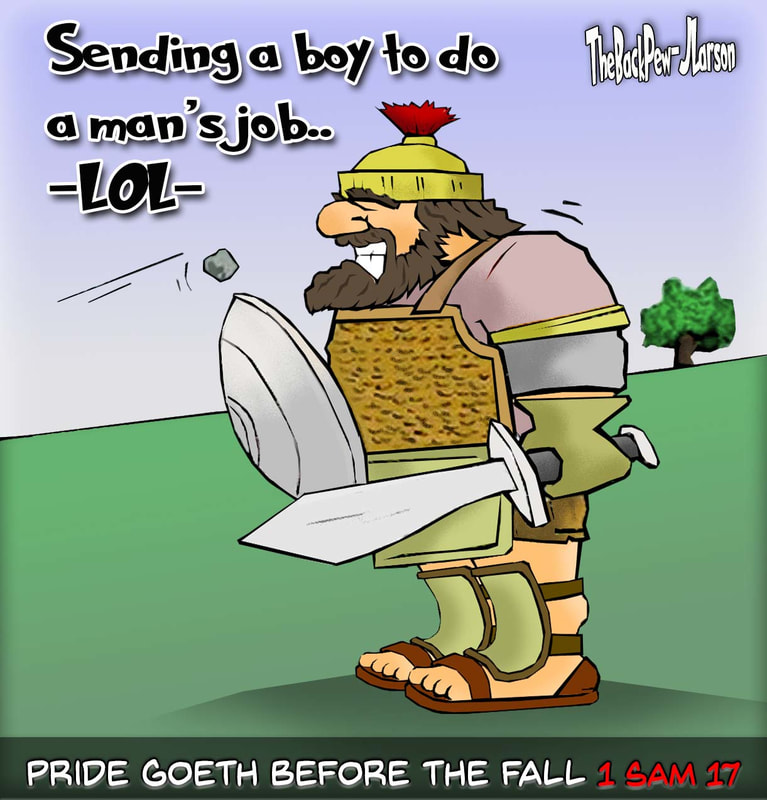
“Saul became an enemy to David through pride. He was jealous because the crowds of Israelite women were singing that “Saul hath slain his thousands, and David his ten thousands.” (1 Sam. 18:6–8.)
“The proud stand more in fear of men’s judgment than of God’s judgment. (See D&C 3:6–7; D&C 30:1–2; D&C 60:2.) “What will men think of me?” weighs heavier than “What will God think of me?” . . . .
“When pride has a hold on our hearts, we lose our independence of the world and deliver our freedoms to the bondage of men’s judgment. The world shouts louder than the whisperings of the Holy Ghost. The reasoning of men overrides the revelations of God, and the proud let go of the iron rod. (See 1 Ne. 8:19–28; 1 Ne. 11:25; 1 Ne. 15:23–24.)
“Pride is a sin that can readily be seen in others but is rarely admitted in ourselves. Most of us consider pride to be a sin of those on the top, such as the rich and the learned, looking down at the rest of us. (See 2 Ne. 9:42.) There is, however, a far more common ailment among us—and that is pride from the bottom looking up. It is manifest in so many ways, such as faultfinding, gossiping, backbiting, murmuring, living beyond our means, envying, coveting, withholding gratitude and praise that might lift another, and being unforgiving and jealous.
“Disobedience is essentially a prideful power struggle against someone in authority over us. It can be a parent, a priesthood leader, a teacher, or ultimately God. A proud person hates the fact that someone is above him. He thinks this lowers his position.
“Selfishness is one of the more common faces of pride. “How everything affects me” is the center of all that matters—self-conceit, self-pity, worldly self-fulfillment, self-gratification, and self-seeking.
“Pride results in secret combinations which are built up to get power, gain, and glory of the world. (See Hel. 7:5; Ether 8:9, 16, 22–23; Moses 5:31.) . . . .
“Pride is the universal sin, the great vice. Yes, pride is the universal sin, the great vice.
“The antidote for pride is humility—meekness, submissiveness. (See Alma 7:23.) It is the broken heart and contrite spirit. (See 3 Ne. 9:20; 3 Ne. 12:19; D&C 20:37; D&C 59:8; Ps. 34:18; Isa. 57:15; Isa. 66:2.)” (President Ezra Taft Benson, “Beware of Pride,” General Conference, April, 1989).
Humility brings nations to their knees in prayer and submissiveness to God. Pride brings nations to their knees as it erodes the pillars of their society and destroys them from the inside out. America is crumbling today because we have been blessed by the temporal things of the world for so long that we’ve become prideful and have forgotten the God who gave us those blessings. Though millions of us still praise His name, we walk in our own ways and have rejected the covenant path of Christian discipleship. On the institutional level, our People are beginning to hurl God out onto the street and are in open rebellion against Him.
Rebellion against God is rebellion against Freedom. We lose our Liberty as we lose sight of God’s will. Paradoxically, we gain true Freedom when we cling to the Lord’s laws and walk humbly in His commandments. If we wish, both as individuals and a civilization, to regain our lost Liberties and God’s favor, we must come to ourselves, confess our rebellious nature, exercise faith in Jesus Christ to change, and walk forward down the true covenant path. If we don’t, God will destroy us and cleanse this land as He did anciently to Israel and other peoples who had, but rejected, His holy law.
Hearkening back to President Benson’s powerful address, the current apostolic leader President Dieter F. Uchtdorf made similarly enlightening comments about the destructive nature of pride and the need for greater humility and selfless service:
“I believe there is a difference between being proud of certain things and being prideful. I am proud of many things. I am proud of my wife. I am proud of our children and grandchildren.
“I am proud of the youth of the Church, and I rejoice in their goodness. I am proud of you, my dear and faithful brethren. I am proud to stand shoulder to shoulder with you as a bearer of the holy priesthood of God. . . .
“When our hearts are filled with pride, we commit a grave sin, for we violate the two great commandments. Instead of worshipping God and loving our neighbor, we reveal the real object of our worship and love—the image we see in the mirror.
“Pride is the great sin of self-elevation. It is for so many . . . a holy stand that justifies envy, greed, and vanity. In a sense, pride is the original sin, for before the foundations of this earth, pride felled Lucifer, a son of the morning “who was in authority in the presence of God.” . . . .
“Pride is a deadly cancer. It is a gateway sin that leads to a host of other human weaknesses. In fact, it could be said that every other sin is, in essence, a manifestation of pride.
“This sin has many faces. It leads some to revel in their own perceived self-worth, accomplishments, talents, wealth, or position. They count these blessings as evidence of being “chosen,” “superior,” or “more righteous” than others. This is the sin of “Thank God I am more special than you.” At its core is the desire to be admired or envied. It is the sin of self-glorification.
“For others, pride turns to envy: they look bitterly at those who have better positions, more talents, or greater possessions than they do. They seek to hurt, diminish, and tear down others in a misguided and unworthy attempt at self-elevation. When those they envy stumble or suffer, they secretly cheer. . . .
“My dear brethren of the priesthood, my beloved fellow disciples of the gentle Christ, should we not hold ourselves to a higher standard? As priesthood bearers, we must realize that all of God’s children wear the same jersey. Our team is the brotherhood of man. This mortal life is our playing field. Our goal is to learn to love God and to extend that same love toward our fellowman. We are here to live according to His law and establish the kingdom of God. We are here to build, uplift, treat fairly, and encourage all of Heavenly Father’s children. . . .
“. . . We can be grateful for our health, wealth, possessions, or positions, but when we begin to inhale it—when we become obsessed with our status; when we focus on our own importance, power, or reputation; when we dwell upon our public image and believe our own press clippings—that’s when the trouble begins; that’s when pride begins to corrupt. . . .
“Some suppose that humility is about beating ourselves up. Humility does not mean convincing ourselves that we are worthless, meaningless, or of little value. Nor does it mean denying or withholding the talents God has given us. We don’t discover humility by thinking less of ourselves; we discover humility by thinking less about ourselves. It comes as we go about our work with an attitude of serving God and our fellowman.
“Humility directs our attention and love toward others and to Heavenly Father’s purposes. Pride does the opposite. Pride draws its energy and strength from the deep wells of selfishness. The moment we stop obsessing with ourselves and lose ourselves in service, our pride diminishes and begins to die. . . .
“. . . we are tools in the hands of God. When our heart is in the right place, we do not complain that our assigned task is unworthy of our abilities. We gladly serve wherever we are asked. When we do this, the Lord can use us in ways beyond our understanding to accomplish His work” (President Dieter F. Uchtdorf, “Pride and Priesthood,” General Conference, October, 2010).
Whom do we glorify? Do we glorify ourselves or God our Father? Do we put our trust in the arm of flesh or in the Lord of hosts? Do we look inward or Heavenward? Do we help ourselves or help others? Where is our devotion focused – on our own advancement, wealth, or praise, or on the wellbeing, betterment, and uplifting of our fellowman?

Furthermore, are we grateful for the unprecedented blessings we enjoy? Collectively, we have so much wealth, so many personal possessions, such an abundance of technology, clothing, vehicles, tools, entertainment, food and drink, information, and opportunities. Yet, how grateful are we really? Do we have an attitude of gratitude? If we don’t, perhaps it’s a sign we are overtaken by pride. If we can’t see clearly enough to recognize and appreciate our multitude of blessings, then we are spiritually blind and deny truth, which is a symptom of pride.
We should, rather, be grateful to have the knowledge that we are each beloved children of God, that He sent His Son Jesus Christ to die for and redeem us, and that we have been granted His Priesthood authority to perform saving ordinances of ourselves and our neighbors. It is not sinful to recognize that we are sons and daughters – the literal offspring – of our Eternal Father. That is something to be grateful for, proud of, and continuously mindful of. If we allow it to go to our heads and think we are “chosen” when others are destined for hell fire, then we are guilty of pride and need to repent. Catholics, Protestants, and deluded people of all faiths and denominations are sometimes guilty of this prideful mindset.
Let’s not elevate ourselves, but humble ourselves to the earth in recognition of God’s greatness and of His great goodness toward us. We have things to be grateful for every day, including our lives, our daily chance to be better than we were the day before, the abundance of knowledge available to us, the ability to travel and see the world and acquaint ourselves with people and things, the general prosperity of society, and more. Let’s be humble and understand the source of our blessings and rely on the Lord instead of on our own finite understanding, meager strength, and flawed virtue.
Instead of exemplifying the first of the two definitions we talked about at the beginning, let’s emulate the second. Recall that the second definition of positive pride means: “Generous elation of heart; a noble self-esteem springing from a consciousness of worth. The honest pride of conscious virtue.”
Having “noble self-esteem springing from a consciousness of [our] worth” is Godly. We are His sons and daughters with boundless potential, through Jesus Christ, to become like Him. This fact, that we are loved by our Father who has provided everything for us to succeed and return to Him, should give us “generous elation of heart.” It is also perfectly permissible to be grateful for our virtue and our worthiness in God’s sight, which worthiness and obedience to Him brings us the blessings that enrich our lives.
If we are to shed the pride which holds us back, which includes the pride of valuing, celebrating, and tolerating things God has condemned or forbidden, we must recognize our statue before God. We must know who we are – that we are His children whom He loves. This is part and parcel of gaining that correct understanding of truth we spoke of earlier. Truth is the foundation on which we build lives of faith. Our faith must be centered in Jesus Christ, our Mediator and Redeemer. When we truly trust in Him, we walk in His path and bear the trials of life with patience. This is humility, which is the only antidote to pride.
Dear reader, each of us is guilty of being prideful at times. Jesus is the only One who has escaped this universal sin. We would do well to follow Him. Following Him is walking in the light, which is the opposite of walking in the darkness of pride. Let’s remember our blessings and cultivate an attitude of gratitude. Let’s have noble self-esteem as children of the Father who have the privilege of becoming like Him through our Savior Jesus Christ.

We close with the words of a sweet hymn about Christ-like humility. May we each be a little humbler today and walk a little nearer to the Lord of light and truth. God bless you.
“Be thou humble in thy weakness, and the Lord thy God shall lead thee,
Shall lead thee by the hand and give thee answer to thy prayers.
Be thou humble in thy pleading, and the Lord thy God shall bless thee,
Shall bless thee with a sweet and calm assurance that he cares.
“Be thou humble in thy calling, and the Lord thy God shall teach thee
To serve his children gladly with a pure and gentle love.
Be thou humble in thy longing, and the Lord thy God shall take thee,
Shall take thee home at last to ever dwell with him above.”
Zack Strong,
June 4, 2023
 The American Citadel