This past Sunday, in Sunday School, the teacher set us a small assignment at the beginning of class. He asked us to take five minutes and write down what we thought were the most important things the Gospel of Jesus Christ asks us to do as members of the Lord’s Church. We were asked to also write down scripture references to support these ideas. I thought I would take the time to share the scriptures I jotted down in those five minutes. Perhaps they will inspire, help, or lift someone in the audience.
The first thing that came to mind is what we call in The Church of Jesus Christ of Latter-day Saints the “Four-Fold Mission of the Church.” The four planks include: Proclaim the Gospel; Perfect the Saints; Redeem the Dead; and Serve the Poor and Needy. An entire book could be written about this Four-Fold Mission statement. The first scriptural reference that came to me, however, is found in The Book of Mormon: Another Testament of Jesus ChristF
I testify that The Book of Mormon is indeed a witness for Christ and was inspired by God. It is a companion scripture to the Bible that proclaims the divinity of Christ. In fact, 3,925 verses in that holy book talk of Jesus Christ, meaning that the Lord’s name is mentioned an average of once every 1.7 verses. It is a clear, direct, and powerful testimony that Jesus is the Son of God, that He died for our sins, that He rose from the dead and showed Himself to humble disciples on multiple continents, that He stands as the Redeemer of mankind, and that His name is the only name by which salvation comes.
The first verse that came to me that, broadly speaking, supports the Four-Fold Mission detailed above is the following declaration of an ancient Hebrew prophet named Alma. To a group of new converts who desired to enter into a covenant to serve the Lord, Alma said:
“Behold, here are the waters of Mormon (for thus were they called) and now, as ye are desirous to come into the fold of God, and to be called his people, and are willing to bear one another’s burdens, that they may be light;
“Yea, and are willing to mourn with those that mourn; yea, and comfort those that stand in need of comfort, and to stand as witnesses of God at all times and in all things, and in all places that ye may be in, even until death, that ye may be redeemed of God, and be numbered with those of the first resurrection, that ye may have eternal life—
“Now I say unto you, if this be the desire of your hearts, what have you against being baptized in the name of the Lord, as a witness before him that ye have entered into a covenant with him, that ye will serve him and keep his commandments, that he may pour out his Spirit more abundantly upon you?” (Mosiah 18:8-11).
Bearing each other’s burdens, comforting those who stand in need, taking upon you the name of Christ, and standing as a witness of Jesus at all times, in all things, and in all places – this is the essence of Christian discipleship.
“Then came Peter to him, and said, Lord, how oft shall my brother sin against me, and I forgive him? till seven times?
“Jesus saith unto him, I say not unto thee, Until seven times: but, Until seventy times seven.”
In conjunction with this famous passage, I included Doctrine and Covenants 64:8-11. The Doctrine and Covenants is a compilation of revelations and counsel given to the Lord’s disciples in modern times. Though not as well-known as The Book of Mormon, The Doctrine and Covenants is rich with doctrinal treasures and inspired clarifications that benefit anyone seeking to live more like the Master. The verses in question state:
“My disciples, in days of old, sought occasion against one another and forgave not one another in their hearts; and for this evil they were afflicted and sorely chastened.
“Wherefore, I say unto you, that ye ought to forgive one another; for he that forgiveth not his brother his trespasses standeth condemned before the Lord; for there remaineth in him the greater sin.
“I, the Lord, will forgive whom I will forgive, but of you it is required to forgive all men.”
Have you ever considered that if you don’t forgive another, you stand condemned and that in you lies the greater sin? Having a forgiving heart, then, is one of the chief attributes of a real Christian.
Earlier this year, I wrote an article bearing the simple name “70×7.” I love the doctrine of forgiveness and repentance! As one who has recognized that I fall short on a daily basis, I know that I need forgiveness frequently from my fellow man and from my God. I may be guilty of various things in life, but I’m not guilty of denying anyone forgiveness. I readily forgive others and I quickly apologize and ask for forgiveness when I have done a wrong or hurt someone.
he idea of 70×7 – a chance to repent, change, and do better the next time, and a chance to give others that same opportunity – is indescribably precious to my soul. It would revolutionize the world if Christians would embrace “70×7.”
Next, on my Sunday School assignment, I quoted from the resurrected Redeemer. After appearing to His disciples in the Old World, He appeared to other disciples in the New World – the “other sheep” He had spoken of during His mortal ministry (John 10:16). While there, He repeated His Sermon on the Mount and expounded various teachings, including the following taken from 3 Nephi 27:27:
“[W]hat manner of men ought ye to be? Verily I say unto you, even as I am.”
Being like Christ is what it’s all about. It is the answer to the questions “What should I do?” or “What should I say?” or “What should I think?” in 100% of cases. “What Would Jesus Do?” is more than a pithy slogan on bumper stickers – it’s the injunction of the Master Himself.
The next passage I scribbled on my paper in Sunday School was Luke 18:1, which instructs:
“[M]en ought always to pray, and not to faint.”
It’s a simple statement, but one that contains such power. Prayer is the heart of a sincere Christian life. Prayer allows us to talk to our Heavenly Father and tap into His divine power. Through it, we may bless ourselves, our families, and those around us. In my own life, I have had too many experiences with immediately and specifically answered prayers to deny the reality and power of prayer and the fact that Heavenly Father listens to and loves His children.
The next scriptural passage I cited comes from Moroni 10:32-33. These are essentially the final words of the final prophet who closed the scriptural record that was translated and published as The Book of Mormon. What did this ancient seer want us, his future readers, to know and do? Said he:
“Yea, come unto Christ, and be perfected in him, and deny yourselves of all ungodliness; and if ye shall deny yourselves of all ungodliness, and love God with all your might, mind and strength, then is his grace sufficient for you, that by his grace ye may be perfect in Christ; and if by the grace of God ye are perfect in Christ, ye can in nowise deny the power of God.
“And again, if ye by the grace of God are perfect in Christ, and deny not his power, then are ye sanctified in Christ by the grace of God, through the shedding of the blood of Christ, which is in the covenant of the Father unto the remission of your sins, that ye become holy, without spot.”
Wise words that no Christian of any denomination can reject. They point us to Christ. They plead with us to become righteous that we may receive the Savior’s grace and mercy. Jesus has power to give this grace by virtue of His Atonement. We access His grace by entering into covenants and ordinances, by self-sacrifice, and by righteous living. Christ’s mercy may wash away our sins and redeem us, if we will fully and sincerely turn our hearts to Him.
“And this greater priesthood ministereth the gospel and holdeth the key of the mysteries of the kingdom, even the key of the knowledge of God.
“Therefore, in the ordinances thereof, the power of godliness is manifest.
“And without the ordinances thereof, and the authority of the priesthood, the power of godliness is not manifest unto men in the flesh;
“For without this no man can see the face of God, even the Father, and live.”
Too many Christians deny the importance of ordinances. Yet, the Bible is clear that ordinances are part of the salvation process. The Savior taught, for instance, that no man can get to Heaven unless he enters through the door of baptism (John 3:3-5). The New Testament also makes it clear that the ordinance of baptism, to be efficacious, must not only be performed by proper authority, but must be followed by the giving of the Holy Ghost through the laying on of hands of those holding proper Priesthood authority (Acts 8:14-20). Without these types of sacred ordinances, we cannot access the full power of God and, in the end, we will not return to our Father in Heaven.
To clarify, though it is Christ’s grace that save us because of His atoning redemption for us and His pure goodness is advocating our cause, He requires ordinances. There is order and careful calculation in Heaven. No one sneaks into Heaven; there is a proper door. That door is ordinances, beginning with baptism by proper authority and proceeding along the course outlined by the Lord and His prophets.
In modern times, the Prophet Joseph Smith taught the same doctrine in a simple phrase: “Being born again, comes by the Spirit of God through ordinances” (Teachings of the Prophet Joseph Smith, 162). Most consider the Prophet to be a charlatan, yet a tree is known by its fruits. A corrupt tree cannot produce good fruit (Luke 6:42-49). The succulent fruit of Joseph Smith’s works has been to lead millions – myself included – to the Savior Jesus Christ. And, in this example, he merely reworded the words of ancient seers relative to the critical place of ordinances in the Gospel Plan.
The final two passages I jotted down deal with a topic often seen as taboo at Church – politics. Then again, it’s not really politics; it’s the Gospel of Jesus Christ, which is the Gospel of Liberty. We cannot, in good faith, divest the religious side of the Gospel from the political. They are both essential parts that make up the whole. As Elder Hans Verlan Andresen once put it:
“There are those who undertake to keep their “politics” completely separated from their “religion.” This is logically impossible for one who accepts the scriptures as the word of God” (Hans Verlan Andersen, The Great and Abominable Church of the Devil, 47).
“And now, verily I say unto you concerning the laws of the land, it is my will that my people should observe to do all things whatsoever I command them.
“And that law of the land which is constitutional, supporting that principle of freedom in maintaining rights and privileges, belongs to all mankind, and is justifiable before me.
“Therefore, I, the Lord, justify you, and your brethren of my church, in befriending that law which is the constitutional law of the land;
“And as pertaining to law of man, whatsoever is more or less than this, cometh of evil.
“I, the Lord God, make you free, therefore ye are free indeed; and the law also maketh you free.
“Nevertheless, when the wicked rule the people mourn.
“Wherefore, honest men and wise men should be sought for diligently, and good men and wise men ye should observe to uphold; otherwise whatsoever is less than these cometh of evil.”
This is a remarkable declaration by the Savior. He put His divine stamp of approval on the U.S. Constitution. In another passage not cited here but equally valid, the Lord confirmed that the Founding Fathers of the United States were “hands of wise men whom I raised up unto this very purpose” (Doctrine and Covenants 101:76-80).
Furthermore, we see that He encouraged His Saints to uphold the inspired Constitution and all principles harmonious with it. These principles support “the principle of freedom” and help us “in maintaining rights and privileges.” These are not American rights, but “belong to all mankind.” They are part of the “the Laws of Nature and of Nature’s God” that the Declaration of Independence referred to. Anything more or less than these constitutional principles of Freedom are not merely wrong, different, or misguided, but come of evil.
Such a knowledge should make us think twice before supporting policies, parties, and people who find themselves opposed to the U.S. Constitution. This is so important because, in the final equation, we can’t support or uphold – whether knowingly or unwittingly – Satan’s political program, which destroys agency, and suppose we are worthy before God. Therefore, if the Savior stamped the U.S. Constitution with His seal of approval, it becomes a tenet of our faith to defend its principles with the same ferocity we would defend His other teachings and revelations.
The last verse cited in the above passage is a sermon in itself. It shows us how to vote. Have you ever considered that the Lord will judge you based, in part, on how you voted in life? Doesn’t the Bible make it clear that we will be judged for all our acts? (Romans 2:6; 1 Peter 1:17-23; Revelation 20:12).
Voting is a major act because it demonstrates our principles on matters involving human agency, life and death, property, public values, war and peace, etc. It shows whether we sanction or reject evil, force, and injustice. It also shows what we would do if we personally possessed the power to judge and punish. Is our judgement just or unjust? Remember, we are to “judge righteous judgement” (John 7:24) and that “with what judgment ye judge, ye shall be judged: and with what measure ye mete, it shall be measured to you again” (Matthew 7:2). Our votes are forms of judgment that will come back to us at the Judgment Day.
The Lord revealed here that to be in harmony with His will we must only support honest, wise, and good men – those who befriend constitutional principles of Freedom. If we don’t do this, our vote “cometh of evil.” And nothing evil will enter the Kingdom of God.
The concluding passage I wrote down last Sunday comes from the ultimate handbook on Freedom – The Book of Mormon. On my paper, I simply copied the book and chapter: Ether 8. There is so much in the chapter that is of great importance. I cite just a few of the verses that discuss Luciferian secret societies and the grave threat they pose to God’s work and the Freedom of mankind. Speaking to those whom he knew would one day read his writings, the ancient prophet Moroni relayed the Lord’s will and mind thus:
“And it came to pass that they [i.e. the ancient Jaredite people] formed a secret combination, even as they of old; which combination is most abominable and wicked above all, in the sight of God;
“For the Lord worketh not in secret combinations, neither doth he will that man should shed blood, but in all things hath forbidden it, from the beginning of man.
“And now I, Moroni, do not write the manner of their oaths and combinations, for it hath been made known unto me that they are had among all people, and they are had among the Lamanites.
“And they have caused the destruction of this people of whom I am now speaking, and also the destruction of the people of Nephi.
“And whatsoever nation shall uphold such secret combinations, to get power and gain, until they shall spread over the nation, behold, they shall be destroyed; for the Lord will not suffer that the blood of his saints, which shall be shed by them, shall always cry unto him from the ground for vengeance upon them and yet he avenge them not.
“Wherefore, O ye Gentiles, it is wisdom in God that these things should be shown unto you, that thereby ye may repent of your sins, and suffer not that these murderous combinations shall get above you, which are built up to get power and gain—and the work, yea, even the work of destruction come upon you, yea, even the sword of the justice of the Eternal God shall fall upon you, to your overthrow and destruction if ye shall suffer these things to be.
“Wherefore, the Lord commandeth you, when ye shall see these things come among you that ye shall awake to a sense of your awful situation, because of this secret combination which shall be among you; or wo be unto it, because of the blood of them who have been slain; for they cry from the dust for vengeance upon it, and also upon those who built it up.
“For it cometh to pass that whoso buildeth it up seeketh to overthrow the freedom of all lands, nations, and countries; and it bringeth to pass the destruction of all people, for it is built up by the devil, who is the father of all lies; even that same liar who beguiled our first parents, yea, even that same liar who hath caused man to commit murder from the beginning; who hath hardened the hearts of men that they have murdered the prophets, and stoned them, and cast them out from the beginning.
“Wherefore, I, Moroni, am commanded to write these things that evil may be done away, and that the time may come that Satan may have no power upon the hearts of the children of men, but that they may be persuaded to do good continually, that they may come unto the fountain of all righteousness and be saved.”
Powerful words! This command – for it is a commandment – never fails to impress upon me how dire our modern situation is and my own personal duty in respect to Freedom. We are not merely encouraged, but commanded, to “awake” to the “awful” reality of Satanic secret societies “which shall be among [us]” and which “seeketh to overthrow the freedom of all lands, nations, and countries” and which, if not checked, “bringeth to pass the destruction of all people.”
These frightful passages confirm that the “conspiracy theorists” are not so crazy after all. There is indeed a global cabal “built up by the devil” that wants to subjugate the entire world, destroy Freedom, and exterminate mankind. It engages in murder, war, and deception. The Book of Mormon illustrates the wicked workings and rotten fruit of these Devilish combinations. I also detailed this monstrous, malevolent secret conspiracy in my book Red Gadiantons: What the Prophets Have Taught about the Communist Secret Combination that Threatens Mankind.
The threat is very real. In fact, this wicked conspiracy is in its endgame and world events are rising to a crescendo of carnage and oppression surpassing anything we have ever seen. We are presently witnessing the attempt foretold by Moroni to destroy the Freedom of all lands. What will you personally do about it? Will you heed the command to awake and arise in opposition to Satan’s schemes? Will you stand in favor of the Lord’s political program and all just and universal constitutional principles of Freedom? I pray you will.
Despite this evil cabal’s attempts to dethrone God and overcome His people, they will ultimately fail and evil will “be done away.” The Devil will be dragged down to hell and all will know how impotent and pathetic he always was (see Isaiah 14). It won’t happen in Washington, however. Congress won’t legislate away the evil, being part of it. We won’t vote our way to deliverance, though voting right is a command and duty and will help us deliver our own souls. No, salvation from tyranny and Satan will only happen when we individually and collectively “come unto the fountain of all righteousness,” who is Jesus Christ. Only Jesus saves.
And there you have the verses I jotted down in Sunday School and the rationale behind why I chose them. To me, these are imperative duties and parts of my faith in Christ. I consider all of these things – prayer, standing as a witness of Christ, ordinances, rising in defense of Freedom, etc. – to be highly important. Had I had more time, I would have written many more verses that have impacted me, such as John 15:12 which states: “This is my commandment, That ye love one another, as I have loved you”.
I would have also certainly added the testimony and plea of the Book of Mormon prophet Nephi, which is one of the sweetest passages of holy writ I know:
“And we talk of Christ, we rejoice in Christ, we preach of Christ, we prophesy of Christ, and we write according to our prophecies, that our children may know to what source they may look for a remission of their sins. . . .
“. . . And the words which I have spoken shall stand as a testimony against you; for they are sufficient to teach any man the right way; for the right way is to believe in Christ and deny him not; for by denying him ye also deny the prophets and the law.
“And now behold, I say unto you that the right way is to believe in Christ, and deny him not; and Christ is the Holy One of Israel; wherefore ye must bow down before him, and worship him with all your might, mind, and strength, and your whole soul; and if ye do this ye shall in nowise be cast out” (2 Nephi 25:26, 28-29).
Dear reader, may God bless you! May you ask yourself what is important to you in your faith. May you ask what is important for you to do, what sacrifices your faith asks you to make, and then do it. May you have the courage and fortitude to follow the Savior and be like Him.
Reader, you will fail, as I have, to measure up to Christ’s perfection. Yet, you can, as I have, taste of His power, goodness, and grace and receive strength to overcome Satan, to wade through affliction with faith, and to be a light to the dark world around you. Please accept my sincere prayer for your personal faith to increase and become a flame of inspiration inside you forever.
This is the third installment of my “Indispensable Men” series. Enjoy the first two about the indomitable George Washington and fiery John Adams here and here. Today, I happily report on my greatest historical hero – Thomas Jefferson. The Sage of Monticello has influenced my political thinking more than any other mortal. His writings serve as a source of inexhaustible inspiration and are as a bottomless well of knowledge, wisdom, and timeless sagacity. It is my desire to share some small particle of my love for this noble man and his awe-inspiring eminence.
This article will be broken up roughly into two parts: 1) A refuting of prevalent myths about this wonderful figure; and 2) a tribute to him and his far-reaching accomplishments. Both sections are worthwhile and will help you understand the real Thomas Jefferson.
Before we honor Jefferson, we need to do some housekeeping. Thomas Jefferson is one of the most lied-about figures in U.S. history. He has been deliberately mischaracterized as a fornicator, a vicious slave holder, a politically conniving Machiavellian, an Illuminist-Jacobin, an atheist or deist, and so forth. Let’s begin with the last pitiful accusation.
It is popularly thought that Jefferson was either an outright atheist or at least a deist. I have it on good authority that both labels are fraudulent, fictitious, and false. “On whose authority?” you may ask. Thomas Jefferson’s. Is there any better source than a man’s own words for ascertaining what he believes in his heart? Men lie, of course, but when a man speaks and writes of his own principles and convictions, we can justifiably hold his words up as a true measuring stick.
That being established, what, then, was Jefferson’s religious persuasion? He was a Christian. I quote directly from the man himself. He wrote: “I am a real Christian, that is to say, a disciple of the doctrines of Jesus Christ” (Thomas Jefferson to Charles Thomson, January 9, 1816). The words “real Christian” are underlined in the original.
Do mine eyes deceive me or did Jefferson just say that he was a Christian and a follower of Jesus Christ? Yes, in fact, he did! And this was not the only time he admitted as much. Numerous quotations could be called forth to testify to the truth about Jefferson’s inner convictions.
Jefferson was a known Bible reader who gave money to Bible societies to dispense the Bible throughout Virginia, personally selected the hymnals that would be placed inside Washington, D.C. schools, attended worship services in the U.S. Capitol, routinely conversed on religious topics in his letters, encouraged days of Thanksgiving and prayer, and even created his own so-called “Jeffersonian Bible” containing the plain doctrine of the Savior that was used as a missionary tool. If the so-called historians are so egregiously wrong about this very easy-to-uncover fact about the man’s religious and Christian persuasions, what else are they lying about?
Before I tell you exactly what else they have gotten wrong, I want to give you more on his personal religious belief. In fact, I want to quote more from the same letter previously cited. Jefferson explained:
“I too have made a wee little book, from the same materials, which I call the Philosophy of Jesus. it is a paradigma of his doctrines, made by cutting the texts out of the book, and arranging them on the pages of a blank book, in a certain order of time or subject. a more beautiful or precious morsel of ethics I have never seen. it is a document in proof that I am a real Christian, that is to say, a disciple of the doctrines of Jesus, very different from the Platonists, who call me infidel, and themselves Christians and preachers of the gospel, while they draw all their characteristic dogmas from what it’s Author never said nor saw. they have compounded from the heathen mysteries a system beyond the comprehension of man, of which the great reformer of the vicious ethics and deism of the Jews, were he to return on earth, would not recognise one feature.”
Jefferson here stated that he considered Jesus’ Gospel the most “beautiful or precious morsel of ethics” he had ever encountered. He confessed that he was a “real Christian” and a “disciple of the doctrines of the gospel.” He even showed disdain for those who have twisted and butchered Christian doctrines and overloaded the Savior’s simple religion with Platonisms and dogmas, creeds and heretical additions. Is it any clearer how deeply committed Jefferson was to Christ and His Gospel?
During his day, Jefferson was sometimes considered a heretic by his fellow Christians because he rightly condemned the addition of non-scriptural dogmas to Biblical Christianity. He was, as he said, a Christian. Yet, he was unorthodox. To glimpse into his unorthodox views, I cite another letter from his pen. To John Adams, he contemplated the shocking sophisms that had been grafted onto Christianity over the centuries by uninspired and, sometimes, conniving men:
“I am just returned from one of my long absences, having been at my other home for five weeks past. having more leisure there than here for reading, I amused myself with reading seriously Plato’s republic [i.e. his tedious book The Republic]. I am wrong however in calling it amusement, for it was the heaviest task-work I ever went through. I had occasionally before taken up some of his other works, but scarcely ever had patience to go through a whole dialogue. while wading thro’ the whimsies, the puerilities, & unintelligible jargon of this work, I laid it down often to ask myself how it could have been that the world should have so long consented to give reputation to such nonsense as this? how the soi-disant Christian world indeed should have done it, is a piece of historical curiosity. but how could the Roman good sense do it? and particularly how could Cicero bestow such eulogies on Plato? altho’ Cicero did not wield the dense logic of Demosthenes, yet he was able, learned, laborious, practised in the business of the world, & honest. he could not be the dupe of mere style, of which he was himself the first master in the world. with the moderns, I think, it is rather a matter of fashion and authority. education is chiefly in the hands of persons who, from their profession, have an interest in the reputation and the dreams of Plato. they give the tone while at school, and few, in their after-years, have occasion to revise their college opinions. but fashion and authority apart, and bringing Plato to the test of reason, take from him his sophisms, futilities, & incomprehensibilities, and what remains? in truth he is one of the race of genuine Sophists, who has escaped the oblivion of his brethren, first by the elegance of his diction, but chiefly by the adoption & incorporation of his whimsies into the body of artificial Christianity. his foggy mind, is for ever presenting the semblances of objects which, half seen thro’ a mist, can be defined neither in form or dimension. yet this which should have consigned him to early oblivion really procured him immortality of fame & reverence. the Christian priesthood, finding the doctrines of Christ levelled to every understanding, and too plain to need explanation, saw, in the mysticisms of Plato, materials with which they might build up an artificial system which might, from it’s indistinctness, admit everlasting controversy, give employment for their order, and introduce it to profit, power & pre-eminence. the doctrines which flowed from the lips of Jesus himself are within the comprehension of a child; but thousands of volumes have not yet explained the Platonisms engrafted on them: and for this obvious reason that nonsense can never be explained. their purposes however are answered. Plato is canonised: and it is now deemed as impious to question his merits as those of an Apostle of Jesus. he is peculiarly appealed to as an advocate of the immortality of the soul; and yet I will venture to say that were there no better arguments than his in proof of it, not a man in the world would believe it. it is fortunate for us that Platonic republicanism has not obtained the same favor as Platonic Christianity; or we should now have been all living, men, women and children, pell mell together, like the beasts of the field or forest” (Thomas Jefferson to John Adams, July 5, 1814).
This is a fascinating quotation. First, it confirms everything I have ever believed about intellectual fraud that was Plato. His book The Republic was indeed one of the most onerous and ill-conceived works I have ever had the displeasure of reading; total drivel in comparison with the noble ideas and principles laid out by the American Founding Fathers.
That aside, however, there is something more important in Jefferson’s observations. He noted, in what is verifiable historical reality, that Platonism, paganism, Greek philosophy, and various misshapen heretical dogmas were added to Christianity by priests seeking power over others. By erecting a scaffolding of confusing dogmas, unintelligible jargon, and muddled mysteries, priests uninspired by the true principles of Christ’s religion, which were “levelled to every understanding, and too plain to need explanation,” succeeded in making all Christendom dependent upon them. They required blind faith and, often, servility, instead of true understanding of the “plain” Gospel of the Master.
This was Jefferson’s point of view of “orthodox” Christianity and it is one I heartily share. What’s more, John Adams agreed. In his response to Jefferson’s letter, he wrote both of corrupted Christendom and Plato’s fraud:
“If the Christian Religion as I understand it, or as you understand it, Should maintain its Ground as I believe it will; yet Platonick Pythagoric, Hindoo, and cabballistical Christianity which is Catholic Christianity, and which has prevailed for 1500 Years, has [received] a mortal wound of which the Monster must finally die; yet So Strong is his constitution that he may endure for Centuries before he expires. . . .
“I am very glad you have Seriously read Plato: and Still more rejoiced to find that your reflections upon him, So perfectly harmonize with mine. Some thirty Years ago I took upon me the Severe task of going through all his Works. With the help of two Latin Translations, and one English and one French Translation and comparing Some of the most remarkable passages with the Greek, I laboured through the tedious toil. My disappointment was very great, my Astonishment was greater and my disgust was Shocking. . . .
“Some Parts of Some of his Dialogues are entertaining, like the Writings of Rousseau: but his Laws and his Republick from which I expected most, disappointed me most. I could Scarcely exclude the Suspicion that he intended the latter as a bitter Satyre upon all Republican Government, as Xenophon undoubtedly designed by his Essay on Democracy, to ridicule that Species of Republick. . . .
No one has ever seriously questioned Adams’ Christianity. He was a fervent Congregationalist descended from Puritans. Yet, his criticisms of “Platonick” Christianity surpassed Jefferson’s. He, as Jefferson, disdained “orthodox” Christianity. Nevertheless, he, as Jefferson, was a Christian. I submit that one may reject parts of Christian tradition – the man-made parts – and remain a Christian. I am in the same boat, rejecting unBiblical creeds, false traditions, decrees of uninspired priests, and so on, yet I am a fervent, outspoken disciple of my Master Jesus Christ.
In Jefferson’s own words, he was not an unbeliever picking and choosing his principles from a buffet of beliefs, but simply wanted to separate the dross of human creation from the genuine gold of the Gospel:
“[A]mong the sayings & discourses imputed to [Jesus] by his biographers, I find many passages of fine imagination, correct morality, and of the most lovely benevolence: and others again of so much ignorance, so much absurdity, so much untruth, charlatanism, and imposture, as to pronounce it impossible that such contradictions should have proceeded from the same being. I separate therefore the gold from the dross” (Thomas Jefferson to William Short, April 13, 1820).
Notwithstanding his condemnations of some of aspects of orthodox Christianity, there is simply no denying that Jefferson was a Christian who longed for the day that the pure Gospel of Christ, as contained in the Bible, would one day be restored and flourish. Said he:
“I should as soon undertake to bring the crazy skulls of Bedlam to sound understanding, as to inculcate reason into that of an Athanasian. I am old, and tranquility is now my summum bonum. keep me therefore from the fire & faggots of Calvin and his victim Servetus. happy in the prospect of a restoration of primitive Christianity, I must leave to younger Athletes to encounter and lop off the false branches which have been engrafted into it by the mythologists of the middle & modern ages” (Thomas Jefferson to Benjamin Waterhouse, July 19, 1822).
Jefferson rejected the fallacies of creeds and later interpolations of Christianity, but loved and longed for “primitive Christianity.” What did he mean by “primitive”? The term is often used as a pejorative today. However, it simply meant original Christianity as preached by Christ and His apostles. Jefferson believed that, at a future time, Christ’s pure Gospel would one day again grace the world.
The above quote is not obscure or unique. In another letter to the same man, he said:
“I am looking with anxiety to see the dawn of primitive Christianity here, where, if it once appears, it will soon beam like the rising sun, and restore to reason her day. ‘Thy kingdom come’ is therefore my prayer; and my confidence is that it will come. give us your prayers also, and your preachers, and accept the assurance of my great esteem and respect” (Thomas Jefferson to Benjamin Waterhouse, October 15, 1822).
Jefferson literally prayed for the day of Christian restoration, asked for the prayers of preachers for this aim, and quoted the Lord’s Prayer. How do the court historians deal with statements like these? They don’t; they ignore them.
Jefferson often expressed his view of a coming restoration of original, Biblical Christianity. To the Reverend Jared Sparks, the Sage wrote:
“[T]he metaphisical insanities of Athanasius, of Loyola, & of Calvin, are to my understanding, mere relapses into polytheism, differing from paganism only by being more unintelligble. the religion of Jesus is founded on the Unity of God, and this principle chiefly, gave it triumph over the rabble of heathen gods then acknoleged. thinking mena of all nations rallied readily to the doctrine of one only god, and embraced it with the pure morals which Jesus inculcated. if the freedom of religion, guaranteed to us by law in theory, can ever rise in practice under the overbearing inquisition of public opinion, truth will prevail over fanaticism, and the genuine doctrines of Jesus, so long perverted by his pseudo-priests, will again be restored to their original purity. this reformation will advance with the other improvements of the human mind but too late for me to witness it” (Thomas Jefferson to Jared Sparks, November 4, 1820).
What did Jefferson think would happen when “the genuine doctrines of Jesus” were finally “restored to their original purity”? He believed that the whole would have been Christian had not Christianity been perverted by creeds and man-made additions. He explained to Timothy Pickering:
“[N]o one sees with greater pleasure than myself the progress of reason in it’s advances towards rational Christianity. when we shall have done away the incomprehensible jargon of the Trinitarian arithmetic, that three are one, and one is three; when we shall have knocked down the artificial scaffolding, reared to mask from view the simple structure of Jesus, when, in short, we shall have unlearned every thing which has been taught since his day, and got back to the pure and simple doctrines he inculcated, we shall then be truly and worthily his disciples: and my opinion is that if nothing had ever been added to what flowed purely from his lips, the whole world would at this day have been Christian . . . the religion-builders have so distorted and deformed the doctrines of Jesus, so muffled them in mysticisms, fancies and falsehoods, have caricatured them into forms so monstrous and inconcievable, as to shock reasonable thinkers, to revolt them against the whole, and drive them rashly to pronounce it’s founder an imposter. had there never been a Commentator, there never would have been an infidel” (Thomas Jefferson to Timothy Pickering, February 27, 1821).
If mankind had embraced the “simple structure of Jesus,” the “whole world would at this day have been Christian.” If men had not “distorted and deformed the doctrines of Jesus,” there “never would have been an infidel.” This is remarkably religious language approaching zealotry for one who was allegedly an atheist or deist.
You can see from these statements why orthodox Christians then and now have accused Jefferson of atheism, deism, or unbelief. He very pointedly dismissed as heretical their belief in the false priesthoods of the various denominations. He was a well-read man and could read texts in Greek, Latin, French, and other languages. He knew, as anyone who takes the time to study also knows, that mainstream Christianity is often a wildly distorted version of the plain Gospel taught in the Bible. Christ’s simple principles were joined together with Platonisms, Greek thought, Roman religious attitudes, paganism, and heretical ideas introduced in contentious and uninspired councils with their uninspired, unscriptural, untenable creeds. A man as brilliant as Jefferson easily recognized the contradictions and the interpolations of man.
Jefferson also used logic, not faith alone, to come to his beliefs about God. For instance, we find this interesting bit of reasoning in a letter to John Adams:
“[I]t is impossible, I say, for the human mind not to believe that there is, in all this, design, cause and effect, up to an ultimate cause, a fabricator of all things from matter and motion, their preserver and regulator while permitted to exist in their present forms, and their regenerator into new and other forms. we see, too, evident proofs of the necessity of a superintending power to maintain the Universe in it’s course and order. stars, well known, have disappeared, new ones have come into view, comets, in their incalculable courses, may run foul of suns and planets and require renovation under other laws; certain races of animals are become extinct; and were there no restoring power, all existences might extinguish successively, one by one, until all should be reduced to a shapeless chaos. so irresistible are these evidences of an intelligent and powerful Agent that, of the infinite numbers of men who have existed thro’ all time, they have believed, in the proportion of a million at least to Unit, in the hypothesis of an eternal pre-existence of a creator, rather than in that of a self-existent Universe. surely this unanimous sentiment renders this more probable than that of the few in the other hypothesis” (Thomas Jefferson to John Adams, April 11, 1823).
Though I may disagree with some of Jefferson’s conclusions here, I heartily support his logic regarding the near universal feeling in the human soul that there is a God and a Creator who set all things in order. It takes much greater faith to believe in a random “big bang” and magical evolutionary theory, the latter of which is self-refuting and scientifically absurd. It is astonishing how predominate faith in God has been among human beings throughout all of history, as if God implanted in our souls a longing for the divine that cannot be erased.
Perhaps one more quotation from the great Sage is in order. He wrote to Dr. Benjamin Rush:
“In some of the delightful conversations with you, in the evenings of 1798. 99. which served as an Anodyne to the afflictions of the crisis through which our country was then labouring, the Christian religion was sometimes our topic: and I then promised you that, one day or other, I would give you my views of it. they are the result of a life of enquiry & reflection, and very different from that Anti-Christian system, imputed to me by those who know nothing of my opinions. to the corruptions of Christianity, I am indeed opposed; but not to the genuine precepts of Jesus himself. I am a Christian, in the only sense in which he wished any one to be; sincerely attached to his doctrines, in preference to all others; ascribing to himself every human excellence, & believing he never claimed any other” (Thomas Jefferson to Benjamin Rush, April 21, 1803).
In short, yes, Thomas Jefferson was a Christian! There are no two ways about it. There’s no fudging the record. The facts are plain for all to see. The problem is that most people don’t take the time to see – they rely on what their school teachers, professors, and Hollywood tell them. But these three branches have grown out of a corrupt tree whose planter wants to destroy American values and institutions.
This destruction is accomplished by destroying trust in the men who articulated those values. If you can convince people that Jefferson, Washington, Madison, Adams, Franklin, and the others, were rotten, morally repugnant, selfish, greedy, unruly elitists, then you can more easily convince people that the Declaration of Independence and the U.S. Constitution are fraudulent, incorrect documents that are relics of a bygone age that we would be well to be rid of. But truth will out. Jefferson believed that, writing to John Adams of the need to “follow truth as the only safe guide, & to eschew error” (Thomas Jefferson to John Adams, December 10, 1819).
Before proceeding to the next point, I want to end this portion with a word on the “separation of church and state” notion bandied about by those hostile to religion or to the infusion of Christian principles into government and society. It is almost not worth our time to discuss the issue since it was a private opinion and never part of the U.S. government or Constitution. That said, I turn to historian David Barton who accurately explained:
“When Jefferson, the political head of those originally known as the Anti-Federalists (but subsequently known as Democratic-Republicans, or Republicans), became president in 1801, his election was particularly well received by Baptists. This political disposition was understandable, for across much of American history, the Baptists had frequently found their free exercise of religion restricted under the power of a legal alliance between the government and state-established churches. Baptist ministers in various regions had often been beaten, imprisoned, fined, or banned by civic authorities who were joined to state-established churches, so it was not surprising that Baptists strongly opposed centralized government power, including at the federal level. . . .
“Jeffersons’s election as an anti-federalist Democratic-Republican opposed to a strong central government elated the Baptists. They were already very familiar with Jefferson’s record of not only helping disestablish the official church in Virginia but also of championing the cause of religious freedom for Baptists and all other non-established denominations. Not surprisingly, therefore, on his election he received numerous letters of congratulations from Baptist organizations.
“One of them was penned on October 7, 1801, by the Baptist Association of Danbury, Connecticut. Their letter began with an expression of gratitude to God for Jefferson’s election, followed by prayers of blessing for him, to which he replied: “I reciprocate your kind prayers for the protection and blessing of the common Father and Creator of man, and tender you, for yourselves and your religious association, assurances of my high respect and esteem.”
“The Danbury Baptists then expressed their grave concern over governmental laws that protected their free exercise. . . .
“The Danbury Baptists were writing to Jefferson fully understanding that he was an ally of their viewpoint, not an adversary of it. It was Jefferson’s firm position that the federal government had no authority to interfere with, limit, regulate, or prohibit public religious expressions – a position he stated on many occasions:
““[N]o power over the freedom of religion . . . [is] delegated to the United States by the Constitution [the First Amendment].”
““In matters of religion I have considered that its free exercise is placed by the Constitution independent of the powers of the general [federal] government.”
““[O]ur excellent Constitution . . . has not placed our religious rights under the power of any public functionary.””
“None of these or any other statements by Jefferson contain even the slightest hint that religion should be removed from the public square, or that it should be secularized, but rather only that the government could not limit or regulate it. The possibility that the government might do so is what had troubled the Danbury Baptists. Fully understanding their concerns, Jefferson replied to them on January 1, 1802, assuring them that they had nothing to fear – the government would not meddle with their religious expressions, whether they occurred in private or in public:
““Believing with you that religion is a matter which lies solely between man and his God; that he owes account to none other for his faith or his worship; that the legitimate powers of government reach actions only and not opinions; I contemplate with sovereign reverence that act of the whole American people which declared that their legislature should “make no law respecting an establishment of religion or prohibiting the free exercise thereof,” thus building a wall of separation between Church and State. Adhering to this expression of the supreme will of the nation in behalf of the rights of conscience, I shall see with sincere satisfaction the progress of those sentiments which tend to restore to man all his natural rights, convinced he has no natural right in opposition to his social duties.””
“The separation metaphor used here was not a new or original phrase originating from Jefferson; it had long been used among the often government-oppressed Baptists and their ministers. Jefferson deliberately used that phrase, already well-known to them, in order to assure them that the government would protect rather than impede their religious beliefs and expressions. As James Adams later affirmed: “Jefferson’s reference to a ‘wall of separation between Church and State’ . . . was not formulating a secular principle to banish religion from the public arena. Rather he was trying to keep government from darkening the doors of Church.”
“The separation metaphor so often used by courts and officials today was not used by the US Supreme Court until 1878. In that case, the Court particularly emphasized Jefferson’s declaration concerning governmental limitations against interfering with religious expressions, explaining:
““[I]t [Jefferson’s letter] may be accepted almost as an authoritative declaration of the scope and effect of the Amendment thus secured. Congress was deprived of all legislative power over mere [religious] opinion, but was left free to reach actions which were in violation of social duties or subversive of good order.”
“The separation metaphor was invoked in the Court’s decision in order to reaffirm the historical understanding that religious expressions were to be protected rather than limited. In fact, to establish that there were only a narrow handful of religious expressions with which the government could legitimately interfere, the Court quoted from Jefferson’s famous Virginia Statute that: “[T]he rightful purposes of civil government are for its officers to interfere when principles break out into overt acts against peace and good order. In th[is] . . . is found the true distinction between what properly belongs to the Church and what to the States”” (David Barton, The Jefferson Lies: Exposing the Myths You’ve Always Believed About Thomas Jefferson, 159-164).
That is a lot to take in, but, in essence, it shows that Jefferson never wanted to rid society, or even government, or religion. The fact – and it is a fact – that, as President, he attended worship services in Statuary Hall inside the Capitol and distributed Isaac Watts hymnals and Bibles to D.C. churches in his simultaneous post as President of the United States and head of the D.C. school board. It may interest readers to know that numerous administrations, including Washington’s, Adams’, Jefferson’s, and Madison’s, all attended church services, called for prayers and days of fasting, and were highly involved in religious affairs. So much for phony notion of “separation of church and state” prohibiting religion in government functions or in the public square.
Another common accusation against Jefferson is that he was an Illuminist, a Jacobin, or some sort of wicked conspiratorial agent. This is false. There is no evidence for it whatsoever. True, we have a letter wherein Jefferson said that after reading for several hours in an early book on the Illuminati conspiracy, he was disinclined to believe it based on his own experience with revolutionary politics in America. He admitted he hadn’t read the whole book and that he had barely been introduced to the idea, and so his conclusions may have been premature. Having studied those very same books Jefferson had flipped through, I find them, when taken as a whole, more than convincing. Others of the Founding Fathers, including George Washington, were similarly convinced and spoke out against Illuminism. I believe, if he ever investigated it further, that Jefferson must have come to the conclusion that the Illuminati in fact was an abominable organization and the mainspring of Jacobinism.
Furthermore, when he was in France, Jefferson did in fact meet with some of the representatives of the Jacobin government, helping draft their Declaration of Rights. He hoped that the spark of Freedom lit in America would at last spread to Europe and topple the corrupt monarchies and church-and-state conglomerates that had so long suppressed religious Liberty, and thus elevate the status of man above that of serf. He was sadly disappointed, however. Early on, he repudiated the French Revolution with its vicious Jacobinism, bloodletting, and guillotines. Specifically, he lamented the “the effusion of so much blood” and condemned French leaders like Robespierre.
No, Jefferson was never a Jacobin. He was never an Illuminist. He broke with the head-chopping fanatics when their perfidy became evident. An Illuminist would have never denounced his own cabal or criticized its handiwork. Several of his backhand swipes at the French revolutionists will be displayed below in the quotes section. They should be enough, combined with the deafening lack of any hard evidence of a connection beyond mere supposition, to belie the false claims.
The next accusation I will discuss is that Jefferson was a conniving politician who used political tricks to gain and hold power. This is also false, though there is a hint of reality. Jefferson never wanted to be the guy out front leading anything. He preferred the quiet life in the country. He hated cities and crowds. Yet, because he was so brilliant, he sometimes worked from behind the scenes to influence this or that person to bring about a desirable conclusion for the country he loved.
For instance, when, as Vice-President, his conscience forbade him from supporting President John Adams in signing the Alien and Sedition Acts (which were misguided attempts to stop Jacobin-like terror from gaining a foothold here in America), he quietly helped a group in Kentucky write the Kentucky Resolutions. The Kentucky Resolutions declared the doctrine that states could nullify actions the federal government took which were deemed unconstitutional (thus making them void by default). The draft of the Resolutions which Jefferson worked on explained in minute detail why nullification was the “rightful remedy” to federal overreach:
“[T]his commonwealth is determined, as it doubts not its co-States are, to submit to undelegated, and consequently unlimited powers in no man, or body of men on earth: that in cases of an abuse of the delegated powers, the members of the General Government, being chosen by the people, a change by the people would be the constitutional remedy; but, where powers are assumed which have not been delegated, a nullification of the act is the rightful remedy: that every State has a natural right in cases not within the compact, (casus non foederis,) to nullify of their own authority all assumptions of power by others within their limits: that without this right, they would be under the dominion, absolute and unlimited, of whosoever might exercise this right of judgment for them: that nevertheless, this commonwealth, from motives of regard and respect for its co-States, has wished to communicate with them on the subject: that with them alone it is proper to communicate, they alone being parties to the compact, and solely authorized to judge in the last resort of the powers exercised under it, Congress being not a party, but merely the creature of the compact, and subject as to its assumptions of power to the final judgment of those by whom, and for whose use itself and its powers were all created and modified: that if the acts before specified should stand, these conclusions would flow from them; that the General Government may place any act they think proper on the list of crimes, and punish it themselves whether enumerated or not enumerated by the Constitution as cognizable by them: that they may transfer its cognizance to the President, or any other person, who may himself be the accuser, counsel, judge and jury, whose _suspicions_ may be the evidence, his order – the sentence, his officer – the executioner, and his breast the sole record of the transaction: that a very numerous and valuable description of the inhabitants of these States being, by this precedent, reduced, as outlaws, to the absolute dominion of one man, and the barrier of the Constitution thus swept away from us all, no rampart now remains against the passions and the powers of a majority in Congress to protect from a like exportation, or other more grievous punishment, the minority of the same body, the legislatures, judges, governors, and counsellors of the States, nor their other peaceable inhabitants, who may venture to reclaim the constitutional rights and liberties of the States and people, or who for other causes, good or bad, may be obnoxious to the views, or marked by the suspicions of the President, or be thought dangerous to his or their election, or other interests, public or personal: that the friendless alien has indeed been selected as the safest subject of a first experiment; but the citizen will soon follow, or rather, has already followed, for already has a sedition act marked him as its prey: that these and successive acts of the same character, unless arrested at the threshold, necessarily drive these States into revolution and blood, and will furnish new calumnies against republican government, and new pretexts for those who wish it to be believed that man cannot be governed but by a rod of iron: that it would be a dangerous delusion were a confidence in the men of our choice to silence our fears for the safety of our rights: that confidence is everywhere the parent of despotism — free government is founded in jealousy, and not in confidence; it is jealousy and not confidence which prescribes limited constitutions, to bind down those whom we are obliged to trust with power: that our Constitution has accordingly fixed the limits to which, and no further, our confidence may go . . . In questions of power, then, let no more be heard of confidence in man, but bind him down from mischief by the chains of the Constitution.”
At the same time that he was helping draft the Kentucky Resolutions, he encouraged James Madison to write the Virginia Resolutions. This latter document said substantively the same thing as the former and helped establish the idea of state nullification.
Is this Machiavellian? I don’t see how it is. It is merely watching your step while walking through a mine field. Though he couldn’t care less about what the press said about him, Jefferson was highly cognizant of public perception and of how events, revelations, and policies work to influence people. He was careful and smart, not conniving and scheming. He went against his own president because he knew he had to account to a higher judge – his own conscience.
Jefferson’s biggest rival, Alexander Hamilton, claimed he was a man of ambition. Again, I dispute this idea. Jefferson did not want to attend the Continental Congress, but he did because he was selected and asked. He did not want to author the Declaration of Independence, but did because John Adams asked him to. He did not want to be away from home in France for all those years as ambassador, yet he did it because he was called upon. He did not want to be the Secretary of State, but he dutifully accepted President Washington’s appointment. He later resigned over disputes with Treasury Secretary Alexander Hamilton and retired to his farm – which is what he had always dreamed of.
He was later drafted as the Vice-President under John Adams not because he campaigned for the job (he didn’t do one ounce of campaigning), but because the system at the time chose the person with the second highest amount of votes as the number two man. As shown, he had disputes with President Adams and did not truly want to be there. Finally, though he rued the thought, because he was the natural leader of the “Democratic-Republican” faction, he was the natural choice to run against Adams in the election of 1800. Jefferson won by a hair in what he called America’s second revolution – the peaceful transfer of power from one party to another. He won twice in a row, bowing out after eight years at President Washington had done, at last retiring to his beloved Monticello to till the soil, study science, build and rebuild his fascinating house, and enjoy old age.
When confronted with this record of repeated reluctance, it is hardly plausible to call Jefferson an “ambitious” man in any sort of negative sense of the term. He was ambitious for America, certainly. He craved to see the ideas of Freedom that he had helped popularize and define spread across the globe. He was anxious to see the slaves freed. He was desirous to watch the American Empire of Liberty expand and become permanent. But all of these are noble aspirations, not duplicitous ambitions such as Hamilton himself had with his foreign-concocted banking scheme.
Finally, the coup de grâce of all malign myths about Jefferson is that of his relationship to slaves and slavery. I got into more than one heated argument with university professors about Jefferson’s alleged affair with his daughters’ servant, Sally Hemings, with whom, it is alleged, he fathered as many as five children (yes, I’m talking to you “Professor” Isaiah Walker from BYU-H). This myth has been shattered so many times by competent researchers that it is infuriating it still gets the limelight. Simply, there is no hard evidence that Thomas Jefferson had an affair with anyone, least of all one of his slaves, or that he fathered children with anyone but his own wife.
“But,” the critics claim, “the Jefferson family DNA runs in Hemings’ children!” Yes, it does. This is because Jefferson’s brother Randolph was the father. This was widely known at the time. In fact, the vaunted DNA “evidence” only confirms that the Jefferson family DNA runs in Hemings’ family, narrowing the father down to one of ten individuals. And this “evidence” was only released at the time Bill Clinton was on trial for his affairs. The so-called discovery led Establishment news sources to say, in essence, “See, if a man like Jefferson could have affairs and yet remain a national hero, why can’t Clinton?”
Let’s delve a little deeper into the past, however. The accusation of Jefferson’s supposed indiscretions first became a “controversy” when the self-admitted liar James Thomson Callender, who was angry that Jefferson would not grant him the position of postmaster he thought he was owed, printed the lie in a pamphlet. He printed lying pamphlets for a living. He had in fact fled Scotland previously under suspicion of sedition for, you guessed it, printing lying pamphlets. Callender is not exactly a credible source.
“The claim that Thomas Jefferson had a sexual relationship with Sally Hemings began with James Thomson Callender, a notorious journalist and scandalmonger. Callender had demanded that Jefferson, who was elected president in 1800, appoint him postmaster of Richmond, Va. At one point during the summer of 1802, Callendar shouted from in front of the White House, “Sir, you know that by lying [in press attacks on President John Adams] I made you President!”
“When Jefferson refused to make the appointment, Callender promised “ten thousand fold vengeance” and wrote a series of articles denouncing Jefferson as a French agent and an atheist. When those charges had no effect, he insisted that the president had taken a young slave girl to be his “concubine” while in Paris during the late 1780s. At the time, Sally attended to Jefferson’s young daughters, who lived in a Catholic boarding school across town in Paris that had servants’ quarters. She didn’t live at the Jefferson residence.
“Both John Adams and Alexander Hamilton—political rivals of Jefferson’s at the time—rejected Callender’s charges, because they knew Jefferson’s character and had bitter personal experiences with Callender’s lies.
“The case against Jefferson was the subject of a yearlong examination by a group of 13 distinguished scholars, including historians Robert Ferrell (Indiana University) and Forrest McDonald (University of Alabama), as well as political scientists Harvey Mansfield (Harvard) and Jean Yarbrough (Bowdoin). Save for a mild dissent by historian Paul Rahe (now at Hillsdale College) the group concluded that the story is probably false. This Scholars Commission, which I chaired, published its findings in book form late last year.
“The legend of a sexual relationship between Jefferson and one of his slaves lives on in books, novels, films and the popular imagination. But proof—or even much verifiable evidence supporting it—is lacking.”
Lacking is an understatement. “Bald-faced lie” is a better term for this pathetic myth.
The famed Professor Joseph Ellis described the foreign-born liar Callender thus:
“James Callender was an angry, bitter, and cynical man who made a career by specializing in invective and character assassination. He ruthlessly, viciously, and often crudely ravaged anyone unfortunate enough to be caught in his journalistic sights” (Cited in The Jefferson-Hemings Controversy: Report of the Scholars Commission, chapter 3).
Historian John Chester Miller also reported:
“Callender made his charges against Jefferson without fear and without research. . . . He never made the slightest effort to verify the ‘facts’ he so stridently proclaimed. It was ‘journalism’ at its most reckless, wildly irresponsible, and scurrilous. Callender was not an investigative journalist; he never bothered to investigate anything” (Cited in The Jefferson-Hemings Controversy: Report of the Scholars Commission, chapter 3).
Imagine that, political lies and attempted blackmail from one who never did a moment of research and who was an angry, bitter, known liar on two continents! And yet we still believe this man’s tripe two-hundred and twenty years later? Incredible!
Historian David Barton, who is berated by lesser researchers who hate his defense of Christianity and conservatism, said this of the Hemings’ myth:
“[O]nly eight weeks after the initial blockbuster DNA story was issued, it was pulled and rewritten, quietly and without fanfare, with the scientific researcher who had conducted the DNA test acknowledging that the test actually had not proven that Jefferson fathered any children with Hemings. It turned out that the results had been dramatically overstated: there were twenty-six Jefferson males living in the area, of whom ten might have been the father of a Hemings child, and Thomas was only one possibility. But the admission of the misportrayed DNA testing results did not make the same splash in the national headlines, for it aided no agenda. Doing justice to Jefferson’s reputation was not deemed in and of itself to be a worthy national consideration, so the retraction story was generally buried or ignored. . . .
“A blue-ribbon commission of thirteen leading scholars was assembled to examine the Jefferson paternity issue. Those scholars were all PhDs from prestigious schools such as Harvard, the University of Virginia, the University of North Carolina, the University of Kentucky, Indiana University, and others. This Scholars’ Commission reported:
““There are at least ten possible fathers for Sally Hemings’ children who could have passed down genetic material that might produce children physically resembling Thomas Jefferson and who are thought to have visited Monticello regularly during the years Sally Hemings was having children.”
“After investigating the ten possible fathers, the group concluded that the “case against some of Thomas Jefferson’s relatives appears significantly stronger than the case against him.” It was these other nine unaddressed paternity alternatives that made the DNA testing announcement suspect. Thomas Jefferson’s own DNA was not checked; and with the exception of Field Jefferson, the DNA for the rest of the Jefferson males living in the area was not checked. World therefore correctly reported:
““According to the genetic evidence, the father could have been Jefferson. Or it could have been his brother Randolph. Or one of Randolph’s sons. Or, presumably, his uncle Field, or his son George or one of his sons. . . . Any of these men had access to Monticello and could have been culpable.”
“National columnist Mona Charen accurately summarized the scope of the testing results:
““The DNA data did rule Jefferson out as the father of Thomas Woodson, the eldest of Sally’s sons, and shed no light on the rest. That leaves a scenario in which Jefferson’s sexual liaison with his slave [that produced Eston] is estimated to have begun when he was 65 years old. Possible certainly, but likely? While the DNA data adds to our knowledge – it is clear that there was mixing of Hemings and Jefferson genes sometimes in the past 200 years – they do not provide names or dates. They most definitely do not “prove” anything about Thomas Jefferson himself.”
“Herbert Berger, the Jefferson family historian and genealogist who assisted in the DNA testing, explained:
““My study indicates to me that Thomas Jefferson was NOT the father of Eston or any other Hemings child. The DNA study . . . indicates that Randolph [Thomas’ younger brother] is possibly the father of Eston and maybe the others. . . . [T]hree of Sally Hemings’ children, Harriet, Beverly, and Eston (the latter two not common names), were given names of the Randolph family.”
“The Scholars’ Commission arrived at the same conclusion. Significantly, that group had not been composed of Jefferson supporters; in fact, several of the scholars had believed that Jefferson might indeed be the father of Hemings’ children. But after spending a year investigating the evidence, they all concluded that Randolph, Jefferson’s younger brother, was indeed the most likely father” (David Barton, The Jefferson Lies: Exposing the Myths You’ve Always Believed About Thomas Jefferson, 32, 38-40).
It is clear beyond any reasonable doubt that, unlike Bill Clinton, Thomas Jefferson never had sex with that woman, nor did he father any of her children. His character was noble and great. He was an upright, honest, and loyal man. He was a Christian and a man of honor.
But what of slavery? Didn’t Jefferson own slaves. Correct. He primarily inherited them when his father died or acquired them through marriage. Under the laws of Virginia, you could not outright free slaves. Jefferson himself wrote that “the laws do not permit us to turn them loose” (more on this quotation in a moment).
Most people do not understand that Jefferson couldn’t simply free them whenever he wanted. They don’t comprehend Virginia’s laws barring indebted individuals, like Jefferson, from freeing their slaves. They also do not understand that, when he became a member of the Virginia House of Burgesses, he introduced legislation to do away with slavery and allow people to free them, or that he tried to insert a condemnatory paragraph into the Declaration of Independence, or that he often denounced the institution as immoral, wrong, and contrary to American principles.
“At the time of the American Revolution, Jefferson was actively involved in legislation that he hoped would result in slavery’s abolition. In 1778, he drafted a Virginia law that prohibited the importation of enslaved Africans. In 1784, he proposed an ordinance that would ban slavery in the Northwest territories. But Jefferson always maintained that the decision to emancipate slaves would have to be part of a democratic process; abolition would be stymied until slaveowners consented to free their human property together in a large-scale act of emancipation. To Jefferson, it was anti-democratic and contrary to the principles of the American Revolution for the federal government to enact abolition or for only a few planters to free their slaves.
“Although Jefferson continued to advocate for abolition, the reality was that slavery was becoming more entrenched. The slave population in Virginia skyrocketed from 292,627 in 1790 to 469,757 in 1830. Jefferson had assumed that the abolition of the slave trade would weaken slavery and hasten its end. Instead, slavery became more widespread and profitable. In an attempt to erode Virginians’ support for slavery, he discouraged the cultivation of crops heavily dependent on slave labor—specifically tobacco—and encouraged the introduction of crops that needed little or no slave labor—wheat, sugar maples, short-grained rice, olive trees, and wine grapes. But by the 1800s, Virginia’s most valuable commodity and export was neither crops nor land, but slaves.
“Jefferson’s belief in the necessity of ending slavery never changed. From the mid-1770s until his death, he advocated the same plan of gradual emancipation. First, the transatlantic slave trade would be abolished. Second, slaveowners would “improve” slavery’s most violent features, by bettering (Jefferson used the term “ameliorating”) living conditions and moderating physical punishment. Third, all born into slavery after a certain date would be declared free, followed by total abolition. Like others of his day, he supported the removal of newly freed slaves from the United States.”
Now I turn to the real source – Jefferson himself. Here are a few of the Sage’s many statements on the evil of slavery:
“I am not advocating slavery . . . on the contrary there is nothing I would not sacrifice to a practicable plan of abolishing every vestige of this moral and political depravity” (Thomas Jefferson to Thomas Cooper, September 10, 1814).
Another time, Jefferson called the evil institution “a hideous blot” (Thomas Jefferson to William Short, September 8, 1823). More famously, however, Jefferson wrote an entire paragraph condemning slavery in the original draft of the Declaration of Independence. It read:
“[King George III] has waged cruel war against human nature itself, violating it’s most sacred rights of life & liberty in the persons of a distant people who never offended him, captivating & carrying them into slavery in another hemisphere, or to incur miserable death in their transportation thither. this piratical warfare, the opprobrium of infidel powers, is the warfare of the CHRISTIAN king of Great Britain. determined to keep open a market where MEN should be bought & sold, he has prostituted his negative for suppressing every legislative attempt to prohibit or to restrain this execrable commerce: and that this assemblage of horrors might want no fact of distinguished die, he is now exciting those very people to rise in arms among us, and to purchase that liberty of which he has deprived them, & murdering the people upon whom he also obtruded them; thus paying off former crimes committed against the liberties of one people, with crimes which he urges them to commit against the lives of another.”
Finally, I return to the earlier line where Jefferson acknowledged the illegality of freeing slaves in Virginia, expect under very particular circumstances. The full letter was a denunciation of slavery. It also tackled the problem of what to do considering slavery was still legal. Some of Jefferson’s remarks may seem harsh to modern ears, yet I challenge anyone to refute their truthfulness. With this in mind, I now reproduce nearly the entire letter. To Edward Coles, the great Sage observed:
“Your favor of July 31. was duly recieved, and was read with peculiar pleasure. the sentiments breathed thro’ the whole do honor to both the head and heart of the writer. mine on the subject of the slavery of negroes have long since been in possession of the public, and time has only served to give them stronger root. the love of justice & the love of country plead equally the cause of these people, and it is a mortal reproach to us that they should have pleaded it so long in vain, and should have produced not a single effort, nay I fear not much serious willingness to relieve them & ourselves from our present condition of moral and political reprobation. from those of the former generation who were in the fulness of age when I came into public life, which was while our controversy with England was on paper only, I soon saw that nothing was to be hoped. nursed and educated in the daily habit of seeing the degraded condition, both bodily & mental, of those unfortunate beings, not reflecting that that degradation was very much the work of themselves & their fathers, few minds had yet doubted but that they were as legitimate subjects of property as their horses or cattle. the quiet & monotonous course of colonial life had been disturbed by no alarm, & little reflection on the value of liberty. and when alarm was taken at an enterprise on their own, it was not easy to carry them the whole length of the principles which they invoked for themselves. in the first or second session of the legislature after I became a member, I drew to this subject the attention of Colo Bland, one of the oldest, ablest, and most respected members, and he undertook to move for certain moderate extensions of the protection of the laws to these people. I seconded his motion, and, as a younger member, was more spared in the debate: but he was denounced as an enemy to his country, & was treated with the grossest indecorum. from an early stage of our revolution other and more distant duties were assigned to me, so that from that time till my return from Europe in 1789. and I may say till I returned to reside at home in 1809. I had little opportunity of knowing the progress of public sentiment here on this subject. I had always hoped that the younger generation, recieving their early impressions after the flame of liberty had been kindled in every breast, and had become as it were the vital spirit of every American, that the generous temperament of youth, analogous to the motion of their blood, and above the suggestions of avarice, would have sympathised with oppression wherever found, and proved their love of liberty beyond their own share of it. but my intercourse with them, since my return, has not been sufficient to ascertain that they had made towards this point the progress I had hoped. your solitary but welcome voice is the first which has brought this sound to my ear; and I have considered the general silence which prevails on this subject as indicating an apathy unfavorable to every hope. yet the hour of emancipation is advancing in the march of time. it will come; and whether brought on by the generous energy of our own minds, or by the bloody process of St Domingo, excited and conducted by the power of our present enemy, if once stationed permanently within our country, & offering asylum & arms to the oppressed, is a leaf of our history not yet turned over.
“As to the method by which this difficult work is to be effected, if permitted to be done by ourselves, I have seen no proposition so expedient on the whole, as that of emancipation of those born after a given7 day, and of their education and expatriation at a proper age. this would give time for a gradual extinction of that species of labor and substitution of another, and lessen the severity of the shock which an operation so fundamental cannot fail to produce. the idea of emancipating the whole at once, the old as well as the young, and retaining them here, is of those only who have not the guide of either knolege or experience of the subject. for, men, probably of any colour, but of this color we know, brought up from their infancy without necessity for thought or forecast, are by their habits rendered as incapable as children of taking care of themselves, and are extinguished promptly wherever industry is necessary for raising the young. in the mean time they are pests in society by their idleness, and the depredations to which this leads them. their amalgamation with the other colour produces a degradation to which no lover of his country, no lover of excellence in the human character can innocently consent.
“. . . I have overlived the generation with which mutual labors and perils begat mutual confidence and influence. this enterprise is for the young; for those who can follow it up, and bear it through to it’s consummation. it shall have all my prayers, and these are the only weapons of an old man. but in the mean time are you right in abandoning this property, and your country with it? I think not. my opinion has ever been that, until more can be done for them, we should endeavor, with those whom fortune has thrown on our hands, to feed & clothe them well, protect them from ill usage, require such reasonable labor only as is performed voluntarily by freemen, and be led by no repugnancies to abdicate them, and our duties to them. the laws do not permit us to turn them loose, if that were for their good: and to commute them for other property is to commit them to those whose usage of them we cannot controul. I hope then, my dear Sir, you will reconcile yourself to your country and it’s unfortunate condition; that you will not lessen it’s stock of sound disposition by withdrawing your portion from the mass. that, on the contrary you will come forward in the public councils, become the Missionary of this doctrine truly Christian, insinuate & inculcate it softly but steadily thro’ the medium of writing & conversation, associate others in your labors, and when the phalanx is formed, bring on & press the proposition perseveringly until it’s accomplishment. it is an encoraging observation that no good measure was ever proposed which, if duly pursued, failed to prevail in the end” (Thomas Jefferson to Edward Coles, August 25, 1814).
Let’s unpackage this a bit. First, Jefferson acknowledged his anti-slavery sentiments. He called it a “mortal reproach” that slavery had not been abolished by that time – 38 years after the Declaration of Independence had championed the Liberty of all men. Second, he explained some of his legislative efforts to ameliorate the condition of slaves. Third, he acknowledged that slavery would end one way or another, either through peaceful and willing means or by savagery and violence like in the Jacob-style Haitian Revolution.
Furthermore, Jefferson expressed his dismay that the sentiments of his nation had not kept pace with the times and that they had not lived up to the high-minded ideals expressed by himself and others at America’s founding. He explained that full emancipation on a sudden would be a dangerous thing. History bears him out. Functioning in a free society and as free individuals takes experience, education, dedication, self-discipline, and a spirit of Independence and accountability. Naturally, slaves were not usually encouraged to develop these types of traits – especially not a spirit of Independence. How, then, could the nation suddenly let millions of uneducated, unprepared people join society? They could not unless they wanted chaos.
Jefferson has been called a “racist” for his views. This isn’t racist; it’s realistic. While he hoped, dreamed, and yearned for a brighter future, Jefferson was a profound pragmatist. We cannot condemn a man for not knowing how to untangle a giant knot which he did not personally tangle and which he spent years of his own life trying to undo.
Therefore, Jefferson proposed gradual emancipation and a focus on educating slaves and averting violence. After all, he had said: “[I]f a nation expects to be ignorant & free, in a state of civilisation, it expects what never was & never will be” (Thomas Jefferson to Charles Yancey, January 6, 1816). Yet, he knew that the momentum of Freedom was leading to a full emancipation one way or another, expressing his view thus:
“There must doubtless be an unhappy influence on the manners of our people produced by the existence of slavery among us. The whole commerce between master and slave is a perpetual exercise of the most boisterous passions, the most unremitting despotism on the one part, and degrading submissions on the other . . . The man must be a prodigy who can retain his manners and morals undepraved by such circumstances. And with what execration should the statesman be loaded, who permitting one half the citizens thus to trample on the rights of the other, transforms those into despots, and these into enemies, destroys the morals of the one part, and the amor patriae of the other. For if a slave can have a country in this world, it must be any other in preference to that in which he is born to live and labour for another: in which he must lock up the faculties of his nature, contribute as far as depends on his individual endeavours to the evanishment of the human race, or entail his own miserable condition on the endless generations proceeding from him. With the morals of the people, their industry also is destroyed. For in a warm climate, no man will labour for himself who can make another labour for him. This is so true, that of the proprietors of slaves a very small proportion indeed are ever seen to labour. And can the liberties of a nation be thought secure when we have removed their only firm basis, a conviction in the minds of the people that these liberties are of the gift of God? That they are not to be violated but with his wrath? Indeed I tremble for my country when I reflect that God is just: that his justice cannot sleep for ever: that considering numbers, nature and natural means only, a revolution of the wheel of fortune, an exchange of situation, is among possible events: that it may become probable by supernatural interference! The Almighty has no attribute which can take side with us in such a contest.–But it is impossible to be temperate and to pursue this subject through the various considerations of policy, of morals, of history natural and civil. We must be contented to hope they will force their way into every one’s mind. I think a change already perceptible, since the origin of the present revolution. The spirit of the master is abating, that of the slave rising from the dust, his condition mollifying, the way I hope preparing, under the auspices of heaven, for a total emancipation, and that this is disposed, in the order of events, to be with the consent of the masters, rather than by their extirpation” (Thomas Jefferson, Notes on the State of Virginia, Query XVIII).
In all honesty, how can anyone not feel Jefferson’s loathing for slavery in these words?
I now want to share one more story from Jefferson’s life. When the great Sage returned to his beloved Monticello after years away in France, a remarkable thing happened. His slaves met his carriage as it approached, took Jefferson out of it, and, weeping and cheering, carried him up the little hill into his house. Read about this incident, and more Jefferson truth in The Real Thomas Jefferson by Andrew Allison and the National Center for Constitutional Studies.
What ill-treated or oppressed people would do something like that to their master? If Jefferson was a cruel taskmaster who treated slaves like chattel, would they behave like this? Hardly! The reality is that Jefferson was a kind man who educated his slaves and treated them fairly and in a dignified manner.
In light of these quotations and facts, let’s sum up Jefferson’s relationship to slavery. First, he never wanted slaves, inherited those he had, and was forbidden by the laws of his state from freeing most of them. Second, no concrete evidence exists that he had an affair with Sally Hemings or fathered her children. Third, copious evidence exists, including his own letters and speeches, proving that he abhorred the institution of slavery and advocated its abolition for decades. Fourth, and finally, he was beloved by his slaves because he treated them so fairly and he was able to free some of his slaves upon his death.
Now that we have dispensed with some of the most common absurdities surrounding this stalwart man, I want to spend the duration of this piece celebrating his excellence and the wonderful contributions he made to his country and to the world.
Thomas Jefferson was, in my studied view, the most brilliant of the Founding Fathers. In a prestigious group that includes Benjamin Franklin, James Madison, George Washington, James Wilson, George Wythe, John Adams, Patrick Henry, Samuel Adams, and beyond, that is saying something! His rise through formal studies was meteoric. He was tutored by the great George Wythe who trained numerous other Founding Fathers, was himself one of that number, and who signed the Declaration of Independence and participated in the Constitutional Convention. Jefferson, however, was the star pupil.
The Sage could speak four languages and read others. He himself said: “I read Greek, Latin, French, Italian, Spanish, and English of course, with something of it’s radix the Anglo-Saxon” (Thomas Jefferson to Joseph Delaplaine, April 12, 1817). He dabbled in others. This impressive knowledge of ancient tongues allowed Jefferson to read the classical works in their original forms, giving him an edge in understanding their pearls of timeless wisdom.
Apart from languages, Jefferson was a man of science and reason. Of science and politics respectively, he wrote: “The first is my passion, the last my duty” (Thomas Jefferson to Harry Innes, March 7, 1791). Dr. John W. Oliver described him thus:
“Jefferson was the most scientifically minded president this nation has ever known . . . And to M. Dupont de Nemours, he wrote, “Nature intended me for the tranquil pursuits of science by rendering them my supreme delight.” And again to Dr. Benjamin Rush, he declared that nothing but “revolutionary duties would ever have called me away from scientific studies.” Had not these “revolutionary duties” driven him into politics Jefferson might well have taken rank as a scientist with Leonardo de Vinci, Francis Bacon, Sir Isaac Newton, and Benjamin Franklin. Even with all the political demands made upon him he still found time to render a distinct service in the fields of the physical sciences, mathematics, geography, botany, paleontology, agriculture, and natural history” (John W. Oliver, “Thomas Jefferson – Scientist,” The Scientific Monthly, Vol. 56, No. 5, May, 1943, 460).
So attached to science was he that Jefferson dubbed Sir Isaac Newton, Francis Bacon, and John Lock “the three greatest men that have ever lived, without any exception” (Thomas Jefferson to John Trumbull, February 15, 1789). If anyone was curious, my personal triumvirate of heroes includes Jefferson in first place.
Jefferson succeeded Benjamin Franklin as the second head of the American Philosophical Society, “the oldest learned society in the United States.” He was curious about space and astronomy, meteorology, paleontology (he had a collection of fossils), botany, agriculture, medicine, surveying, mathematics, ethnology, and so on. He made extensive studies of the American Indians and his administration perhaps had the friendliest relations with the Indians of any in our history. He sent Lewis and Clark to explore the American West. And so forth.
Jefferson was also an inventor. He created a unique “polygraph” device that allowed him to write one letter while it was simultaneously copied onto another piece of paper via an arm mimicking the motion of the pen in Jefferson’s hand. As a farmer and plantation owner, he improved upon the basic plough. He created a dumbwaiter system for his highly original and innovative house, which I recommend visiting if you ever have the chance.
The man was of course a noted statesman, holding numerous positions from state legislator, to governor, to secretary of state, to vice-president, to president. Historians often bicker about whether his administration was a success or not. I submit that it is for several reasons, including how dramatically he cut the debt, expanded the nation’s territory, presided over peaceful relations with the Indians, kept us out of another brewing war with England, and managed to shrink the size of government.
A Smithsonian Magazinearticle once explained in part how Jefferson accomplished so much as president:
“Some founding fathers were no strangers to the sort of fiscal woes that Congress, under increasing pressure to solve the ever-worsening financial crisis, faces today. Thomas Jefferson, elected in 1800, inherited $83 million dollars worth of federal debt. His plan to get the fledgling United States out of the hole? Government spending cuts! . . . .
“Through a series of strategic moves that would puzzle even the most savvy political strategist of 2013, Jefferson managed to cut military spending by nearly half, end the whiskey tax and buy a third of North America.”
Since his exploits as president are so well-known, I merely mark these few features and move on to more intriguing matters.
Jefferson often went against the grain and did that which others would not dare consider. He frequently answered the White House door as president. He sometimes dined at a circular table so that there was no “head” and, thus, no one above another. His style of dress was also somewhat unique, but often included common clothing instead of flashy, high-society garb.
One George Flower said of Jefferson’s style:
“His dress in color and form, was quaint and old-fashioned, plain and neat-a dark pepper-and-salt coat, cut in the old quaker fashion, with a single row of large metal buttons, knee-breeches, gray-worsted stockings, shoes fastened by large metal buckles.”
Frances Few observed:
“I dined with the President … he was dressed in a pair of dark corduroy breeches-an old fringed dimmity jacket that he bought with him from France which reached down to his hips-a blue cloth coat with metal buttons-worsted stockings nicely drawn up & a clean pair of leather shoes.”
Ellen R. Coolidge recounted:
“His dress was simple, and adapted to his ideas of neatness and comfort. He paid little attention to fashion, wearing what-ever he liked best, and sometimes blending the fashions of several different periods. He wore long waistcoats, when the mode was for very short; white cambric stocks fastened behind with a buckle, when cravats were universal. He adopted the pantaloon very late in life, because he found it more comfortable and convenient, and cut off his queue for the same reason. He … did nothing to be in conformity with the fashion of the day.”
And, finally, William H. Thornton remarked:
“His simplicity of attire, his plainess of manner was not a flout.”
The above and additional descriptions of Jefferson’s fashion choices can be read at this link for those so interested. Suffice it to say that the 6’3” redheaded Jefferson had a style all his own.
Though he was clearly among America’s aristocratic class, Jefferson hated castes and classes, did not follow the fashion of the day, and preferred the farm to the city. The only type of aristocracy he favored was what he called an “aristocracy of virtue.” He explained in a letter to John Adams:
“I agree with you that there is a natural aristocracy among men. the grounds of this are virtue & talents . . . there is also an artificial aristocracy founded on wealth and birth, without either virtue or talents . . . the artificial aristocracy is a mischievous ingredient in government, and provision should be made to prevent it’s ascendancy . . . I think the best remedy is exactly that provided by all our constitutions, to leave to the citizens the free election and separation of the aristoi from the pseudo-aristoi, of the wheat from the chaff. in general they will elect the real good and wise. in some instances, wealth may corrupt, and birth blind them; but not in sufficient degree to endanger the society” (Thomas Jefferson to John Adams, October 28, 1813).
Perhaps Jefferson was too optimistic about the good sense of the People, but that is a matter for a different time. The takeaway is that Jefferson believed in meritocracy. He believed in what came to be called “the American dream.” He believed in true fairness, not in the artificial absurdity of one class rising in ascendancy above another because of materialistic and arbitrary things such as money, birth, or family name. In other words, his philosophy encompassed true Americanism.
Jefferson hated aristocracies and loathed the concept that one class should be above another. This was the common American view, said Jefferson:
“[I]n America, no other distinction between man and man had ever been known, but that of persons in office exercising powers by authority of the laws, and private individuals. Among these last the poorest labourer stood on equal ground with the wealthiest Millionary, and generally on a more favoured one whenever their rights seemed to jar. It has been seen that a shoemaker, or other artisan, removed by the voice of his country from his work bench into a chair of office, has instantly commanded all the respect and obedience which the laws ascribe to his office. But of distinctions by birth or badge they had no more idea than they had of the mode of existence in the moon or planets. They had heard only that there were such, and knew that they must be wrong. A due horror of the evils which flow from these distinctions could be excited in Europe only, where the dignity of man is lost in arbitrary distinctions, where the human species is classed into several stages of degradation, where the many are crouched under the weight of the few, and where the order established can present to the contemplation of a thinking being no other picture than that of God almighty and his angels trampling under foot the hosts of the damned” (Thomas Jefferson, Observations on DéMeunier’s Manuscript, June 22, 1786).
In short, Jefferson believed: “An equal application of law to every condition of man is fundamental” (Thomas Jefferson to George Hay, August 20, 1807). There will be more about equal Liberty later in the article.
Like the average American in the early Republic, Jefferson loved music. The Sage was a musician who played the violin and cello, and tinkered with pianos, pianofortes, and harpsicords. He loved to dance and sing. Music brought him and his future wife, Martha Skelton, together. It was one of his true delights. According to two people who were routinely around him at Monticello, Jefferson “was nearly always humming some tune, or singing in a low tone to himself” and was “always singing when ridin’ or walkin’.”
Jefferson was also a fantastic horse rider. He took daily rides, sometimes covering many miles to the edges of his gorgeous property. His plantation overseer, Edmund Bacon, remarked that Jefferson was “an uncommonly fine rider – sat easily upon his horse and always had him in the most perfect control.” He was also a hunter who participated in fox hunts.
The Sage was a prodigious botanist. His property at Monticello was full of exotic and varied species of plants, trees, and flowers. He corresponded widely in attempts to acquire rare varieties. He loved experimenting with these pleasant adornments of nature. Graham Smith has written of his lovely gardens:
“Somehow, the author of the Declaration of Independence and the nation’s third president found spare time to meticulously document his many trials and errors, growing over 300 varieties of more than 90 different plants. These included exotics like sesame, chickpeas, sea kale and salsify. They’re more commonly available now, but were rare for the region at the time. So were tomatoes and eggplant.
“In the nearby South Orchard, he grew 130 varieties of fruit trees like peach, apple, fig and cherry.
“All the time, he carefully documented planting procedures, spacings of rows, when blossoms appeared, and when the food should come to the table. Behind Jefferson’s “zeal to categorize the world around him” was a patriotic mission, [author Peter] Hatch says.
“Jefferson wrote, “The greatest service which can be rendered any country is to add a useful plant to its culture.”
“Hatch says, “He believed that plants could transform society.” Jefferson even mused that the slavery of African-Americans in the Deep South might be replaced if sugar maple trees could replace sugar cane. He said they’d be so simple to tend, children could do it.”
Notably, Jefferson introduced several foods to the American diet and various plants to American gardens, including rhubarb. If you’ve never had rhubarb pie, you’re missing out! He also introduced the “sprout kale.” In terms of dining, Jefferson brought various French dishes to the United States, including macaroni and cheese and French fries. He also popularized tomatoes and ice cream. He routinely served ice cream at public functions as President.
Generally speaking, Jefferson believed that those who were close to the soil were God’s people. Said he:
“The political oeconomists of Europe have established it as a principle that every state should endeavour to manufacture for itself: and this principle, like many others, we transfer to America, without calculating the difference of circumstance which should often produce a difference of result. In Europe the lands are either cultivated, or locked up against the cultivator. Manufacture must therefore be resorted to of necessity not of choice, to support the surplus of their people. But we have an immensity of land courting the industry of the husbandman. Is it best then that all our citizens should be employed in its improvement, or that one half should be called off from that to exercise manufactures and handicraft arts for the other? Those who labour in the earth are the chosen people of God, if ever he had a chosen people, whose breasts he has made his peculiar deposit for substantial and genuine virtue. It is the focus in which he keeps alive that sacred fire, which otherwise might escape from the face of the earth. Corruption of morals in the mass of cultivators is a phaenomenon of which no age nor nation has furnished an example. It is the mark set on those, who not looking up to heaven, to their own soil and industry, as does the husbandman, for their subsistance, depend for it on the casualties and caprice of customers. Dependance begets subservience and venality, suffocates the germ of virtue, and prepares fit tools for the designs of ambition. This, the natural progress and consequence of the arts, has sometimes perhaps been retarded by accidental circumstances: but, generally speaking, the proportion which the aggregate of the other classes of citizens bears in any state to that of its husbandmen, is the proportion of its unsound to its healthy parts, and is a good-enough barometer whereby to measure its degree of corruption. While we have land to labour then, let us never wish to see our citizens occupied at a work-bench, or twirling a distaff. Carpenters, masons, smiths, are wanting in husbandry: but, for the general operations of manufacture, let our work-shops remain in Europe. It is better to carry provisions and materials to workmen there, than bring them to the provisions and materials, and with them their manners and principles. The loss by the transportation of commodities across the Atlantic will be made up in happiness and permanence of government. The mobs of great cities add just so much to the support of pure government, as sores do to the strength of the human body. It is the manners and spirit of a people which preserve a republic in vigour. A degeneracy in these is a canker which soon eats to the heart of its laws and constitution” (Thomas Jefferson, Notes on the State of Virginia, Query XIX).
This is a profound statement that shows how very well-acquainted with history, politics, social problems, culture, agriculture, and human nature Jefferson was. When people remove themselves from the soil and from nature, they become disconnected from real life and are more easily swayed, corrupted, and led by the nose. Having seen industrial Europe, Jefferson wanted no part of it. He disdained big cities and the corrupting influence they have on people. Instead, he observed what I have observed in my own life of traveling and living in both big metropolises and tiny villages; namely, that those who remain closer to nature and away from the cities are noticeably closer to God, have a higher sense of morality, and are more fiercely independent and patriotic. There really is a higher truth in the phrase “down to earth.”
Jefferson was not only a man of the soil, however. As we have already discussed, he was a man of intense intellect. He was a deep thinker whose mind comprehended more fields and occupations than nearly any other man in any other age. He was a famous lover of books, writing: “I cannot live without books” (Thomas Jefferson to John Adams, June 10, 1815). He owned approximately 10,000 books, putting my own 1,200 physical volumes to shame (add several thousand more if you count digital copies). His first library tragically burned in a fire at his mother’s property in 1770. In a letter of the same year, he lamented:
“My late loss may perhaps have reac[hed y]ou by this time, I mean the loss of my mother’s house by fire, and in it, of every pa[per I] had in the world, and almost every book. On a reasonable estimate I calculate th[e cost o]f t[he b]ooks burned to have been £200. sterling. Would to god it had been the money [;then] had it never cost me a sigh! To make the loss more sensible it fell principally on m[y books] of common law, of which I have but one left, at that time lent out. Of papers too of every kind I am utterly destitute. All of these, whether public or private, of business or of amusement have perished in the flames” (Thomas Jefferson to John Page, February 21, 1770).
It says a lot about Jefferson that he valued far more his books than his money. Money is finite, but books contain wisdom and knowledge which endure forever. Jefferson valued reason to an extreme degree and had a supreme intelligence, curiosity, and sense of creativity. He once recommended:
“Fix reason firmly in her seat, and call to her tribunal every fact, every opinion. Question with boldness even the existence of a god; because, if there be one, he must more approve the homage of reason, than that of blindfolded fear” (Thomas Jefferson to Peter Carr, August 10, 1787).
As an English teacher, I have often taught my students that “why?” is the most important question. Asking “why?” gets to the heart of matters. And Jefferson relentlessly questioned everything. Questioning, however, sometimes makes enemies. Regardless, Jefferson believed in doing what was right, honest, and true no matter what.
On one occasion, Jefferson counseled his nephew thus:
“Give up money, give up fame, give up science, give the earth itself and all it contains rather than do an immoral act. And never suppose that in any possible situation or under any circumstances that it is best for you to do a dishonourable thing however slightly so it may appear to you. Whenever you are to do a thing tho’ it can never be known but to yourself, ask yourself how you would act were all the world looking at you, and act accordingly. Encourage all your virtuous dispositions, and exercise them whenever an opportunity arises, being assured that they will gain strength by exercise as a limb of the body does, and that exercise will make them habitual. From the practice of the purest virtue you may be assured you will derive the most sublime comforts in every moment of life and in the moment of death. If ever you find yourself environed with difficulties and perplexing circumstances, out of which you are at a loss how to extricate yourself, do what is right, and be assured that that will extricate you the best out of the worst situations. Tho’ you cannot see when you fetch one step, what will be the next, yet follow truth, justice, and plain-dealing, and never fear their leading you out of the labyrinth in the easiest manner possible. The knot which you thought a Gordian one will untie itself before you. Nothing is so mistaken as the supposition that a person is to extricate himself from a difficulty, by intrigue, by chicanery, by dissimulation, by trimming, by an untruth, by an injustice. This increases the difficulties tenfold, and those who pursue these methods, get themselves so involved at length that they can turn no way but their infamy becomes more exposed. It is of great importance to set a resolution, not to be shaken, never to tell an untruth. There is no vice so mean, so pitiful, so contemptible and he who permits himself to tell a lie once, finds it much easier to do it a second and third time, till at length it becomes habitual, he tells lies without attending to it, and truths without the world’s beleiving him. This falshood of the tongue leads to that of the heart, and in time depraves all it’s good dispositions.
Such noble sentiments. What’s more, Jefferson followed these lofty ideals with a high degree of exactness. He was well-known for his character and fidelity to his principles.
He had a disarming, charming, genteel personality. Nearly every person who ever met him in person remarked about his gentle nature, civil manner, and personability. He once said something that few other people could truthfully say:
“I never considered a difference of opinion in politics, in religion, in philosophy, as cause for withdrawing from a friend. during the whole of the last war, which was trying enough, I never deserted a friend because he had taken an opposite side; and those of my own state who joined the British government can attest my unremitting zeal in saving their property, and can point out the laws in our statute books which I drew, and carried through in their favor. however I have seen during the late political2 paroxysm here, numbers whom I had highly esteemed draw off from me, insomuch as to cross the street to avoid meeting me. the fever is abating, & doubtless some of them will correct the momentary wanderings of their heart, & return again. if they do, they will meet the constancy of my esteem, & the same oblivion of this as of any other delirium which might happen to them” (Thomas Jefferson to William Hamilton, April 22, 1800).
What magnanimity! I can’t profess to be so generous, though I try my best to be civil in conversations with my opposition and stick to facts. Jefferson, however, was the consummate gentleman at all times and was willing to forgive and let bygones fade into oblivion.
One of the things I have always admired about Jefferson was his even temper. He controlled his emotions extraordinarily well and was a perfect gentleman. He once explained a simple method for controlling your temper, which was contained in his list of axioms for use in “practical life.” Said he:
“When angry, count ten, before you speak; if very angry, an hundred.”
For fun, here are a few other pearls of wisdom from the same list of Jeffersonian axioms:
“Pride costs us more than hunger, thirst and cold.”
“Never put off till tomorrow what you can do to-day.”
“Never trouble another for what you can do yourself.”
“How much pain have cost us the evils which have never happened!”
The first and the last mentioned here are two that Jefferson mastered. Even when life was difficult and others spoke calumnies against him because of his politics or unorthodox religious views, he did what he believed was right in his heart and pursued the course of truth calmly and without anger or shame. He once said:
The great Sage knew he would be put to the torch, yet he blazed a trail and proclaimed the Liberty of man. Jefferson was one of the foremost reformers of error I have ever become acquainted with. He started with his own character and then worked selflessly to improve the world.
Before we talk about how he improved the world, I have two more statements summing up Jefferson’s grandeur. Thomas Jefferson was superb at nearly everything he did. He was a true Renaissance man with few equals. When President John F. Kennedy met a group of Nobel Prize winners for a special dinner at the White House, he made this illuminating comment:
“I want to tell you how welcome you are to the White House. I think this is the most extraordinary collection of talent, of human knowledge, that has ever been gathered together at the White House, with the possible exception of when Thomas Jefferson dined alone.
“Someone once said that Thomas Jefferson was a gentleman of 32 who could calculate an eclipse, survey an estate, tie an artery, plan an edifice, try a cause, break a horse, and dance the minuet. Whatever he may have lacked, if he could have had his former colleague, Mr. Franklin, here we all would have been impressed.”
This account has always made me smile. Not only is it clever, but it is true. A similar recounting of Jefferson’s seemingly endless list of skills was written by William Eleroy Curtis. He described some of Jefferson’s talents this way:
“He once told a grandson that from the time when, as a boy, he had turned off wearied from play and first found pleasure in books, he had never sat down in idleness. His greed for knowledge was insatiable, and he eagerly seized all means of obtaining it. It was his habit, in his intercourse with all classes of men, – the mechanic as well as the man of science, – to turn the conversation upon that subject with which his companion was best acquainted, whether it was farming, shoe-making, astronomy, the anatomy of the human body, or the theory of an extinct species of animals. Having drawn all the information his companions possessed, he noted it down in his memorandum-book, arranging it methodically and fixing it in his mind. Mathematics was his favorite study . . . While in Paris he studied balloon ascensions with great care, and wrote several lengthy papers upon what he calls “the aeronautical art.” He advocated the application of chemistry to the common affairs of life. . . .
“Jefferson was the first to introduce into America “the threshing machine, which may be moved by water or horses” . . . While he was in Europe he endeavored to discover the secrets of French perfumery manufacturers, and frequently interviewed chemists on that subject, hoping to introduce the art into Virginia. . . .
“The Marquis de Chastellux found Jefferson proficient in natural sciences, particularly in meteorology . . . He kept a record of the weather, the temperature, the rain, and the wind for nearly half a century, and it can be found in his note-books. Among his scientific instruments at Monticello he had pedometers, microscopes, theodolites, telescopes, thermometers, protractors, hydrometers, botanical microscopes, an air-pump, electrical batteries, and magnetic needles.
“Jefferson had more or less knowledge of anatomy, civil engineering, physics, mechanics, meteorology, astronomy, architecture, and botany. He was so familiar with every subject discussed by ordinary men and talked so fluently and with such confidence that the people of Virginia considered him a monument of learning. The story goes that on one occasion, while stopping at an inn, he spent an evening with a stranger from the North, a highly educated man, who was so charmed with his conversation and amazed at his learning that he inquired of the landlord who his companion might be. “When he spoke of law,” said the stranger, “I thought he was a lawyer; when he talked about mechanics, I was sure he was an engineer; when he got into medicine, it was evident that he was a physician; when he discussed theology, I was convinced that he must be a clergyman; when he talked of literature, I made up my mind that I had run against a college professor who knew everything”” (William Eleroy Curtis, The True Thomas Jefferson, 357-359).
What phenomenal talent, expertise, and excellence! If any man was ever competent at the business of living a well-rounded and meaningful life, it was Jefferson. He embodied a phrase which I have also tried to emulate in my life: Know something about everything and everything about something.
As amazing as Jefferson was in all of the elite fields listed above, his greatest strides and most important influence were in the realms of politics, government, and human Freedom. I have no hesitancy in proclaiming that in his day Thomas Jefferson was the most prepared man in America – and, thus, the world – to help establish and lead a free country. No man was better qualified to unfold the heavenly ideals of Freedom to the common man in simple terms and enduring slogans.
The most meaningful thing Jefferson has done for me personally and for the world, was to define Liberty and to do it in such an animating way. Any patriot worth his salt should be able to quote, in substance if not exactly, these lines from the Declaration of Independence:
“We hold these truths to be self-evident, that all men are created equal, that they are endowed by their Creator with certain unalienable Rights, that among these are Life, Liberty and the pursuit of Happiness.–That to secure these rights, Governments are instituted among Men, deriving their just powers from the consent of the governed, –That whenever any Form of Government becomes destructive of these ends, it is the Right of the People to alter or to abolish it, and to institute new Government, laying its foundation on such principles and organizing its powers in such form, as to them shall seem most likely to effect their Safety and Happiness . . . when a long train of abuses and usurpations, pursuing invariably the same Object evinces a design to reduce them under absolute Despotism, it is their right, it is their duty, to throw off such Government, and to provide new Guards for their future security.”
This paragraph is a primer on the rights and duties of freemen. Our rights come from God, our Creator; they do not come from government. These rights include life, Liberty, and all things – including the right to own and manage private property – which allow us to pursue happiness and Independence according to the dictates of our conscience. We have a right to unite to form governments. The sole purpose of those governments is to secure our individual rights. When governments violate this mandate, they abdicate their authority which is nothing but a temporary endowment from freemen. When freemen decide the creature no longer serves the creator, it is not only their right, but duty, to “throw off” such tyranny.
Imagine if we could make these concepts sink down deep into the hearts of men and women everywhere! The whole world would be revolutionized in a day.
Jefferson did not stop at the Declaration, however. He later defined what he called “rightful liberty,” as opposed to Liberty without restraint which is libertine and destructive, like this:
“[R]ightful liberty is unobstructed action according to our will, within the limits drawn around us by the equal rights of others. I do not add ‘within the limits of the law’; because law is often but the tyrant’s will, and always so when it violates the right of an individual” (Thomas Jefferson to Isaac H. Tiffany, April 4, 1819).
This quote has made a massive impression upon my understanding. Liberty is not what the law allows. Liberty is not what the majority deems appropriate. Liberty and rights come from God and are possessed equally by each individual. These cannot be negated or justly taken from us. We alone can forfeit them by infringing on the equal rights of others. This is Freedom indeed!
I say it again: A correct understanding of correct and rightful Liberty could revolutionize the entire world. Surely understanding where rights come from, knowing the reality of rightful Liberty, and comprehending the only authentic purpose of government in protecting those rights, would be enough to convince the People in every state that their governments have overstepped their mandates and need to be reined in.
There are too many inspiring Jefferson quotes on Freedom, self-government, and other such matters to quote in any sort of acceptable number. I have selected several more, however, which illustrate some of Jefferson’s big ideas.
Jefferson said of natural rights, Liberty, and a government’s true purpose:
“A right of free correspondence between citizen and citizen, on their joint interests, whether public or private, and under whatsoever laws these interests arise, (to wit, of the state, of Congress, of France, Spain or Turkey) is a natural right: it is not the gift of any municipal law either of England, of Virginia, or of Congress, but in common with all our other natural rights, is one of the objects for the protection of which society is formed and municipal laws established” (Thomas Jefferson to James Monroe, September 7, 1797).
“Being myself a warm zealot for the attainment and enjoiment by all mankind of as much liberty as each may exercise without injury to the equal liberty of his fellow citizens, I have lamented that in France the endeavors to obtain this should have been attended with the effusion of so much blood” (Thomas Jefferson to Jean Nicholas Demeunier, April 29, 1795).
“[C]an one generation bind another, and all others, in succession for ever? I think not. the Creator has made the earth for the living, not the dead. rights and powers can only belong to persons, not to things, not to mere matter, unendowed with will. the dead are not even things. the particles of matter which composed their bodies, make part now of the bodies of other animals, vegetables, or minerals of a thousand forms. to what then are attached the rights and power they held while in the form of men? a generation may bind itself, as long as it’s majority continues in life; when that has disappeared, another majority is in place, holds all the rights and powers their predecessors once held and may change their laws and institutions to suit themselves. nothing then is unchangeable but the inherent and unalienable rights of man” (Thomas Jefferson to John Cartwright, June 5, 1824).
“I congratulate you on the successes of our two allies. Those of the Hollanders are new, and therefore pleasing. It proves there is a god in heaven, and that he will not slumber without end on the iniquities of tyrants, or would-be tyrants, as their Stadtholder. This ball of liberty, I believe most piously, is now so well in motion that it will roll round the globe. At least the enlightened part of it, for light and liberty go together. It is our glory that we first put it into motion, and our happiness that being foremost we had no bad examples to follow. What a tremendous obstacle to the future attempts at liberty will be the atrocities of Robespierre!” (Thomas Jefferson to Tench Coxe, June 1, 1795).
“[T]he cause of republicanism, triumphing in Europe, can never fail to do so here in the long run. our citizens may be decieved for a while, & have been decieved; but as long as the presses can be protected, we may trust to them for light” (Thomas Jefferson to Archibald Stuart, May 14, 1799).
“[T]he only security of all is in a free press. the force of public opinion cannot be resisted, when permitted freely to be expressed. the agitation it produces must be submitted to. it is necessary to keep the waters pure” (Thomas Jefferson to the Marquis de Lafayette, November 4, 1823).
On education, Jefferson observed:
“I know no safe depository of the ultimate powers of the society, but the people themselves: and if we think them not enlightened enough to exercise their controul with a wholsome discretion, the remedy is, not to take it from them, but to inform their discretion by education. this is the true corrective of abuses of constitutional power” (Thomas Jefferson to William C. Jarvis, September 28, 1820).
“[U]nder pretence of governing [Europeans] have divided their nations into two classes, wolves and sheep. I do not exaggerate. This is a true picture of Europe. Cherish therefore the spirit of our people, and keep alive their attention. Do not be too severe upon their errors, but reclaim them by enlightening them. If once they become inattentive to the public affairs, you and I, and Congress, and Assemblies, judges and governors shall all become wolves” (Thomas Jefferson to Edward Carrington, January 16, 1787).
“[I]t is my principle that the will of the Majority should always prevail. If they approve the proposed Convention in all it’s parts, I shall concur in it chearfully, in hopes that they will amend it whenever they shall find it work wrong. I think our governments will remain virtuous for many centuries; as long as they are chiefly agricultural; and this will be as long as there shall be vacant lands in any part of America. When they get piled upon one another in large cities, as in Europe, they will become corrupt as in Europe. Above all things I hope the education of the common people will be attended to; convinced that on their good sense we may rely with the most security for the preservation of a due degree of liberty” (Thomas Jefferson to James Madison, December 20, 1787).
Jefferson was an advocate of a system of self-government called the ward-republic. It is the finest rendering of a plan for true self-government I have ever encountered – a plan that would maximize the Freedom and stewardship of the individual while making the need for big government totally unnecessary. Here is one of several important quotes on the subject:
“[T]he way to have good and safe government, is not to trust it all to one, but to divide it among the many, distributing to every one exactly the functions he is competent to. Let the national government be entrusted with the defence of the nation, and its foreign and federal relations; the State governments with the civil rights, laws, police, and administration of what concerns the State generally; the counties with the local concerns of the counties, and each ward direct the interests within itself. It is by dividing and subdividing these republics from the great national one down through all its subordinations, until it ends in the administration of every man’s farm by himself; by placing under every one what his own eye may superintend, that all will be done for the best. What has destroyed liberty and the rights of man in every government which has ever existed under the sun? The generalizing and concentrating all cares and power into one body, no matter whether of the autocrats of Russia or France, or of the aristocrats of a Venetian senate. And I do believe that if the Almighty has not decreed that man shall never be free, (and it is a blasphemy to believe it,) that the secret will be found to be in the making himself the depository of the powers respecting himself, so far as he is competent to them, and delegating only what is beyond his competence by a synthetical process, to higher and higher orders of functionaries, so as to trust fewer and fewer powers in proportion as the trustees become more and more oligarchical. The elementary republics of the wards, the county republics, the State republics, and the republic of the Union, would form a gradation of authorities, standing each on the basis of law, holding every one its delegated share of powers, and constituting truly a system of fundamental balances and checks for the government. Where every man is a sharer in the direction of his ward-republic, or of some of the higher ones, and feels that he is a participator in the government of affairs, not merely at an election one day in the year, but every day; when there shall not be a man in the State who will not be a member of some one of its councils, great or small, he will let the heart be torn out of his body sooner than his power be wrested from him by a Caesar or a Bonaparte” (Thomas Jefferson to Joseph C. Cabell, February 2, 1816).
On the topic of war and conquest, Jefferson was firm:
“If there be one principle more deeply rooted than any other in the mind of every American, it is that we should have nothing to do with conquest” (Thomas Jefferson to William Short, July 28, 1791).
“Determined as we are to avoid, if possible, wasting the energies of our people in war and destruction, we shall avoid implicating ourselves with the powers of Europe, even in support of principles which we mean to pursue. They have so many other interests different from ours, that we must avoid being entangled in them. We believe we can enforce these principles as to ourselves by peaceable means, now that we are likely to have our public councils detached from foreign views. The return of our citizens from the phrenzy into which they had been wrought, partly by ill conduct in France, partly by artifices practised on them, is almost entire, and will, I believe, become quite so” (Thomas Jefferson to Thomas Paine, March 18, 1801).
“[T]o cherish & maintain the rights and liberties of our citizens, & to ward from them the burthens, the miseries, & the crimes of war, by a just & friendly conduct towards all nations, were among the most obvious and important duties of those to whom the management of their public interests has been confided. and happy shall we be if a conduct guided by these views on our part shall secure to us a reciprocation of peace & justice from other nations” (Thomas Jefferson to John Thomas, November 18, 1807).
“The great principles of right and wrong are legible to every reader; to pursue them requires not the aid of many counsellors. The whole art of government consists in the art of being honest. Only aim to do your duty, and mankind will give you credit where you fail” (Thomas Jefferson, A Summary View of the Rights of British America, 1774).
“He who made us would have been a pitiful bungler if he had made the rules of our moral conduct a matter of science. For one man of science, there are thousands who are not. What would have become of them? Man was destined for society. His morality therefore was to be formed to this object. He was endowed with a sense of right and wrong merely relative to this. This sense is as much a part of his nature as the sense of hearing, seeing, feeling; it is the true foundation of morality, and not the truth, &c., as fanciful writers have imagined. The moral sense, or conscience, is as much a part of man as his leg or arm. It is given to all human beings in a stronger or weaker degree, as force of members is given them in a greater or less degree. It may be strengthened by exercise, as may any particular limb of the body. This sense is submitted indeed in some degree to the guidance of reason; but it is a small stock which is required for this: even a less one than what we call Common sense. State a moral case to a ploughman and a professor. The former will decide it as well, and often better than the latter, because he has not been led astray by artificial rules” (Thomas Jefferson to Peter Carr, August 10, 1787).
Finally, Jefferson summed up many of his principles in a long paragraph to fellow Founder Elbridge Gerry:
“I do then with sincere zeal wish an inviolable preservation of our present federal constitution, according to the true sense in which it was adopted by the states, that in which it was advocated by it’s friends, & not that which it’s enemies apprehended, who therefore became it’s enemies: and I am opposed to the monarchising it’s features by the forms of it’s administration, with a view to conciliate a first transition to a President & Senate for life, & from that to a hereditary tenure of these offices, & thus to worm out the elective principle. I am for preserving to the states the powers not yielded by them to the Union, & to the legislature of the Union it’s constitutional share in the division of powers: and I am not for transferring all the powers of the states to the general government, & all those of that government to the Executive branch. I am for a government rigorously frugal & simple, applying all the possible savings of the public revenue to the discharge of the national debt: and not for a multiplication of officers & salaries merely to make partizans, & for increasing, by every device, the public debt, on the principle of it’s being a public blessing. I am for relying, for internal defence, on our militia solely till actual invasion, and for such a naval force only as may protect our coasts and harbours from such depredations as we have experienced: and not for a standing army in time of peace which may overawe the public sentiment; nor for a navy which by it’s own expences and the eternal wars in which it will implicate us, will grind us with public burthens, & sink us under them. I am for free commerce with all nations, political connection with none, & little or no diplomatic establishment: and I am not for linking ourselves, by new treaties with the quarrels of Europe, entering that field of slaughter to preserve their balance, or joining in the confederacy of kings to war against the principles of liberty. I am for freedom of religion, & against all maneuvres to bring about a legal ascendancy of one sect over another: for freedom of the press, & against all violations of the constitution to silence by force & not by reason the complaints or criticisms, just or unjust, of our citizens against the conduct of their agents. and I am for encouraging the progress of science in all it’s branches; and not for raising a hue and cry against the sacred name of philosophy, for awing the human mind, by stories of rawhead & bloody bones, to a distrust of it’s own vision & to repose implicitly on that of others; to go backwards instead of forwards to look for improvement, to believe that government, religion, morality & every other science were in the highest perfection in ages of the darkest ignorance, and that nothing can ever be devised more perfect than what was established by our forefathers. to these I will add that I was a sincere wellwisher to the success of the French revolution, and still wish it may end in the establishment of a free & well ordered republic: but I have not been insensible under the atrocious depredations they have committed on our commerce. the first object of my heart is my own country. in that is embarked my family, my fortune, & my own existence. I have not one farthing of interest, nor one fibre of attachment out of it, nor a single motive of preference of any one nation to another but in proportion as they are more or less friendly to us” (Thomas Jefferson to Elbridge Gerry, January 26, 1799).
What a marvelous man! What lofty principles! What a stalwart soul!
Jefferson gained his knowledge of the pure principles of Freedom from many sources. The Old Testament of the Bible was one. The texts of antiquity containing the thinking of the Romans, Greeks, and others, was another. And his own experience in self-government was a third. Jefferson gained much understanding from the history of the Anglo-Saxons.
In Andrew Allison’s masterful text The Real Thomas Jefferson, we read:
“Like others of the Founding Fathers, Jefferson had studied the various forms of government which had operated throughout recorded history. Along with the Greek democracies, the Roman republic, and the numerous monarchies, aristocracies, and other political systems of Europe, he had examined with great interest the governmental institutions established by the ancient Israelites and the very similar forms later used among the Anglo-Saxons. In these he saw the model for free government in his own era.
“Now that the United States had declared itself an independent nation, the members of Congress were responsible to devise a system of government that would most effectively serve the American people . . . “Has not every restitution of the ancient Saxon laws had happy effects” he asked a friend that summer. “Is it not better now that we return at once into that happy system of our ancestors, the wisest and most perfect yet devised by the wit of man, as it stood before the eight century.” One of Jefferson’s biographers has written of him:
““Jefferson’s great ambition at that time was to promote a renaissance of Anglo-Saxon primitive institutions on the new continent. Thus presented, the American Revolution was nothing but the reclamation of the Anglo-Saxon birthright of which the colonists had been deprived by “a long train of abuses.” . . . This is the true foundation of Jefferson’s political philosophy.””
Jefferson was not as much of an innovator as he was a restorer. He made comprehensive studies of ancient history, gleaning wisdom from the failures and successes of the past. He found the Anglo-Saxon system to be the most effective in guarding Liberty. But where did the Anglo-Saxons get their system?
W. Cleon Skousen, whom I regard as the most brilliant historian of the modern age, has done much research on this topic. Two of his books in particular of worth noting: The Making of America: The Substance and Meaning of the Constitution; and The Majesty of God’s Law. In the former, he wrote:
“By the time Jefferson had reached early adulthood, he had gained proficiency in five languages. He had studied the Greek and Roman classics. He had studied European and English history. He had carefully studied both the Old and New Testaments.
“While studying the history of ancient Israel, Jefferson made a significant discovery. He saw that at one time the Israelites had practiced the earliest and most efficient form of representative government. As long as the Israelites followed their fixed form of constitutional principles, they flourished. When they drifted from it, disaster overtook them. Jefferson thereafter referred to this constitutional pattern as the “ancient principles.”
“Jefferson was also surprised to find that the Anglo-Saxons somehow got hold of some of these “ancient principles” and followed a pattern almost identical to that of the Israelites, until around the eighth century A.D. . . .
“A short time after the Declaration of Independence was adopted, Thomas Jefferson, John Adams, and Benjamin Franklin were assigned to formulate an official seal for the new nation.
“As mentioned earlier, Jefferson – and several of the other Founders, including the Reverend Thomas Hooker, who wrote the constitution for Connecticut in 1649 – had discovered that the most substantive principles of representative government were those practiced by ancient Israel under the leadership of Moses. Jefferson had also studied the institutions of government of the Anglo-Saxons and had found that they were almost identical to those of the Israelites.
“After a brief discussion it was decided that both of these ancient peoples should be represented on the great seal of the United States.
“Here is Franklin’s description of the way he thought ancient Israel should be portrayed:
““Moses standing on the shore, and extending his hand over the sea, thereby causing the same to overwhelm Pharaoh who is sitting in an open chariot, crown on his head and a sword in his hand. Rays from a pillar of fire in the clouds reaching to Moses, to express that he acts by command of the Deity. Motto: Rebellion to tyrants is obedience to God.”
“John Adams described what Jefferson proposed:
““Mr. Jefferson proposed: The children of Israel in the wilderness, led by a cloud by day, and a pillar of fire by night, and on the other side Hengist and Horsa, the Saxon chiefs, from whom we claim the honour of being descended and whose political principles and form of government we have assumed”” (W. Cleon Skousen, The Making of America: The Substance and Meaning of the Constitution, 27-28, 32).
These passages demonstrated Jefferson’s attention to detail, his fidelity to history, his Christian faith, and his commitment to the “ancient principles” of Liberty as enacted at various times in history. Because of his five years of tutelage by George Wythe, his profession as a lawyer, his mastery of numerous ancient languages, and his own native wisdom and personal experience with self-government, Jefferson was exceptionally qualified to be what he has been occasionally called, the “Apostle of Liberty” for the new nation.
Though I believe Jefferson would have heartily opposed Abraham Lincoln’s governmental overreaches, unconstitutional policies, bureaucratic centralizing, invasions of individual rights, and brutal attacks on independent states which had succeeded, Lincoln nevertheless said many correct things, including the following:
“[I]t is now no child’s play to save the principles of Jefferson from total overthrow in this nation. . . .
“. . . The principles of Jefferson are the definitions and axioms of free society. . . .
“All honor to Jefferson – to the man who, in the concrete pressure of a struggle for national independence by a single people, had the coolness, forecast, and capacity to introduce into a merely revolutionary document, an abstract truth, applicable to all men and all times, and so to embalm it there, that to-day, and in all coming days, it shall be a rebuke and a stumbling-block to the very harbingers of re-appearing tyranny and oppression” (Abraham Lincoln, Address, April 6, 1859).
Indeed, the Jeffersonian philosophy is the true American philosophy. It is the purest articulation of the principles of Liberty I have ever encountered. Jefferson has rightly been called the Apostle of Liberty, the Pen of the Revolution, and the Man of the People, and was perhaps the supreme advocate for individual rights and limited government who ever walked the planet. No man’s ideas had more of an effect upon the formation of America than Jefferson’s.
Think of his political resume. It is nearly unrivaled. Jefferson started his life as a highly successful lawyer and then moved into public service. Jefferson served in the Virginia House of Burgesses, wrote “A Summary View of the Rights of British America,” attended the Continental Congress, wrote the Declaration of Independence, served as the governor of Virginia, was America’s minister to France for five years, advised the Marquis de Lafayette as he drafted France’s Declaration of the Rights of Man, served as the first U.S. Secretary of State under President George Washington, was President John Adams’ Vice-President, headed the informal Democratic-Republican Party, served as the nation’s third President for eight years, doubled the territory of America through the Louisiana Purchase, sliced the nation’s debt by cutting military and government spending and reducing unnecessary government offices while president, and founded the University of Virginia.
You would be hard-pressed to find another man from any time in world history whose resume blazed so brightly (add the facts discussed earlier regarding Jefferson’s forays into botany, astronomy, medicine, music, architecture, agriculture, and so forth, and you see how remarkable this man truly was). It is a testament to how unprecedented the collection of brilliance was in early America that we still debate which of the Founding Fathers was the most gifted. Yet, as expert as Madison, Franklin, Adams, Henry, Wilson, Washington, and the others were, there was only one Thomas Jefferson.
Thomas Jefferson rightfully occupies the top spot in my pantheon of historical heroes. I can’t wait to meet him one day, to thank him, and to express what his life, example, and hard work have meant to me. I am loyal to the glorious principles of Liberty, honor, and virtue he articulated and I honor his magnificent memory. I am Jefferson’s man, through and through.
The final words of the last living Founding Father are perhaps a fitting close to this tribute. As he slipped into the immortal world, John Adams believed that Thomas Jefferson yet lived. In fact, Jefferson had died on the same day several hours before. That day was July 4, 1826, the fiftieth anniversary – the significant jubilee – of national Independence. While fading into his well-earned eternal glory, Adams uttered three words which I pray will always remain true in the hearts of patriots in every future age: “Thomas Jefferson survives.”
Happy Mother’s Day to all the wonderful mothers out there all around the world. Please know that your hard work is not in vain, that it is recognized, and that it is the greatest work in the world. You are engaged in the lofty task of bearing, nurturing, and raising the children of Father in Heaven. Your posterity, as well as Almighty God, will honor you for eternity for your selfless service and humble sacrifices in the home as mothers. This holiday, I want to offer words of general encouragement and praise to mothers and to remind you how valuable and essential your calling really is.
I first turn to the holy scriptures. From Eve, the mother of all living, to Jochebed, the mother of Moses, to Mary, the mother of Jesus, good mothers have always been praised by the Lord and His prophets. Their good deeds, valor, uprightness, humility, and service have been highlighted and noted. Virtuous women generally, and mothers specifically, are held up high by the Bible as examples.
In both the Old and New Testaments, women are designated as mothers whom we are to honor (Leviticus 19:3) and who should multiply and replenish the earth (Genesis 1:28), as wives who should cleave to their husbands (Genesis 2:24), and as “keepers at home” (Titus 2:5) who should help raise their children in righteousness (Deuteronomy 6:1-9). We are taught that virtuous women have a value “far above rubies” (Proverbs 31:10).
Though they are usually the side characters throughout the scriptures, think of all the great things that could not have happened without good women and mothers. Without Jochebed’s quick action to save her son Moses, and her extreme faith that the Lord would preserve her son, Pharaoh would have killed him. However, her faith was honored and Moses was found and taken in by Pharaoh’s daughter.
What’s more, Moses’ sister, Miriam, watched as little Moses was discovered. She interjected herself into the situation, asking Pharoah’s daughter if she could help by getting a Hebrew woman to nurse the crying child. Pharaoh’s daughter agreed and Miriam got her mother Jochebed to nurse Moses, for which she was paid. It is amazing how the Lord blesses the faithful actions of His people – and even more abundantly than they expect.
We all know of faithful Father Abraham who was promised that his posterity would be as numerous “as the sand which is upon the sea shore” (Genesis 22:17). The chosen house of Israel, through which came most of the prophets and the Savior of the world, came through Abraham’s lineage. However, Abraham could not have fulfilled his part in this covenant alone. His wife, Sarah, was by his side the whole time. She bore Abraham a child in her old age, Isaac, who was the father of Jacob, renamed Israel, who was the father of the tribes of Israel. Without Sarah’s part in this story, the great Abrahamic covenant would have come to nothing.
Many take offense when I honor Mother Eve for her sacrifice and goodness. She, with Adam, chose to fall so that the could bring about God’s higher purposes – the peopling of the earth and the redemption of the world through Jesus Christ. In an inspired text that is sadly not considered worthwhile by most Christians, Adam and Eve were visited by an angel, taught of the coming of the Redeemer, and made joint pronouncements that give precious insight into their noble souls:
“And then the angel spake, saying: This thing is a similitude of the sacrifice of the Only Begotten of the Father, which is full of grace and truth.
“Wherefore, thou shalt do all that thou doest in the name of the Son, and thou shalt repent and call upon God in the name of the Son forevermore.
“And in that day the Holy Ghost fell upon Adam, which beareth record of the Father and the Son, saying: I am the Only Begotten of the Father from the beginning, henceforth and forever, that as thou hast fallen thou mayest be redeemed, and all mankind, even as many as will.
“And in that day Adam blessed God and was filled, and began to prophesy concerning all the families of the earth, saying: Blessed be the name of God, for because of my transgression my eyes are opened, and in this life I shall have joy, and again in the flesh I shall see God.
“And Eve, his wife, heard all these things and was glad, saying: Were it not for our transgression we never should have had seed, and never should have known good and evil, and the joy of our redemption, and the eternal life which God giveth unto all the obedient.
“And Adam and Eve blessed the name of God, and they made all things known unto their sons and their daughters” (Moses 5:7-12).
We should likewise make these things known to our children, teaching them of the goodness of Adam and Eve and their blessed souls. They should be honored as our first parents. Mother Eve was imperfect, like all of us, but she helped complete a crucial mission and did her part in fulfilling God’s higher purposes. Without her decision to become more like God in knowing good and evil, she and Adam would have never had children, which includes the Holy One, Jesus Christ.
And that brings us to Mary, the mother of the Son of God. No doubt she was a special woman for the Lord to have chosen her to be His earthly mother. We know that the angel Gabriel came to her, explaining that she had a unique mission, praising her in these words: “Hail, thou that art highly favoured, the Lord is with thee: blessed art thou among women” (Luke 1:28).
Two additional Hebrew prophets likewise described her as a “virgin, and she was exceedingly fair and white,” a “virgin, most beautiful and fair above all other virgins” (1 Nephi 11:13,15), and as “a virgin, a precious and chosen vessel,” (Alma 7:10).
The thing that is most remarkable is not that she was a virgin or that she was apparently beautiful or that she was highly favored. The most special thing about Mary is how willing and quick she was to obey the will of God. A true willingness to do the will of God is somewhat rare in this fallen world of ours. It is also the hallmark of a true disciple of Christ and follower of the Almighty.
Good mothers are those who unbegrudgingly embrace the will of the Lord for their life and for their family. When circumstances allow, they happily embrace life in the home. When the Father favors them with children, they happily raise them, understanding the great trust that has been placed in them. They live virtuously, teach their children in the ways of God, and try as best as imperfect mortals can to lead by example. These types of mothers are cherished by right-thinking people and have earned the honor of future generations.
Many modern servants of Christ have raised their prophetic voices to honor mothers and exalt motherhood. I share just a few of them. The eloquent Elder Neal A. Maxwell once stated:
“Just as certain men were foreordained from before the foundations of the world, so were certain women appointed to certain tasks. Divine design—not chance—brought Mary forward to be the mother of Jesus. . . .
“When the real history of mankind is fully disclosed, will it feature the echoes of gunfire or the shaping sound of lullabies? The great armistices made by military men or the peacemaking of women in homes and in neighborhoods? Will what happened in cradles and kitchens prove to be more controlling than what happened in congresses? When the surf of the centuries has made the great pyramids so much sand, the everlasting family will still be standing, because it is a celestial institution, formed outside telestial time. The women of God know this.
“No wonder the men of God support and sustain you sisters in your unique roles, for the act of deserting home in order to shape society is like thoughtlessly removing crucial fingers from an imperiled dike in order to teach people to swim.
“We men love you for meeting inconsiderateness with consideration and selfishness with selflessness. We are touched by the eloquence of your example. We are deeply grateful for your enduring us as men when we are not at our best because—like God—you love us not only for what we are, but for what we have the power to become” (Elder Neal A. Maxwell, “The Women of God,” General Conference, April, 1978).
Sister Sheri L. Dew once discoursed on motherhood, sharing these thoughts:
“Prophets have repeatedly answered this question, as did the First Presidency six decades ago when they called motherhood “the highest, holiest service . . . assumed by mankind.”
“Have you ever wondered why prophets have taught the doctrine of motherhood—and it is doctrine—again and again? I have. I have thought long and hard about the work of women of God. And I have wrestled with what the doctrine of motherhood means for all of us. This issue has driven me to my knees, to the scriptures, and to the temple—all of which teach an ennobling doctrine regarding our most crucial role as women. It is a doctrine about which we must be clear if we hope to stand “steadfast and immovable” regarding the issues that swirl around our gender. For Satan has declared war on motherhood. He knows that those who rock the cradle can rock his earthly empire. And he knows that without righteous mothers loving and leading the next generation, the kingdom of God will fail.
“When we understand the magnitude of motherhood, it becomes clear why prophets have been so protective of woman’s most sacred role. While we tend to equate motherhood solely with maternity, in the Lord’s language, the word mother has layers of meaning. Of all the words they could have chosen to define her role and her essence, both God the Father and Adam called Eve “the mother of all living”—and they did so before she ever bore a child. Like Eve, our motherhood began before we were born. Just as worthy men were foreordained to hold the priesthood in mortality, righteous women were endowed premortally with the privilege of motherhood. Motherhood is more than bearing children, though it is certainly that. It is the essence of who we are as women. It defines our very identity, our divine stature and nature, and the unique traits our Father gave us.
President Ezra Taft Benson emphatically declared the importance of homemaking and motherhood in God’s Plan and to the salvation of women:
“Before the world was created, in heavenly councils the pattern and role of women were prescribed. You were elected by God to be wives and mothers in Zion. Exaltation in the celestial kingdom is predicated on faithfulness to that calling.
“Since the beginning, a woman’s first and most important role has been ushering into mortality spirit sons and daughters of our Father in Heaven.
“Since the beginning, her role has been to teach her children eternal gospel principles. She is to provide for her children a haven of security and love—regardless of how modest her circumstances might be.
“In the beginning, Adam was instructed to earn the bread by the sweat of his brow—not Eve. Contrary to conventional wisdom, a mother’s place is in the home!
“I recognize there are voices in our midst which would attempt to convince you that these truths are not applicable to our present-day conditions. If you listen and heed, you will be lured away from your principal obligations.
“Beguiling voices in the world cry out for “alternative life-styles” for women. They maintain that some women are better suited for careers than for marriage and motherhood.
“These individuals spread their discontent by the propaganda that there are more exciting and self-fulfilling roles for women than homemaking. . . .
“It is a fundamental truth that the responsibilities of motherhood cannot be successfully delegated. No, not to day-care centers, not to schools, not to nurseries, not to babysitters.
“We become enamored with men’s theories such as the idea of preschool training outside the home for young children. Not only does this put added pressure on the budget, but it places young children in an environment away from mother’s influence. . . .
“It is mother’s influence during the crucial formative years that forms a child’s basic character.
“Home is the place where a child learns faith, feels love, and thereby learns from mother’s loving example to choose righteousness.
A powerful advocate for mothers, Elder Jeffrey R. Holland once remarked:
“Today I declare from this pulpit what has been said here before: that no love in mortality comes closer to approximating the pure love of Jesus Christ than the selfless love a devoted mother has for her child. When Isaiah, speaking messianically, wanted to convey Jehovah’s love, he invoked the image of a mother’s devotion. “Can a woman forget her sucking child?” he asks. How absurd, he implies, though not as absurd as thinking Christ will ever forget us.
“This kind of resolute love “suffereth long, and is kind, . . . seeketh not her own, . . . but . . . beareth all things, believeth all things, hopeth all things, endureth all things.” Most encouraging of all, such fidelity “never faileth.” “For the mountains shall depart and the hills be removed,” Jehovah said, “but my kindness shall not depart from thee.” So too say our mothers.
“You see, it is not only that they bear us, but they continue bearing with us. It is not only the prenatal carrying but the lifelong carrying that makes mothering such a staggering feat. Of course, there are heartbreaking exceptions, but most mothers know intuitively, instinctively that this is a sacred trust of the highest order. The weight of that realization, especially on young maternal shoulders, can be very daunting” (Elder Jeffrey R. Holland, “Behold Thy Mother,” General Conference, October, 2015).
Elder L. Tom Perry said:
“Please allow me to reminisce for a few moments and share a few of the lessons I learned from my mother about teaching the gospel in the home. My mother understood the value of teaching her children about standards, values, and doctrine while they were young. While she was grateful to others who taught her children outside the home at either school or church, she recognized that parents are entrusted with the education of their children and, ultimately, parents must ensure that their children are being taught what their Heavenly Father would have them learn. My siblings and I were quizzed very carefully by our mother after we had been taught away from the home to be certain the correct lessons were reaching our ears and shaping our minds.
“I used to think some days as I ran home from school that I was through learning for the day, but this illusion was quickly destroyed when I saw my mother standing at the door waiting for me. When we were young, we each had a desk in the kitchen where we could continue to be taught by her as she performed household duties and prepared supper. She was a natural teacher and far more demanding of us than our teachers at school and church.
“The scope of Mother’s teaching included both secular and spiritual lessons. She made sure none of us were falling behind in our schoolwork, which she would often supplement. She also would practice her Relief Society lessons with us. We, of course, received the unabridged versions found in her notebooks, not the abridged versions that had to fit in a single class period.
“Part of our learning at home also involved memorizing scriptures, including the Articles of Faith, and the words of prophets, seers, and revelators. My mother was someone who believed a mind would become weak if it was not constantly exercised. She taught us as we would wash the dishes, churn the butter, and help in many other ways. She did not believe in letting idle thoughts enter her children’s minds, even when they were engaged in physical labor.
“I am not using my mother as a role model for parents in today’s world. Times are very different today, but while times may change, a parent’s teaching must never be devalued. Many activities link the values of one generation to the next, but perhaps the most central of these activities is parents teaching children in the home. . . .
“According to “The Family: A Proclamation to the World,” the principles I have taught about teaching in the home apply to both parents, but they are especially crucial to the role of a mother. Fathers most often spend much of their day away from home in their employment. That is one of the many reasons so much of the responsibility for teaching the child in the home falls on mothers. While circumstances do vary and the ideal isn’t always possible, I believe it is by divine design that the role of motherhood emphasizes the nurturing and teaching of the next generation” (Elder L. Tom Perry, “Mothers Teaching Children in the Home,” General Conference, April, 2010).
President J. Reuben Clark, Jr., gave these lofty thoughts about the eternal scope of motherhood:
“[T]he greatest glory of true womanhood has been motherhood.
“What a miracle is motherhood; how nearly infinite is mother. She fashions in her womb the most complex structure known to man. . . .
“This is wife’s and mother’s task and opportunity; and did she fail . . . then the great plan would fail and God’s purposes would come to naught. . . . This must never change. . . .
“But the full glory of motherhood is not yet reached when her child comes forth into this world of trial. . . . She feeds not only, but clothes it. She cares for it by day and watches over it by night. . . . She gently leads its faltering steps, till it walks alone. . . .
“Thus to the full stature of manhood and womanhood, mother guides, . . . instructs, directs . . . the soul for which she built the earthly home, in its march onward to exaltation. God gives the soul its destiny, but mother leads it along the way.
“When the souls shall return to the presence of the Father of all, the worthy mothers will be there to welcome their worthy children” (President J. Reuben Clark, Jr., Immortality and Eternal Life: Melchizedek Priesthood Course of Study, 1969–70, Vol. 2, 24–28).
Finally, I quote only one more modern statement, once again from Elder Jeffrey R. Holland. After reading from a letter written by a young mother, he editorialized thus:
“In light of that kind of expression, it is clear that some of those Rhode Island–sized shadows come not just from diapers and carpooling but from at least a few sleepless nights spent searching the soul, seeking earnestly for the capacity to raise these children to be what God wants them to be. Moved by that kind of devotion and determination, may I say to mothers collectively, in the name of the Lord, you are magnificent. You are doing terrifically well. The very fact that you have been given such a responsibility is everlasting evidence of the trust your Father in Heaven has in you. He knows that your giving birth to a child does not immediately propel you into the circle of the omniscient. If you and your husband will strive to love God and live the gospel yourselves; if you will plead for that guidance and comfort of the Holy Spirit promised to the faithful; if you will go to the temple to both make and claim the promises of the most sacred covenants a woman or man can make in this world; if you will show others, including your children, the same caring, compassionate, forgiving heart you want heaven to show you; if you try your best to be the best parent you can be, you will have done all that a human being can do and all that God expects you to do.
“Sometimes the decision of a child or a grandchild will break your heart. Sometimes expectations won’t immediately be met. Every mother and father worries about that. Even that beloved and wonderfully successful parent President Joseph F. Smith pled, “Oh! God, let me not lose my own.”8 That is every parent’s cry, and in it is something of every parent’s fear. But no one has failed who keeps trying and keeps praying. You have every right to receive encouragement and to know in the end your children will call your name blessed, just like those generations of foremothers before you who hoped your same hopes and felt your same fears.
“Yours is the grand tradition of Eve, the mother of all the human family, the one who understood that she and Adam had to fall in order that “men [and women] might be”9 and that there would be joy. Yours is the grand tradition of Sarah and Rebekah and Rachel, without whom there could not have been those magnificent patriarchal promises to Abraham, Isaac, and Jacob which bless us all. Yours is the grand tradition of Lois and Eunice and the mothers of the 2,000 stripling warriors. Yours is the grand tradition of Mary, chosen and foreordained from before this world was, to conceive, carry, and bear the Son of God Himself. We thank all of you, including our own mothers, and tell you there is nothing more important in this world than participating so directly in the work and glory of God, in bringing to pass the mortality and earthly life of His daughters and sons, so that immortality and eternal life can come in those celestial realms on high. . . .
“You can’t possibly do this alone, but you do have help. The Master of Heaven and Earth is there to bless you—He who resolutely goes after the lost sheep, sweeps thoroughly to find the lost coin, waits everlastingly for the return of the prodigal son. Yours is the work of salvation, and therefore you will be magnified, compensated, made more than you are and better than you have ever been as you try to make honest effort, however feeble you may sometimes feel that to be.
“Remember, remember all the days of your motherhood: “Ye have not come thus far save it were by the word of Christ with unshaken faith in him, relying wholly upon the merits of him who is mighty to save.”
“Rely on Him. Rely on Him heavily. Rely on Him forever. And “press forward with a steadfastness in Christ, having a perfect brightness of hope.” You are doing God’s work. You are doing it wonderfully well. He is blessing you and He will bless you, even—no, especially—when your days and your nights may be the most challenging. Like the woman who anonymously, meekly, perhaps even with hesitation and some embarrassment, fought her way through the crowd just to touch the hem of the Master’s garment, so Christ will say to the women who worry and wonder and sometimes weep over their responsibility as mothers, “Daughter, be of good comfort; thy faith hath made thee whole.” And it will make your children whole as well” (Elder Jeffrey R. Holland, “Because She is a Mother,” General Conference, April, 1997).
I can’t add much to those glowing words of praise, comfort, encouragement, honor, and conviction. Mothers have a special place in God’s economy. Mothers have a unique role, calling, and destiny. Mothers are “highly favored” of the Lord. There are definitely bad mothers, but there are also millions who are so very good and whose deeds and hard work and teaching and loving goes unsung and unnoticed by the crass world. But these motherly deeds don’t go unnoticed by your Father in Heaven, by godly people everywhere, or by your family who will cherish your name and memory forever.
I want to close by paying tribute to the two mothers in my life – my own Mom and my wife. My mother is the most selfless, caring, loving person I know. She taught me the best she could in the ways of the Lord. She gave me a shining example of Christian living. She was a person of passion in her principles. She always did and does stand up for what she believes is right, even if it requires her to turn around in a crowded stadium to tell a group of rabble-rousers in no uncertain terms to stop using profanity in public and around her children. She is also always there when I need someone to talk to about mundane things or about the things that afflict my soul. I love you, Mom!
As for my wife, she is, to quote Archie Bunker’s comment about his wife Edith, “something else.” I love her. She birthed my daughter – my precious little thing that gives me such rapturous joy! I have watched and noticed as she suffered through a hard pregnancy and through tough medical challenges caused by that pregnancy and by nursing. Our daughter sleeps well at night, yet, when she needed to nurse, my wife was there willing to slake her hunger. I have watched as they have fallen to sleep together, bathed together, played and laughed together, cleaned together, surprised me with food together, and every other type of activity. My wife adores our daughter and lives for her. I respect, honor, and thank my wife for always putting our little girl first, always going above and beyond to make her happy, and always giving of herself. Thank you, Emma. I love you.
Motherhood is a blessed calling and the greatest work in the world. Happy Mother’s Day, Mothers. You are loved. God bless each of you!
With the Supreme Court allegedly on the brink of overturning the infamous Roe v. Wade opinion that held that murdering babies was legit and legal, abortion advocates are losing their collective minds in a stunning show of what can only be termed demonic fanaticism. Think of it, thousands of people are belligerently bull horning in the streets and threatening violence, arson, and revolution because they believe their ability to terminate the lives of babies will be curtailed. How is this anything but demonic?
One dictionary defines “demonic” as “of, relating to, or suggestive of a demon: fiendish.” Another says that “demonic” means “wild and evil” and lists the following as related terms: abhorrent; amoral; antichrist; obscene; outrageous; unconscionable; unethical; and unprincipled. All of the above apply to the desperate, militant, breathless baby-killers parading in the streets. To them, sacrificing babies is akin to a religious ritual.
“The Satanic Temple began in 2013 and has launched a number of political actions and lawsuits related to the separation of church and state. Texas is home to four congregations of The Satanic Temple, more than any other state. . . .
“The Satanic Temple’s seven tenets include the belief that “one’s body is inviolable, subject to one’s own will alone.” It interprets state restrictions on abortion access as a burden on this sincerely held religious belief.
“In 2015, The Satanic Temple began a series of lawsuits against the state of Missouri, where women seeking abortions must view sonograms and then review a booklet stating, “The life of each human being begins at conception. Abortion will terminate the life of a separate, unique, living human being.” After this, the women must spend 72 hours considering their decision before finally receiving an abortion.
“The Satanic Temple argued that this practice was an unconstitutional effort by the state to impose its religious views onto vulnerable women. Furthermore, it claimed that under Missouri’s RFRA law, Satanic women could not be forced to comply with these procedures. Instead of answering whether RFRA protected members of The Satanic Temple from abortion restrictions, the court dismissed these cases on procedural grounds.
Twisted logic from The Satanic Temple
“The Missouri Supreme Court ruled that . . . [the woman] . . . had no legal standing to sue. The Satanic Temple appealed this ruling to the U.S. Supreme Court, which declined to hear it.
“To prevent similar rulings, ministers for The Satanic Temple created an “abortion ritual,” in which a woman affirms her own autonomy, obtains an abortion, and then concludes the ritual.
“Since abortion is part of the ritual, The Satanic Temple argues, subjecting a woman to a waiting period is akin to the government interfering with a baptism or communion.”
The Satanic Temple is perhaps an extreme example of abortion advocacy, yet they are one of the foremost organizations using this argument of “religious Liberty,” so they are fair game. There is nothing quite like quoting straight from the horse’s mouth, though, and so I turn to the group’s own words. The Satanic Temple issued a deliberately chilling video proclamation in which they stated the religious character of baby slaughter:
“The Satanic Temple’s rituals adhere to our tenets which value science and assert bodily autonomy. As an expression of our deeply held beliefs, The Satanic Temple has created a religious ritual which involves terminating an unwanted pregnancy during the first trimester. The religious abortion ritual involves the recitation of our third and fifth tenets, along with a personal affirmation during the abortion procedure. The ritual provides spiritual comfort and affirms bodily autonomy and self-worth. The Satanic Temple proudly announces to all of its followers that within the states that have enacted the Religious Freedom Restoration Act religiously performed abortions are exempt from legal requirements that are not medically necessary . . . Thyself is thy master. Hail Satan!”
“Bodily autonomy” is a curious phrase. Does your “autonomy” apply to another person? Does your “autonomy” give you the right to decide life and death for another human being? If not, then how can a mother be said to have “autonomy” over the body of the baby inside her? Wouldn’t the very concept of “bodily autonomy” protect the unborn and prevent their mothers from ending their lives by interfering with their bodily autonomy?
And isn’t it intriguing that these Satanists who claim to be pro-science actually deny science by ignoring the scientific verity that babies are living human beings from conception? But these facts are inconvenient. After all, “thyself” is your only god. Well, except Satan, of course.
Apart from these self-avowed Satanists, the abortion protestors, media talking heads, and Establishment types who are losing their minds, are behaving like literal demons. Some of the asinine things said thus far by commentators include the following.
“The Christian nationalist right is building Gilead in America and the Supreme Court is their deliberately, relentlessly, Federalist Society, Bush, Trump, McConnell-created weapon. And this is just the start. Buckle up women, LGBTQ people and people of color. We’re all on the menu.”
This is unhinged frothing at the mouth that is incoherent and false. Firstly, to claim Bush and McConnell are on the same team as Trump is laughable at best. Second, how can the Supreme Court be said to be “right,” let alone “nationalist”? Third, what could possibly draw a connection between defending the lives of innocent babies and going after women, gays, and black racialists? These types of two-bit commentators are spewing anything in hopes that something will stick.
“In American law, that’s all it takes to renege and turn the clock back on nearly 50 years of precedent. In this light, the leak months in advance of Roe’s formal demise shouldn’t be a surprise, but confirmation that the Republican-captured Supreme Court is a political institution that responds to the vicissitudes of the electorate. Trump himself told us so when he predicted, quite presciently, that his appointments to the court as president would overturn Roe “automatically.” People laughed at Trump for this procedural imprecision at the time—no precedent can be wiped out in the blink of an eye. But not so those voters who placed their faith in him and were perhaps willing to turn a blind eye to his racism, misogyny, and overall unfitness for office so that he may deliver for them “two or perhaps three justices” who would bring an end to what they believe is the intentional murder of preborn life. Promises made, promises kept.
“With this reactionary majority locked down, the writing in the Alito draft was already on the wall. He is part of the same five-justice bloc, minus Roberts, that for the past eight months has not lifted a finger to stop Texas and other states from unleashing their own residents on people needing abortion care in their borders—effectively ending access for many people and forcing thousands to cross state lines to seek abortion and other reproductive health care. The justices’ antipathy toward abortion in the Texas case—as well as the expected end of Roe in Mississippi—has already created a free-for-all where almost all abortion restrictions are on the table. When Alito says that the issue of abortion can now return to the states, what he’s really signaling to the antiabortion faithful is that this may not be a state issue at all—but a brave new world where everything from out-of-state vigilantism to restrictions on mail-order medication abortion can be legalized. And why not, maybe even a national ban is in the offing.
“We don’t have to wait until late June, when the final edict on Roe is expected, for that reality to take hold. That future is now. The only question is what, if anything, those who are reading and dissecting the Supreme Court’s draft opinion can do today to blunt the trauma and uncertainty five justices are already inflicting on the millions of people who have ordered their lives around the idea of reproductive freedom.”
How sad is it that, like Cain who murdered Able and rejoiced that he was “free” (Moses 5:33), these baby-killers find “freedom” in murder! Notice how this writer hits many of the usual talking points: Trump’s so-called “racism” and “misogyny;” the claim Trump broke laws; the cry of anti-abortion “vigilantism;” the idea of Republican bias; the decades’ old refrain that Republicans are hurting and traumatizing “millions” of people unjustly; the well-worn socialist idea that the American electorate is too stupid to know what’s good for them; etc.
Less eloquently, but every bit as stupidly, Ian Millhiser of VoxTweeted various insane and incoherent things such as:
“Seriously, shout out to whoever the hero within the Supreme Court who said ‘f*ck it! Let’s burn this place down.”
“The Supreme Court is one of the most malignant institutions in American history.”
“It seems wrong that Donald Trump tried to overthrow the United States government, and we just let the people he placed on the bench continue to make decisions that bind the government Trump failed to unlawfully remove.”
“One fun fact about the Supreme Court is that a third of its members were appointed by a professional con man who received nearly 3 million fewer votes than Hillary Clinton, and then tried to stage a coup.”
“If I were a right-wing bot whose goal was to undermine liberal democracy in the United States and ensure that fascism prevails, all of my tweets today would be about how no one should vote for Democrats because they haven’t done enough to protect abortion rights.”
“The draft Roe opinion appears to be as bad as expected, but I’m glad it leaked because this leak will foster anger and distrust within the irredeemable institution that is the Supreme Court of the United States.”
The only statement here with any merit is the second one. But isn’t it interesting that this shrill leftist only condemns the Supreme Court when it tries to take away his ability to murder babies? “How dare they protect babies! Let’s burn this place down!” That’s the mentality of these savage abortion sycophants.
Finally, Jeffrey Toobin, CNN’s lead legal expert, gave the following historically-ignorant observation:
“What this means is that a constitutional right that women have had in this country for 50 years, pushing three generations, is gone. It is gone overnight and it is now up to the politicians and this idea that it is simply returning the abortion rights to the states is not really correct because what we are seeing in these states that are banning abortion is they are reaching out, they are trying to ban abortion in the whole country.”
What, pray tell, is a “constitutional right”? There are either natural, or God-given, rights, or none at all. Government can’t bestow rights. The Constitution doesn’t give them. Rights don’t come from dusty documents. In fact, the Constitution came into existence to protect the rights over which the War for Independence was fought.
You’ll recall at least some of these sacred rights if you remember Thomas Jefferson’s immortal pronouncement:
“We hold these truths to be self-evident, that all men are created equal, that they are endowed by their Creator with certain unalienable Rights, that among these are Life, Liberty and the pursuit of Happiness.”
How can something be a “constitutional right” if it denies and contradicts the Declaration of Independence? The Declaration clearly says that life is one of our unalienable rights. So is the ability to pursue one’s own happiness in an atmosphere of Freedom. None of this is possible if you rob a person of his or her life and chance for progression. Killing a baby is killing his rights – the very rights that America was founded on.
Not only did the liberal media flare up, but the streets erupted so suddenly you may be forgiven if you thought the protest was pre-planned. Hundreds of protestors showed up at the Supreme Court building with their corny and unoriginal slogans on signs, chanting their sing-song Marxist phrases and demanding their so-called “right” to kill babies. Five of the slogans I have seen so far in videos and photos said:
“My body, my choice.” “Hands off our uteruses.” “Against abortion? Get a vasectomy.” “Women’s bodies are more regulated than guns.” “Doctors not doctrine.”
One wonders if these people have ever stopped to ponder the real meanings of their signs. The answer must be a resounding “no,” for, if they had, and they possessed any sense of honor, they would have never appeared in public holding them. Let’s look at each of these mentioned above.
Demonic fanaticism on full display
First is “my body, my choice.” This is the fundamental cry of pro-abortion advocates. They utter it as if it has any logical leg to stand on or as if it conveys any sense of morality, justice, and uprightness. It has become something of a religious mantra, repeated mindlessly ad nauseum. Sadly for the baby-butchers, this is the easiest trope to trounce.
The idea “my body, my choice” is only valid if we are talking about only one body. If only a single, lone body is involved, perhaps we can sit down and have a discussion. However, abortion obviously involves more than one body. In fact, the act involves not one, not two, but three individuals and two bodies.
The three individuals are the mother, father, and baby. Feminist and abortion advocates screech about “equality,” yet seek to deny men the right to have an equal say as to whether their children – their flesh and blood – are allowed to live. Where’s the equality in that? If equality was factored in, women would not have a monopoly on deciding what happens to a child which, despite sharing her womb for a short period of time, is not her exclusive property or purview, but which is the shared responsibility of the father.
As for the bodies, you can’t honestly repeat “my body, my choice” and have anyone over the age of 2 buy it. Everyone knows that the body of a separate individual – a small baby, yet a person with all the potential and possibilities that the rest of us have – is involved besides, separate, and apart from the mother’s body. The distinction between the mother’s and baby’s bodies was perhaps explained best by famed heart surgeon and religious leader President Russell M. Nelson:
“When the controversies about abortion are debated, “individual right of choice” is invoked as though it were the one supreme virtue. That could only be true if but one person were involved. The rights of any one individual do not allow the rights of another individual to be abused. In or out of marriage, abortion is not solely an individual matter. Terminating the life of a developing baby involves two individuals with separate bodies, brains, and hearts. A woman’s choice for her own body does not include the right to deprive her baby of life—and a lifetime of choices that her child would make.”
He further stated that:
“Nearly all legislation pertaining to abortion considers the duration of gestation. The human mind has presumed to determine when “meaningful life” begins. In the course of my studies as a medical doctor, I learned that a new life begins when two special cells unite to become one cell, bringing together 23 chromosomes from the father and 23 from the mother. These chromosomes contain thousands of genes. In a marvelous process involving a combination of genetic coding by which all the basic human characteristics of the unborn person are established, a new DNA complex is formed. A continuum of growth results in a new human being. Approximately 22 days after the two cells have united, a little heart begins to beat. At 26 days the circulation of blood begins. To legislate when a developing life is considered “meaningful” is presumptive and quite arbitrary, in my opinion.”
Biologically, scientifically, medically, life begins at conception. That is not debatable. The science really is settled on this matter. There is no other point at which learned men can identify the first flicker of life other than at that first joining of sperm and egg. Scripturally, life begins long before conception, but that is a matter slightly beyond our present scope.
As President, or, if you prefer, Doctor, Nelson said, abortion involves two bodies, two lives, two hearts, two heartbeats, two brains, two sets of organs, two sets of hands and feet, two unique blood types, two unique sets of finger prints, four eyes, two mouths, two heads, two spinal cords, two skeletons, and so forth. It is a bastardization of science, medicine, and reality to claim “my body, my choice.”
Woman, had your choice before you engaged in intercourse. You chose to use your body to perform an act that naturally, intentionally, and by design, creates life and brings another separate body into the world. Before this new body – a new human being – “comes into the world,” however, it inhabits your body for a brief time. Yet, it is another’s body nonetheless.
Please note, this new little body is not your body; it is your child’s body. And you have no right, no autonomy, and no sovereignty over it. Your choice was made when you chose to have sex. Your right to choose the consequence of that action ended then and there and makes your pithy slogan a ludicrous, hollow, and juvenile mockery of reality.
The next slogan is equally idiotic. Whose hands are on your uterus? Who is controlling your sex life? Are you so enslaved and servile that you are not the one in charge of your own sex drive and sex life? If you have the power to control whom you have sex with, you have the power to prevent “unwanted pregnancies” as well as abortion and the resultant conflict. Instead of chiding others for supposedly controlling your uterus, might I suggest learning a little self-control and getting ahold of your own sex drive and regulating who you have sex with – ideally a husband with whom you are wedded in conformity with God’s laws.
Slogan number three implies that only men oppose abortion and that it is men alone who can’t control themselves. As just noted, women have their own agency and have a right to say “no.” They don’t have to sleep with anyone – especially if they are not prepared to bear the responsibilities of motherhood that could likely result.
Furthermore, why should men have to get a vasectomy because women want to shirk their motherhood responsibilities? How does murdering your own offspring give you the right to control another person’s ability to procreate? Wouldn’t that contradict the other two slogans talked about already? And wouldn’t it be equally as easy for a woman to undergo an operation to prevent herself from having kids as for a man to endure one? While both options are immoral and unnecessary, it seems far worse to take a life than to tie your tubes or exercise sexual self-restraint.
The fourth slogan is patently absurd and uncategorically false. Felons, for instance, can’t have guns, yet they can have sex, get abortions, etc. You can’t buy a gun without jumping through bureaucratic hoops ranging from background checks to delay periods. Are there such government checks for women before they have intercourse? Are women prevented from entering banks, stadiums, schools, and other such places that armed individuals are often prohibited from? You can’t legally use a gun to kill people for no other reason than that you didn’t want them around anymore, yet a woman can legally kill her unborn child simply because she wants to. This non-comparison between women and guns is not only poorly thought out, but utterly non-existent.
The fifth and final slogan has already been refuted. Doctors – who supposedly follow the science – are bound to admit the personhood of unborn babies, that they are alive from conception, and that killing them is killing a unique, individual, living boy or girl. Yet, regardless of what doctors say, it really should be about doctrine. God’s commands should prevail in our lives. Even if we disregard God, however, we still have to deal with the Declaration of Independence which upholds our right to life. Roe v. Wade is an explicit violation of the Declaration of Independence and is blatantly anti-American.
The protestors at the Supreme Court building are more than logically flawed. They are also frothing at the mouth with demonic rage. Fulcrum7 published an aptly-titled article “Vicious Crowd At Supreme Court Protesting For Abortion With Demonic Influences.” In it, the author painted an excellent picture of the madness and malevolence of the pro-abortion protestors:
“I could hear the massive crowds chanting and screaming as I walked up Capitol Hill to the Supreme Court. Strident chants of “my body, my choice” and “abortion is healthcare” rang out into the beautiful spring evening. . . .
“Abortion protests are not uncommon in Washington, D.C. . . . .
“But tonight was different. A Monday evening report from POLITICO revealed that Roe v. Wade is most likely about to be overturned, and the anger and desperation from pro-abortion rights activists was palpable. . . .
“The crowd seemed to be almost entirely made up of pro-abortion protesters. The only pro-life group that I encountered was the Progressive Anti-Abortion Uprising (PAAU). . . .
““Abortion is murder,” the small knot of PAAU members chanted into megaphones, completely surrounded by pro-abortion rights protesters screaming curse words at them.
“I pushed my way through the crowd until I could see and film what was going on. One girl dressed in denim while sporting both a mask and sunglasses flung water at the PAAU members. It splashed a man next to me, who looked annoyed and surprised.
““*** you, *** you!” screamed another masked woman, waving her middle finger at the pro-life activists. Two lanky young men followed her example, aggressively thrusting middle fingers toward the PAAU members and screaming, “*** you, *** you!”
“Their eyes were wild with rage, and for a moment I wondered if they would assault the PAAU members. It seemed surreal to see these very typical-looking Washington, D.C., men behaving in such a manner in broad daylight. . . .
“Amid the angry noise, I surveyed the teeming horde of pro-abortion rights protesters, filming them to capture their hostile passion.
“One young woman in a red crop top was chanting, her eyes half closed as if in a trance, “I will not be subjugated! I will not be subjugated!” Her face and body were covered in paint and hand prints. . . .
““Whose streets?” asked a woman with a megaphone. “Our streets!” the protestors responded. . . .
“The megaphone sirens continued to wail above the crowd as they moved in closer toward Hurley, who proclaimed his faith in God.
““I don’t believe in your Jesus. Your Jesus isn’t real. F*** your Jesus, f*** your Jesus,” screamed the large black woman in green with the megaphone. “Christ is not here, baby, I’m right here, and right here today, I can get an abortion. I can get an abortion.”
““Pack it up,” she told him repeatedly. “You are actively trying to take away my rights as a woman. You do not have the right to say what I can do with my body. That’s not your choice. We do not believe in the same thing!” . . . .
““Where’s your God now?” jeered a man close to my shoulder. I turned and stared at him, shocked by his malicious tone.”
Read the full article for more of this tale. This is just a small taste. The people on the ground right now are malevolent, frothing maniacs. They are unmasked – everyone now knows how desperately they desire to murder babies and end human life. Rule of law doesn’t matter to them. They have come to believe that might makes right and they are willing to use their might to force the matter.
What is this other than mob mentality? We are dealing with a group of radical, enraged baby-killers – people who would burn down the government for their “right” to end human life. When you are so past feeling, no atrocity is off limits in your mad dash to get your way and be on top.
If the Supreme Court goes through with their present decision to essentially overturn Roe and kick the issue to the states (it is not a state issue, as I will discuss in an upcoming article), the Marxians among us will riot. Even if they don’t actively burn down cities a la Antifa and BLM, their rage will be palpable. And how sad is it that such rage can be engendered by a ban on infanticide!
At times, fortunately, abortions go awry and the would-be-human-sacrifice survives. Such was the case of Melissa Ohden. You can read about her story here. The takeaway is the insight she shares regarding how an abortion survivor feels – the terrible emotional toll of abortion. She explained her feelings this way:
“I felt ashamed. I was embarrassed to have survived an abortion. . . .
“I must not be loved. . . .
“There is this little piece of us that feels like we are so unworthy, that we are so broken, that there’s no way anybody would love us if they actually knew who we were. . . .
“[abortion advocates are] protesting our lives somehow being protected.”
How can anyone look at a testimony like this and try to deny that a human being – not a mere clump of cells – is involved in the dastardly act of abortion? The little boy or girl being terminated has a brain that, with a little time and training, can compute numbers, create masterpieces, reason, debate, and so many other wonders. He or she has a heart that can feel love and hate, compassion and callousness, joy and sadness, ecstasy and pain. All the rationalizing aside, he or she, like Melissa Ohden, is a real person with a real right to life.
It must be draining to realize that your mother, the one who is supposed to love and care for you above all others, attempted to kill you, end your life, and snuff out your existence. Yet, despite these types of sentiments from survivors like Melissa, the protestors still protest with their selfish slogans “my body, my choice,” never stopping to think of the special, unique, amazing, hope-filled, Heaven-sent children they are destroying.
This brings us back one last time to the present as millions are up in arms about the leaked information regarding the Supreme Court’s possible overturning of Roe v. Wade. These people, so unfeeling, so unthinking, so heartless, are enraged that anyone would dare prevent them from murdering children. More to the point, they are catatonic thinking that they might not be able to fornicate at will.
These amoral people want to be able to sleep around with impunity. They want to rid themselves of responsibility. They want to shirk adulthood, fatherhood, motherhood, and real life. They want to remain promiscuous whoremongers whose only thought is selfish pleasure and hedonistic living. Doing away with the ability to get rid of “unwanted” pregnancies, then, is an imperative in their listless worldview.
“But,” you cry, “not all people pursue abortions because they want to. Some of them are victims of rape, incest, or medical problems!” You are correct. However, less than 1% of abortions fall into these tragic categories and, you may be surprised, I would allow for some abortions under certain carefully-define circumstances in these given situations. The other 99% are medically and morally unnecessary. They are called “elective” abortions for a reason, the very word implying choice and free will. But is abortion the only choice? No!
Truly, women have a choice. In the first place, they don’t need to have sex until they are ready to care for and raise a child. They choose to procreate. Men and women are not evolved beasts ruled by instinct and impulse. We don’t go into heat and have to mate with the first person of the opposite sex that comes our way. That is a nihilistic, Marxian, Darwinist viewpoint. Instead, we are created, intelligent beings with reason, agency, and free will. Humans are smart enough to know from a very young age that the act of procreation produces children. And they are endowed with sufficient Freedom of choice to choose self-control.
Second, women don’t need to terminate the pregnancy – they simply want to avoid responsibility. If they truly can’t cope with the responsibilities of motherhood, and their partner can’t handle being a father, there are adoption agencies ready and willing to help. There are millions who want children but, for one reason or another, cannot have them. Women who don’t want children could give so much joy to other women who do want them by giving their children in adoption. That is the humane, human, healthy choice.
Those who are crying for abortion are wild and savage like animals which devour their young. They either don’t understand how horrific abortion is or simply don’t care. They clearly have never watched videos or seen pictures of poor bloodied babies ripped into pieces by abortionists. If they have seen these images and yet still support this barbarity, their hearts are hard and cold. They also obviously ignore the science which confirms beyond any doubt that babies in the womb sense the abortion before it happens and feel the extreme pain inflicted upon their tiny bodies, minds, and souls.
How can people do this to their young? How can civilized people advocate it? It is barbarism! It is demonic! It is evil! We sometimes think of the ancient Hebrews throwing their children into the flames of the false god Moloch as a horror and atrocity. And that it is. Yet, how is it any worse than the manner, scale, and scope of modern infanticide? Does the fact that it happens at a “clinic” really make it any better?
At least 70 million unborn babies have been slaughtered in abortion clinics in the United States since Roe v. Wade was foisted upon us in 1973. It constitutes one of the greatest massacres in human history, rivaling, even surpassing, the obscenely high number butchered by Lenin, Stalin, and the Soviet dictators. People condemn Hitler’s almost entirely exaggerated and overly-hyped “Holocaust” of some 6 million, yet they don’t bat an eye at the 70 million very real babies holocausted by Planned Parenthood and its co-conspirators (the real “Holocaust” death toll is probably around 150,000 from all causes, even according to many Jewish historians like Yad Vashem’s Shmuel Krakowsky and professional archivists at Auschwitz. Auschwitz’s resident experts have in fact been forced by pesky facts to formally reduce the alleged toll from 4 to a still high 1 million. The scholarly Holocaust Handbook series of books published by The Barnes Review is a must-read on the subject).
The people who control the narrative in the media, Hollywood, and academia play up their favorite historical boogeymen, yet ignore, downplay, or openly defend, the abortion genocide that has eliminated generations of unborn Americans, to say nothing of countless millions of Russians, Chinese, and Indians. These same gatekeepers perhaps aren’t aware that their ideological forbears in the Soviet Union were the first to legalize abortion. If you didn’t know it already, now you know that abortion-on-demand came from Soviet Russia and was part of the communist strategy to Sovietize and subjugate a nation.
And, yet again, as we invoke the communists as the godfathers of modern infanticide, we realize how demonic the abortion movement is. This is a mass movement spawned by the greatest mass murderers in history. This is a movement of proud anti-Christs. It is a movement of hedonists, selfish sexual deviants, political hacks, leftists, anarchists, avowed Satanists, adults with arrested development, and disturbed people with blood on their hands.
While it is true that some good women have been bullied or, at times, forced, into having abortions, or were young and desperate enough to not truly be cognizant of the enormity of their crimes, these are exceptions. The majority of those who march in the street, wave banners, and occupy the Supreme Court, are people like I have described – people who seem possessed with a demonic zeal for baby-murder.
To these individuals, however, there is a remedy. The remedy is repentance. While the Lord does not wink at sin and pat the unrepentant on the back, He is willing to forgive the penitent soul. It is hard to repent of murder, and things so very like it, such as abortion, but the Lord would say to those guilty of such heinous deeds the same thing He said to the woman taken in adultery: “Go, and sin no more” (John 8:1-12). If one heeds the invitation, reforms his or her life according to Gospel covenants, and sincerely tries to follow the Lord, repentance is possible. No one is destined for hell – Heaven is a possibility in every human being’s future because of the Redemption of Jesus Christ.
It is historic moments like the one we are witnessing unfold at the Supreme Court that give us all a chance to reflect and to adjust course. If we find ourselves astray, we can change. It’s not too late. If we find ourselves on the right side, we can redouble our efforts and work to bring about much good and to be a light to the world. I challenge you to firmly root yourself in Gospel soil, rejecting baby slaughter and demonic infanticide, protecting the God-given rights of every person born or unborn, and standing up for what is right even when it is unpopular, politically incorrect, and difficult.
Zack Strong, May 4, 2022
Read my other articles on abortion, global genocide, and the miracle of life here:


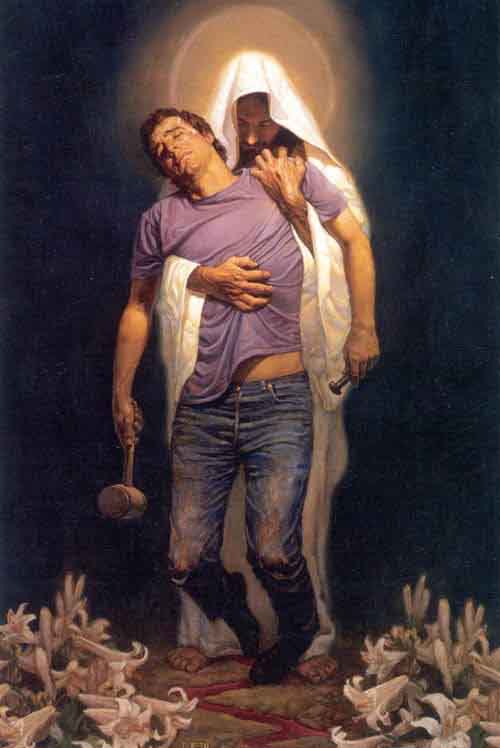
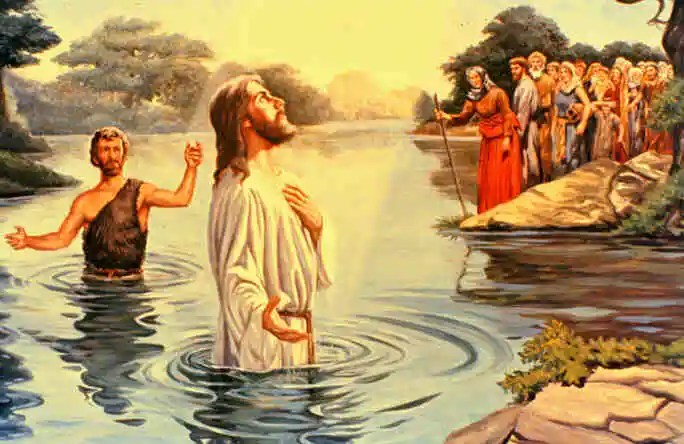
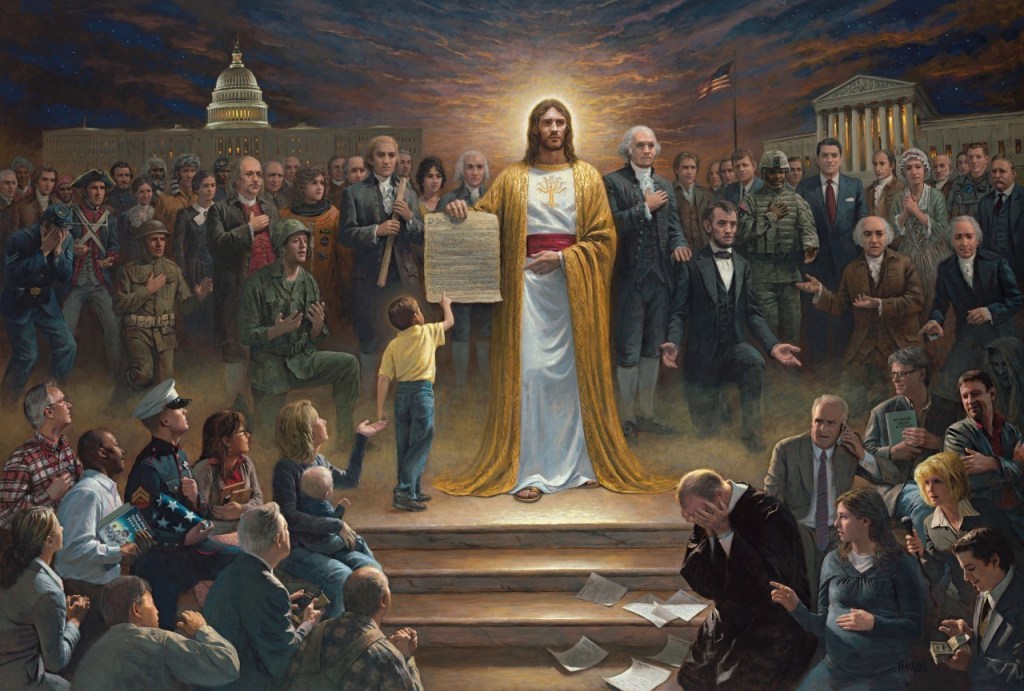

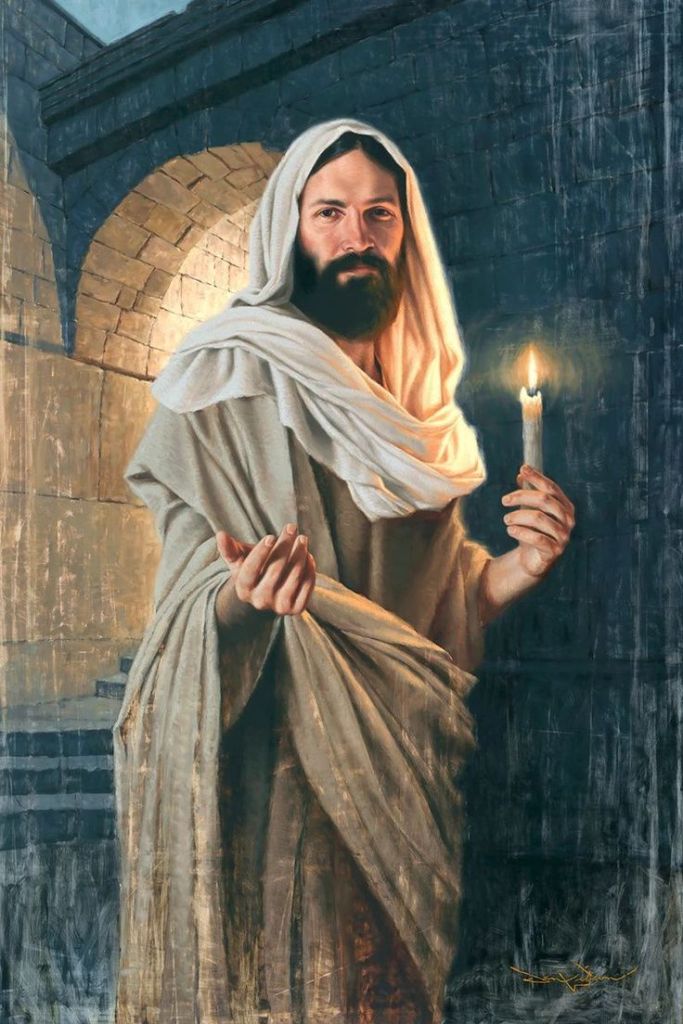



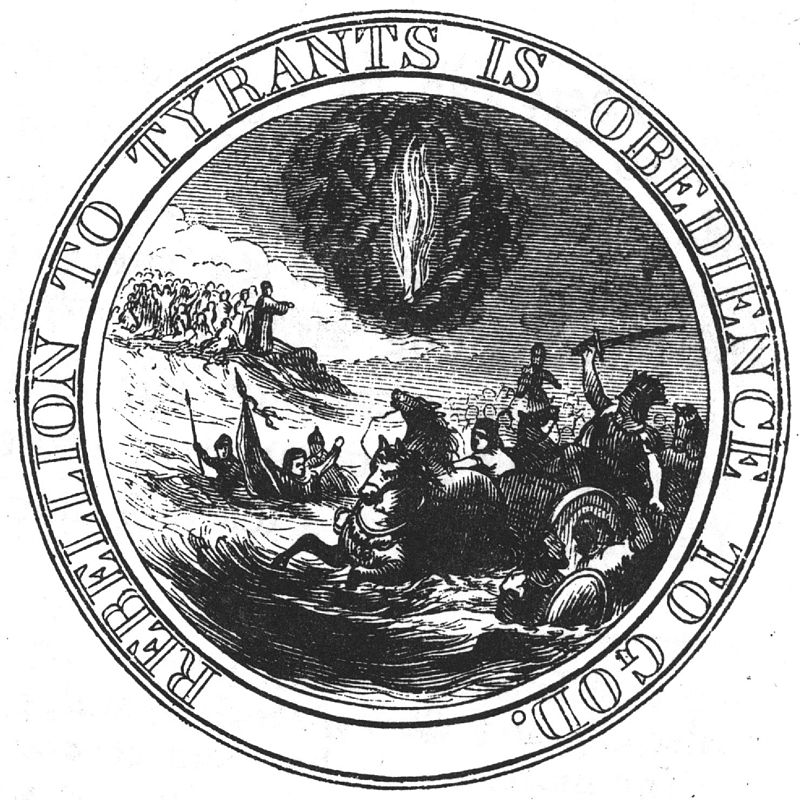


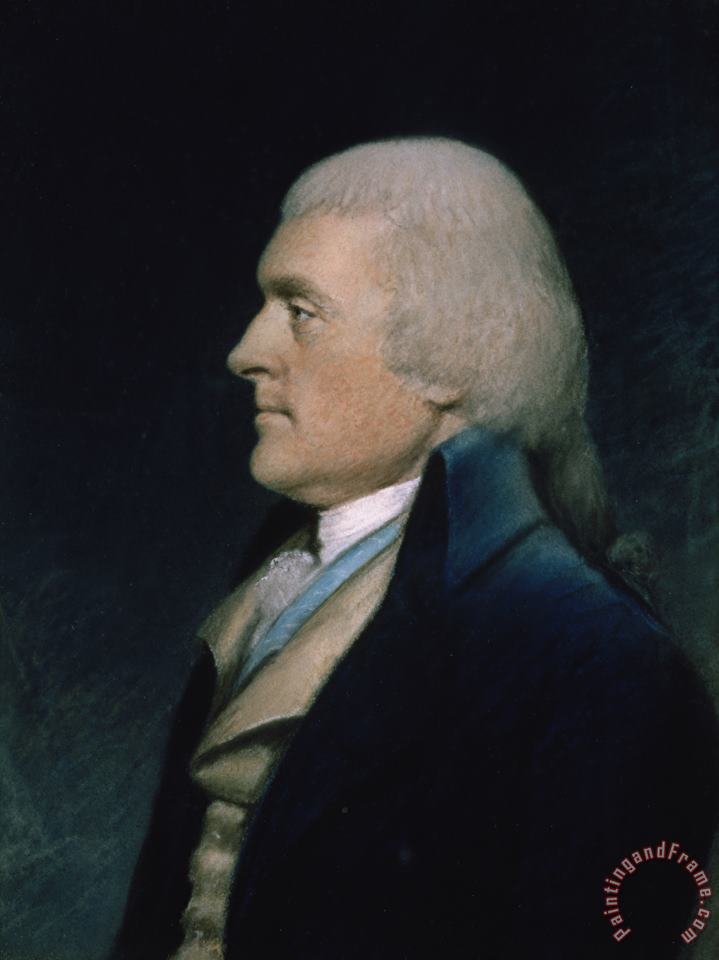








 The American Citadel